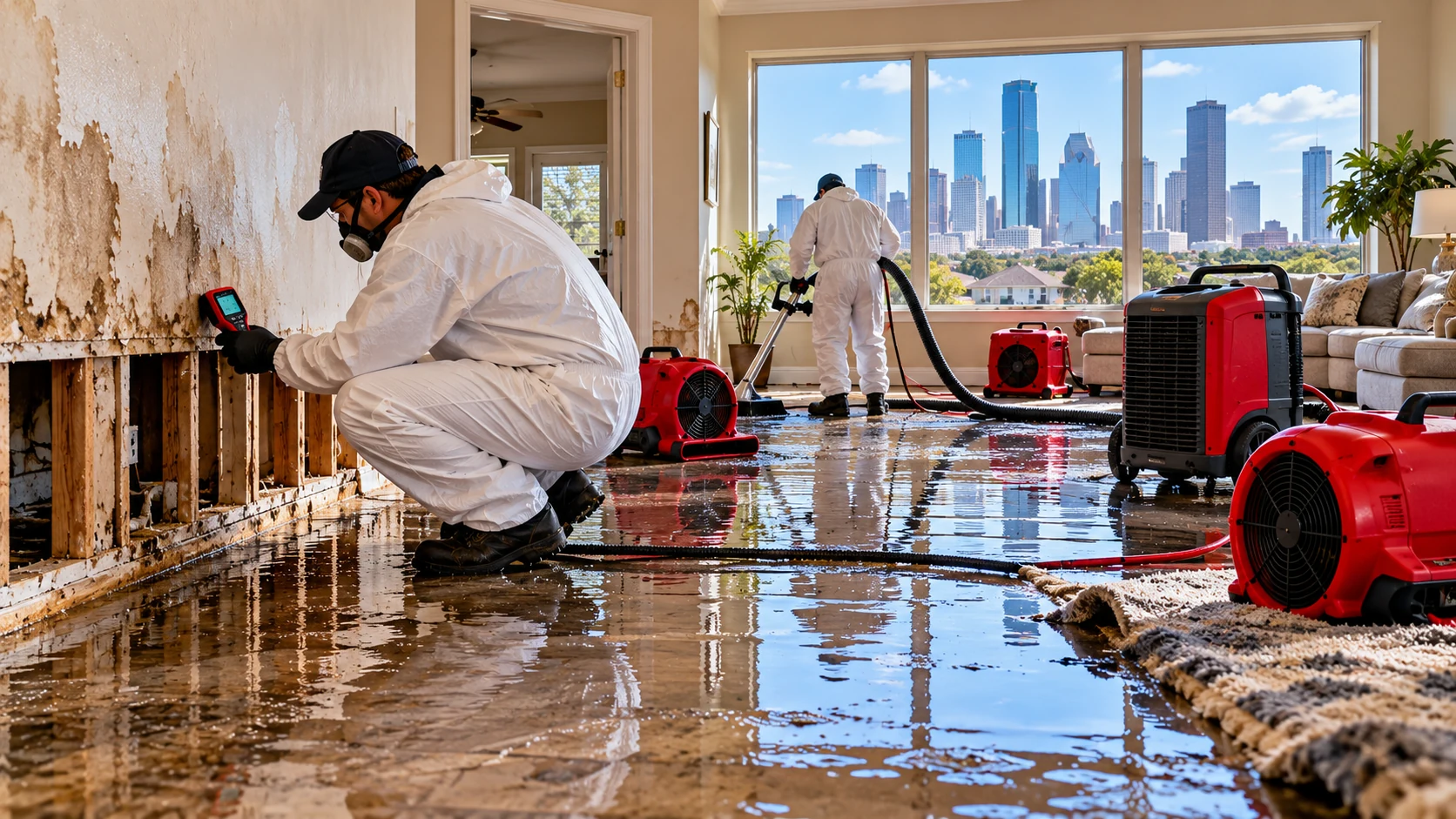
Most water damage restoration takes a few days to a few weeks. Water extraction is usually finished in hours, structural drying typically runs 3 to 5 days, and any cleaning and repairs add more time on top of that. A small, clean-water leak caught early can be done in days. A large flood, or one with contaminated water, can take several weeks.
The honest answer is that restoration runs on a schedule the moisture sets, not a fixed calendar. Below is the typical timeline phase by phase, the difference between water removal and full restoration, and the factors that make a job faster or slower.
How long does water damage restoration take?
Water damage restoration usually takes a few days to a few weeks from start to finish. The work moves through a set sequence, and each phase has a typical length:
| Phase | What happens | Typical time |
|---|---|---|
| Inspection & assessment | Find the water source, map the moisture, classify the water | First visit (hours) |
| Water extraction | Remove standing and absorbed water | A few hours to 1 day |
| Structural drying & dehumidification | Pull remaining moisture from materials | About 3–5 days |
| Cleaning & sanitizing | Clean, disinfect, and deodorize affected areas | 1–2 days (often overlaps drying) |
| Repairs & rebuilding | Replace drywall, flooring, paint, and finishes | A few days to several weeks |
| Final assessment | Confirm dryness and that the space is restored | Last visit |
The drying phase is the one most people underestimate. It is also the phase you should never rush, because repairs built over damp materials trap moisture and lead to mold and rework.
The water damage restoration timeline, step by step
Here is what happens in each stage and why it takes the time it does.
1. Inspection and assessment
The first step is finding every place the water went and how bad it is. A technician traces the water source, uses moisture meters and often thermal imaging to find hidden moisture, and classifies the water type. This usually happens on the first visit and guides the whole plan. A thorough water damage inspection up front prevents the single biggest cause of delay: discovering missed moisture days later.
2. Water extraction (water removal)
Next, standing water is pumped and vacuumed out, and soaked materials like carpet padding may be removed. Professional truck-mounted and portable units remove water far faster than household tools. Extraction is usually done within hours to a day, and getting it done quickly matters, because every hour water sits, it spreads into more materials.
3. Structural drying and dehumidification
Once the water is out, the structure still holds moisture inside walls, subfloors, and framing. Crews set up air movers to speed evaporation and dehumidifiers to pull that moisture out of the air. This phase typically takes 3 to 5 days and runs around the clock. Technicians take daily moisture readings, and the job moves forward only when materials reach a normal, documented dry standard. For a room-level view of this stage, see how to dry out a flooded room.
4. Cleaning and sanitizing
Affected surfaces and contents are cleaned, disinfected, and deodorized. How much is needed depends on the water category: clean water needs basic cleaning, while gray or black water requires thorough sanitizing of everything it touched. This stage often overlaps with drying and usually adds a day or two.
5. Repairs and reconstruction
With the area dry and clean, damaged materials are rebuilt: new drywall, flooring, trim, and paint. This is the most variable phase. Minor patching may take a day or two, while larger repairs such as replacing floors, cabinets, or several rooms can take anywhere from several days to a few weeks.
6. Final assessment
Before the job is closed, the space is checked one last time to confirm materials are dry, no hidden moisture remains, and repairs are complete. This final verification is what separates a finished job from one that comes back as a mold problem later.
Water removal vs. drying vs. full restoration: what's the difference?
These three terms are often used as if they mean the same thing, but they describe different stages with very different timelines.
- Water removal (extraction) is pulling out the water you can see and the water soaked into materials. It is the fastest phase — usually hours — and it is only the beginning.
- Structural drying removes the moisture left inside materials after the standing water is gone. It takes several days because evaporation and dehumidification need time to reach the water meters can still detect but you cannot see.
- Full restoration is the entire process, from the first inspection through cleaning and final repairs. It is the longest timeline because it includes putting the property back to its pre-loss condition, not just removing water.
A property can have the water removed in an afternoon and still be weeks away from full restoration. Knowing which stage someone means avoids a lot of confusion about "how long it takes."
What factors affect how long water damage restoration takes?
Two jobs that look similar can have very different timelines. These are the factors that decide it:
- Severity and size. A single damp room dries far faster than multiple saturated rooms or several floors. More affected area means more extraction, more drying equipment, and more repairs.
- Water category. Clean water (Category 1) is the quickest to handle. Gray and black water (Categories 2 and 3) require extra removal, sanitizing, and often replacing porous materials, which adds days. Our guide to the three water categories explains the difference.
- Affected materials. Non-porous and thin materials dry quickly. Dense or porous materials — hardwood, plaster, thick carpet padding, and insulation — hold water longer and stretch the drying phase.
- Humidity and climate. Drying depends on moving moisture into the air and then out. In a humid environment, evaporation is slower, so dehumidification has to work harder and longer.
- Hidden moisture. Water trapped inside wall cavities, under flooring, or above ceilings dries slowly and is easy to miss. Finding it late is one of the most common reasons a timeline runs long — see the signs of hidden water damage.
- How fast help arrived. The sooner extraction and drying start, the less water spreads and the less material is lost — which shortens every phase that follows.
Does Houston's climate make restoration take longer?
Houston's humid, subtropical climate can slow the drying phase. When the outdoor air is already heavy with moisture, water evaporates from materials more slowly, so dehumidifiers carry more of the load and may need to run longer to reach a dry standard. This is one reason professional drying equipment and daily moisture monitoring matter more here than in a dry climate — and why "just open the windows" often makes Houston drying worse, not better, by letting humid air back in.
Why does mold risk make the timeline urgent?
Mold can begin to grow on damp materials within 24 to 48 hours, which is why drying speed is about health and cost, not just convenience. Starting extraction and drying quickly keeps the job inside that window and helps avoid a separate mold remediation project, which adds its own time. For more detail, see how fast mold grows after water damage.
Practical tips to keep your restoration on schedule
You cannot change how saturated the materials are, but you can avoid the delays that come from slow or incomplete action:
- Stop the water source if you safely can — shut off the supply valve or main.
- Call for professional extraction quickly. Faster extraction means faster drying and less material to save.
- Remove standing water and wet items you can safely move, and lift furniture off wet carpet.
- Keep air moving and leave professional equipment running; do not switch off air movers or dehumidifiers to save on noise or power.
- Don't start repairs until drying is verified. Closing up walls or laying new flooring over damp materials is the most common cause of redoing the work.
- Document the damage with photos before cleanup for your records.
A quick, measured response almost always shortens the overall timeline — and reduces what has to be torn out and rebuilt.
When should you call a professional?
Call a professional restoration company as soon as you find more than a minor, contained spill — especially if water has soaked into walls, flooring, or ceilings, if the water may be contaminated, or if it has sat for more than a day. The right time to call is early, because professional extraction and monitored drying are what keep the timeline short and stop a water problem from turning into a mold or structural one.
If you're facing water damage in Houston, our restoration team can inspect the damage, start drying fast, and give you a clear picture of what your specific timeline looks like.
Frequently asked questions
How long does water damage restoration take on average?
How long does it take to dry out after water damage?
What is the difference between water removal, drying, and full restoration?
Why does my water damage restoration take longer than expected?
Can I speed up water damage restoration?
Dealing with water damage in Houston?
The sooner drying starts, the shorter the whole timeline. Call and we'll walk you through the next steps and what to expect.