Dehumidification in Houston, TX
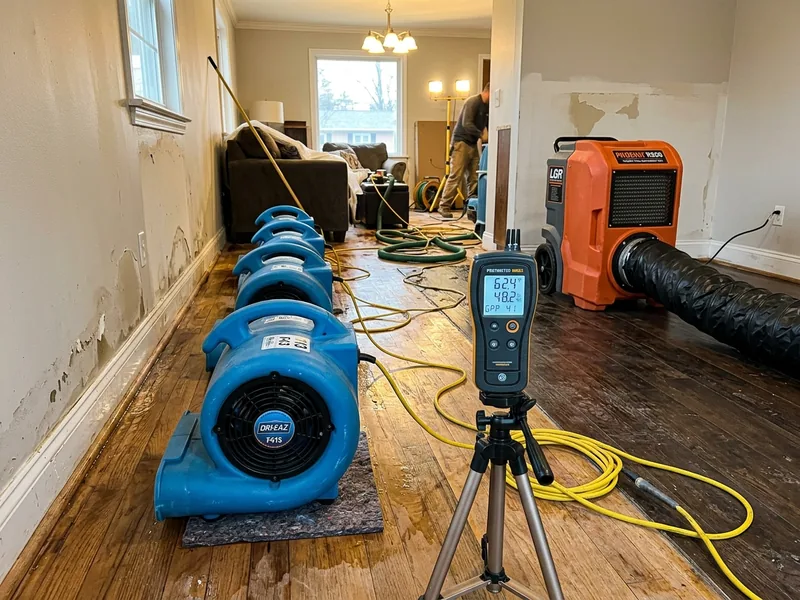
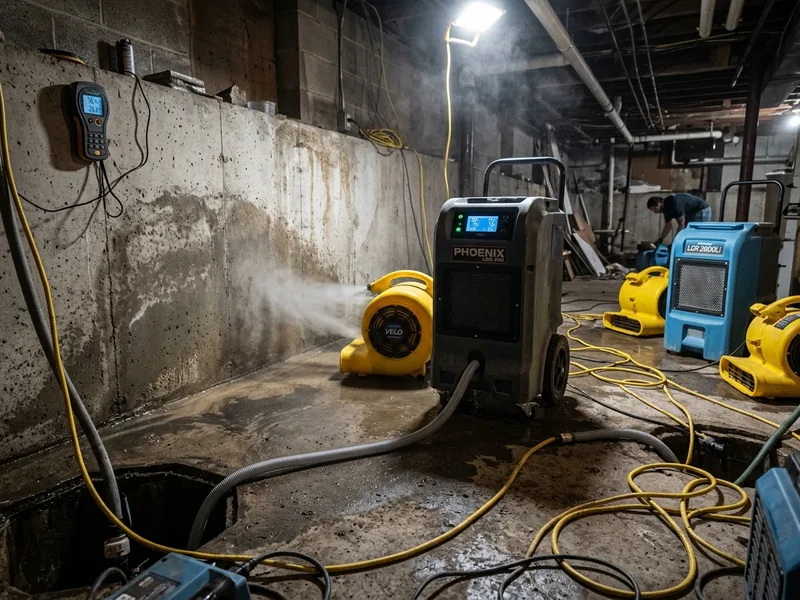
Dehumidification pulls moisture out of the air so wet materials can release theirs and dry. It is a core part of drying after water damage, and it matters even more in Houston, where the humid climate slows natural drying. We provide dehumidification for Houston homes and businesses.
How we respond
- 1You call usDescribe the water damage and we advise the next steps.
- 2We size the dryingWe match dehumidifiers and air movers to the space and moisture.
- 3We verify dryWe monitor with meters until the materials are truly dry.
What is dehumidification?
Dehumidification is the removal of moisture from the air, and it is one of the two forces that dry a property after water damage. By keeping the air dry, it lets wet materials give up the moisture they are holding.
On its own, water sitting inside drywall, subfloor, or framing has nowhere to go if the surrounding air is already damp. Dehumidification creates the dry air those materials need to release their moisture into, which is why it sits at the center of the drying process.
Why does dehumidification matter after water damage?
Dehumidification matters because drying is really about moving moisture from materials into the air and then out. If the air stays humid, the materials cannot dry, no matter how long you wait.
A dehumidifier pulls that moisture out of the air continuously, so the materials keep releasing theirs. Without it, humid air simply holds the moisture in the room, and the structure can stay wet for a long time, which is the condition mold needs to grow.
How does a dehumidifier work in drying?
A dehumidifier works in a continuous cycle that gradually pulls water out of the structure:
- It dries the air. The unit removes moisture from the air in the space.
- Materials release moisture. Wet materials give up moisture into the drier air.
- It removes that too. The dehumidifier pulls the newly released moisture out.
- The cycle repeats. Over hours and days, the materials keep drying.
This is why drying takes time: the moisture leaves the structure gradually through the air.
How do dehumidification and air movement work together?
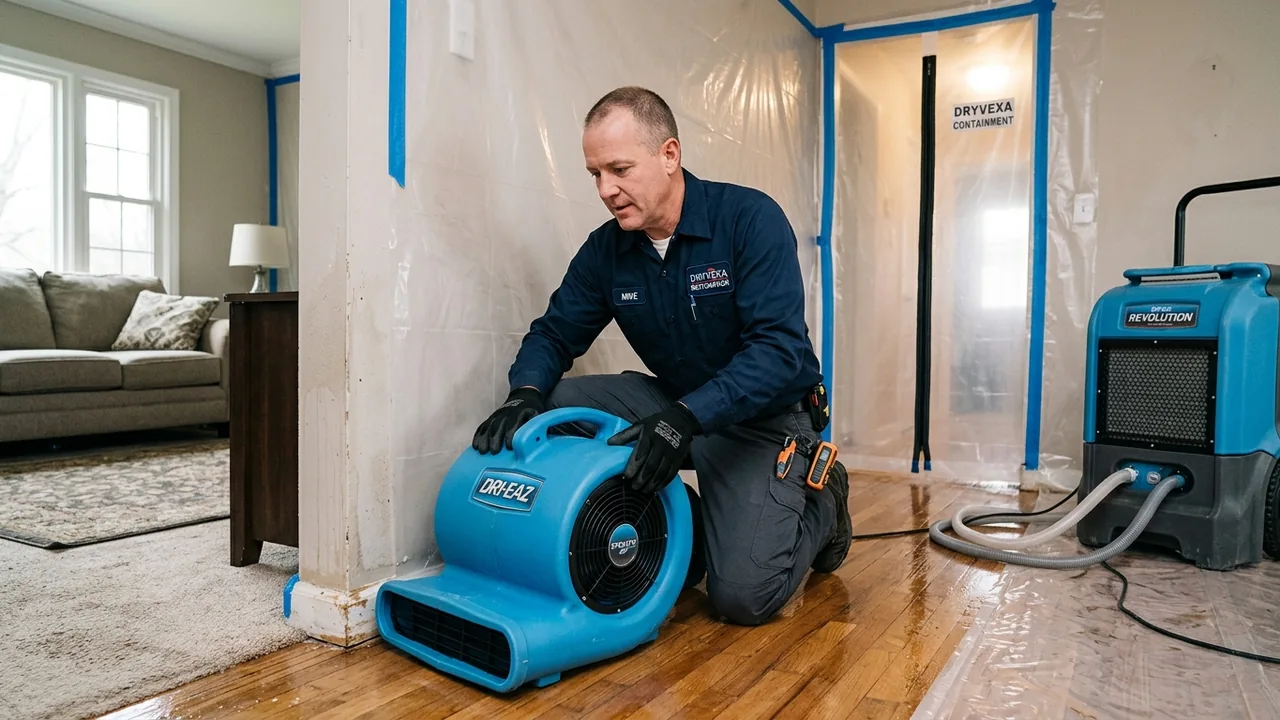
Dehumidification and air movement work as a pair, each doing half the job. Air movers push air across and into wet materials, speeding how fast they release moisture. Dehumidifiers then remove that moisture from the air.
Run one without the other and drying stalls: air movers alone just fill the room with humid air, and dehumidifiers alone dry the air slowly without pushing materials to release moisture. Used together, they dry the structure efficiently, which is why a proper setup includes both.
Why Houston's humidity makes dehumidification important
Houston's humidity makes dehumidification important because the outdoor air is often damp enough to slow, or even work against, natural drying. Opening windows to "air out" a wet property can let in more moisture than it removes.
Controlled dehumidification takes that variable out of the equation, drying the air regardless of the weather outside. In a humid climate like Houston's, that control is frequently the difference between a property that dries properly and one that stays damp and develops mold.
Humid air keeps a property wet
In Houston's climate, drying often needs real dehumidification. Call our Houston team to set it up right.
What water damage restoration looks like