Water Extraction & Removal in Houston, TX
Water extraction is the first step of removing standing water from your property before it soaks deeper into floors, walls, and belongings. We pump out the water for Houston homes and businesses, because the sooner the water is gone, the less damage it can do.
How we respond
- 1You call usTell us what happened and we advise immediate safety steps.
- 2We assess & containCheck for hazards, find the source, and stop the spread.
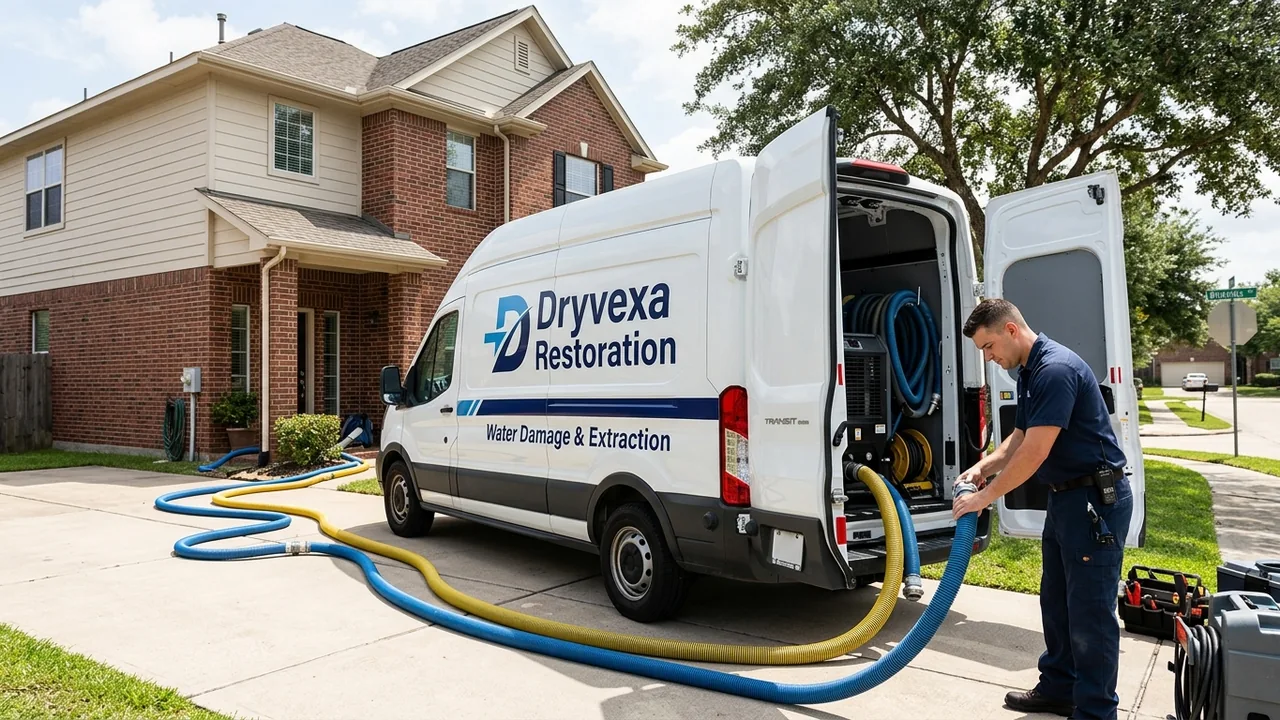
- 3We pump it outTruck-mounted extractors remove standing water fast.
What is water extraction and removal?
Water extraction and removal is the process of getting standing water out of your property as quickly as possible. It is the first hands-on step after a leak, flood, or burst pipe, before any drying or repairs can begin.
Removing the water fast does two things. It stops the water from spreading into new areas, and it limits how deeply it soaks into floors, walls, and belongings. Every hour that water sits, it reaches further and causes more damage.
When do you need water removal?
Call for water extraction any time water pools or floods somewhere it should not. Common situations in Houston include:
- A burst or leaking pipe flooding a room or lower floor
- Storm or heavy rain pushing water into the property
- A sewer or drain backup bringing water indoors
- A failed appliance such as a water heater, washing machine, or dishwasher leaking gallons of water
- Standing water in a basement or on a slab after flooding
If water is pooling on the floor, it needs to come out quickly, even if it looks clean. Clean water becomes contaminated the longer it sits.
What does the water extraction process look like?
- Safety check and inspection. We confirm it is safe to enter, identify the water source, and check for electrical hazards before starting.
- Stopping the source. Where possible, we help stop or contain the water so it stops adding to the problem.
- Extraction. Truck-mounted and portable pumps and extractors remove standing water quickly from floors, carpet, and hard surfaces.
- Detail extraction. We pull trapped water from carpet, padding, and flooring with specialized tools, and check for water underneath and behind surfaces.
- Moisture check. We measure remaining moisture so the drying stage can target the right areas, including water you cannot see.
Extraction hands off directly into drying and dehumidification, which removes the moisture that pumps alone cannot reach.
What kinds of water can be removed?
The right approach depends on how contaminated the water is:
| Water category | What it is | Handling |
|---|---|---|
| Clean water | From a supply line or rain | Extract fast before it becomes contaminated |
| Gray water | From appliances or fixtures | Extract with protective equipment and sanitizing |
| Black water | From sewage or flooding | Handled only by professionals with full protection |
Gray and black water carry health risks and should never be handled without proper protective equipment and training.
Is it safe to remove standing water yourself?
A small, clean spill you catch immediately is often safe to handle. Larger amounts of standing water are not. Water conducts electricity and can hide live hazards, and water from sewage or flooding can carry bacteria and contamination.
Never enter a flooded area while the power is on to that space, and do not wade into standing water of unknown source. When there is more than a minor spill, call a professional.
Why fast extraction matters
Water removal is a race against time. Here is roughly how standing water progresses when it is left in place:
| Time after damage | What typically happens |
|---|---|
| First hours | Water spreads across floors and soaks into carpet, drywall, and belongings |
| 24–48 hours | Materials swell and warp; odors develop; mold can begin to grow |
| After several days | Contamination worsens; more flooring and drywall must be replaced |
Getting the water out quickly is the best way to protect your property and reduce how much has to be repaired or replaced.