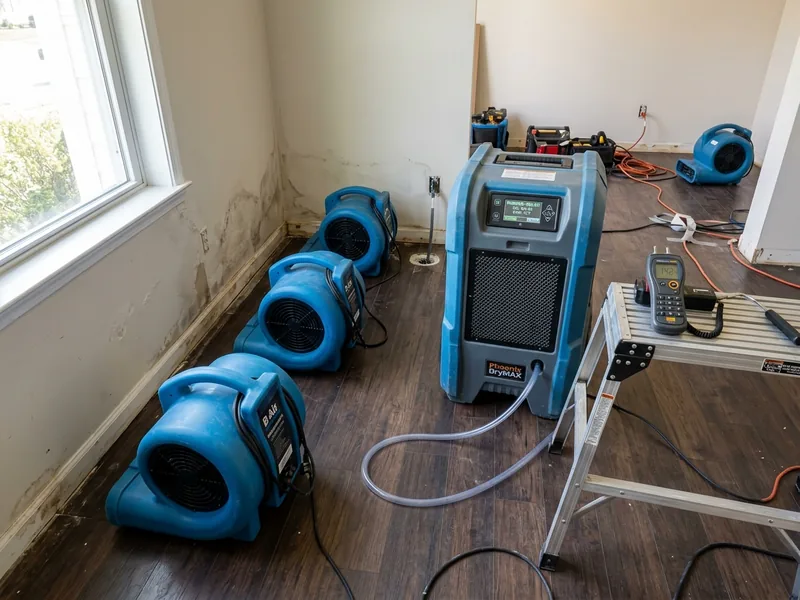
To dry out a flooded room properly, you remove the standing water first, then use strong airflow and dehumidification to pull moisture out of the materials, and you keep going until the structure itself reads dry, not just the surface. Skipping that last part is the most common reason rooms "dry" and then develop warping or mold.
Here is how to do it the right way.
What are the steps to dry out a flooded room?
Drying follows a clear order. Each step sets up the next.
- Stop the water source and confirm it is safe, including checking that power is off to any wet area with outlets.
- Remove standing water with a wet/dry vacuum, pump, or extractor. The less water left behind, the faster everything else goes.
- Take out wet soft materials that trap moisture, such as rugs and soaked padding, and move furniture out of the room.
- Increase airflow with fans or air movers aimed across wet surfaces, including along walls and baseboards.
- Run a dehumidifier to pull the released moisture out of the air so it does not resettle.
- Open up trapped areas where safe, such as removing baseboards or lifting carpet edges, so air can reach hidden moisture.
- Measure and monitor moisture levels until the materials, not just the surfaces, read dry.
Why is removing the water first so important?
Removing the water first matters because evaporation is slow and limited. Fans and dehumidifiers are designed to dry damp materials, not to clear a pool of standing water. Every gallon you extract is water the drying equipment does not have to pull out through the air, which shortens the whole process and limits how deep the water soaks.
Do you need both air movers and a dehumidifier?
Yes, effective drying needs both, because they do different jobs. Air movers push air across wet surfaces to speed evaporation, which lifts moisture out of materials and into the air. A dehumidifier then removes that moisture from the air so it does not simply land on another surface and keep the room damp.
Using only fans can actually spread humidity around the room. Using only a dehumidifier dries slowly because the air is not moving across the wet materials. Together, they create a cycle that steadily removes moisture.
How do you dry the structure, not just the surface?
Drying the structure means getting moisture out of the walls, subfloor, and framing, not only the visible surface. Water wicks into these materials and hides there, so a floor can feel dry on top while the subfloor underneath is still wet.
To reach it:
- Direct airflow along walls and into corners, not just across the open floor.
- Remove baseboards or make small openings where water is trapped behind them, where it is safe to do so.
- Lift or remove flooring and padding that hold water underneath.
- Keep the dehumidifier running until readings confirm the materials are dry.
This is where professional structural drying equipment makes a real difference, because industrial air movers and dehumidifiers move far more air and remove far more moisture than household units.
How do you know when the room is actually dry?
You know a room is dry when a moisture meter confirms the materials have returned to a normal, dry reading, not when the surface simply feels dry to the touch. This is the step most do-it-yourself drying skips, and it is the one that prevents warping, odor, and mold later.
If the flood was large, or water soaked into walls and flooring, professional water extraction and water mitigation handle both the removal and the verified drying. For the broader first-response steps after a leak, see our guide on what to do after a burst pipe.
Frequently asked questions
How long does it take to dry out a flooded room?
Do I really need a dehumidifier, or is a fan enough?
How do I know when a room is actually dry?
Can I dry a flooded room myself?
Flooded room that needs to dry fast in Houston?
Industrial drying reaches moisture household fans miss. Call and we'll help you dry it out properly.