Water Damage Restoration in Houston, TX
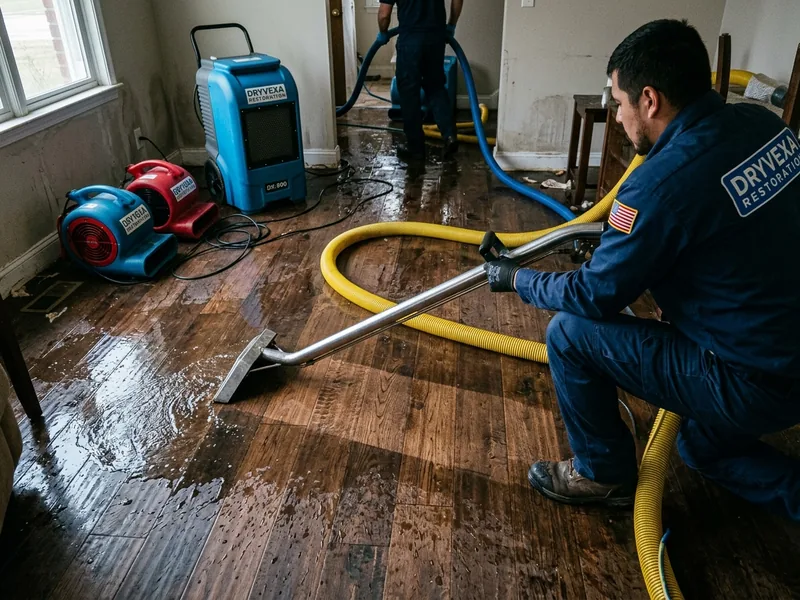
Water damage restoration is the full process of returning a water-damaged property to its pre-loss condition: extraction, drying, cleaning, and repairs. We handle every step for Houston homes and businesses, and the sooner it starts, the more we can save.
How we respond
- 1You call usDescribe the damage and we advise immediate safety steps.
- 2We assess & extractInspect, stop the source, and pump out standing water.
- 3Dry & restoreIndustrial drying, then repairs back to pre-loss condition.
What is water damage restoration?
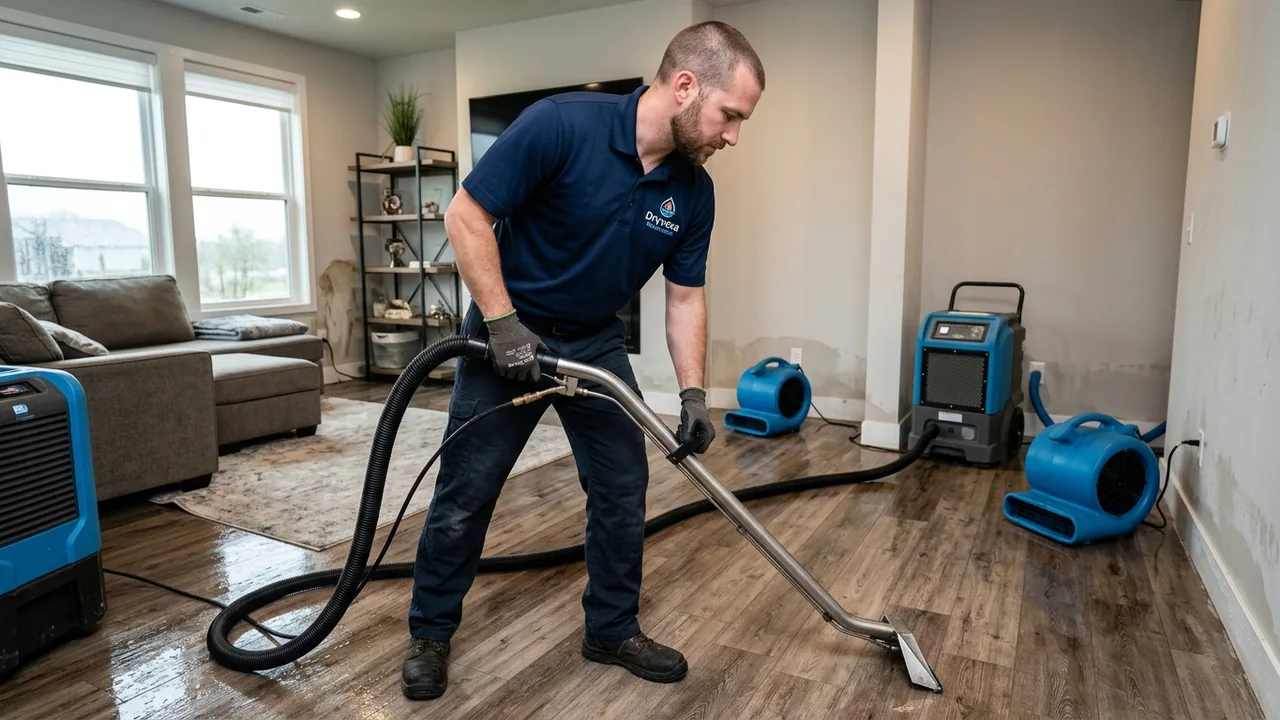
Water damage restoration is the process of cleaning up water, drying the structure, and repairing the damage so your property is safe and whole again. It is more than pumping out water. A complete restoration removes moisture from materials you cannot see, prevents mold, and rebuilds anything the water ruined.
A typical project moves through four stages: inspection, water extraction, drying and dehumidification, and cleaning and repair. Each stage matters. Skipping the drying step, for example, can leave hidden moisture that leads to mold and rot weeks later.
When do you need water damage restoration?
Call for restoration any time water gets somewhere it should not be and sits long enough to cause damage. Common situations in Houston include:
- A burst or leaking pipe soaking floors, walls, or ceilings
- Storm or flood water entering the property after heavy rain
- A roof leak letting rain into the attic or ceilings
- A sewage backup bringing contaminated water indoors
- A failed appliance such as a water heater, washing machine, dishwasher, or refrigerator line
If the water is clean, act fast anyway. Clean water becomes contaminated the longer it sits.
What are the warning signs of water damage?
Some water damage is obvious. Some hides behind walls and under floors. Watch for:
- Damp, musty, or "moldy" smells that will not go away
- Stains or discoloration on ceilings, walls, or baseboards
- Paint or wallpaper that is bubbling, peeling, or cracking
- Warped, buckled, or soft flooring
- A spike in your water bill with no clear cause
If you notice these signs, have the property inspected. Hidden moisture rarely dries on its own.
What does the restoration process look like?
- Inspection and assessment. We find the water source, measure moisture levels, and map the full extent of the damage, including areas you cannot see.
- Water extraction. Powerful pumps and extractors remove standing water quickly to stop it from spreading further.
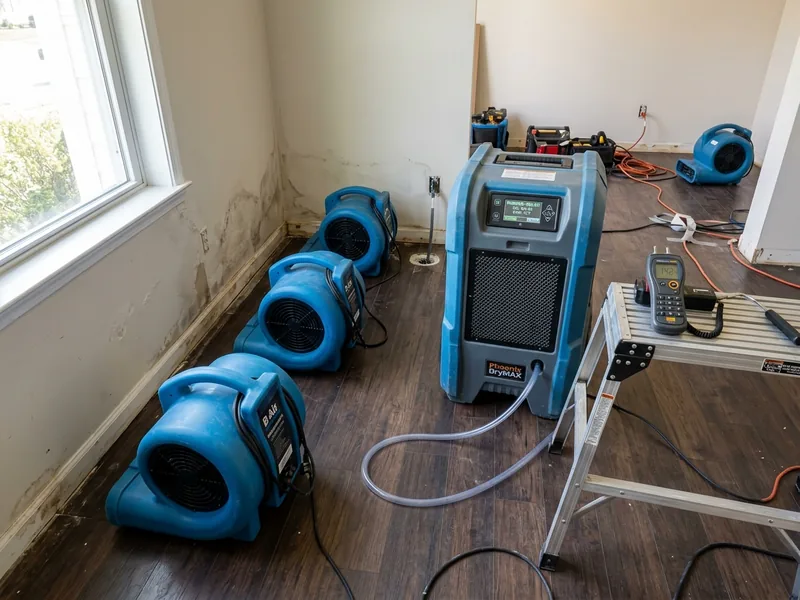
- Drying and dehumidification. Industrial air movers and dehumidifiers dry the structure. We monitor moisture until materials are verified dry, not just dry to the touch.
- Cleaning and sanitizing. We clean and disinfect affected areas, which is especially important after contaminated water.
- Repair and restoration. We repair or replace damaged drywall, flooring, ceilings, and finishes to return the property to its pre-loss condition.
Is it safe to handle water damage yourself?
Small, clean spills you catch right away are often fine to dry yourself. Larger losses are not. Standing water can hide electrical hazards, and water from sewage or flooding can carry bacteria and contamination. Category 2 (gray) and Category 3 (black) water should always be handled by professionals with the right protective equipment.
Never enter a flooded area with active electricity, and do not use a household vacuum on standing water. When in doubt, call.
Why fast restoration matters
Water damage is a race against time. Here is roughly how it progresses when water is left to sit:
| Time after damage | What typically happens |
|---|---|
| First hours | Water spreads; drywall, flooring, and furniture begin to absorb it |
| 24 to 48 hours | Mold can begin to grow; materials swell and warp; odors develop |
| After several days | Structural damage worsens; mold spreads; more materials must be replaced |
Starting extraction and drying quickly is the single biggest factor in limiting both the damage and the disruption to your home or business.
Water damage spreads by the hour
The sooner extraction and drying begin, the more of your property we can save. Talk to our Houston team now.
What water damage restoration looks like