Water Mitigation in Houston, TX
Water mitigation is the work of stopping water damage from getting worse. It means acting fast to stop the source, remove water, contain the area, and begin drying before the damage spreads further. We provide water mitigation for Houston homes and businesses in the critical hours after a loss.
How we respond
- 1You call usTell us what happened and we advise steps to limit the damage.
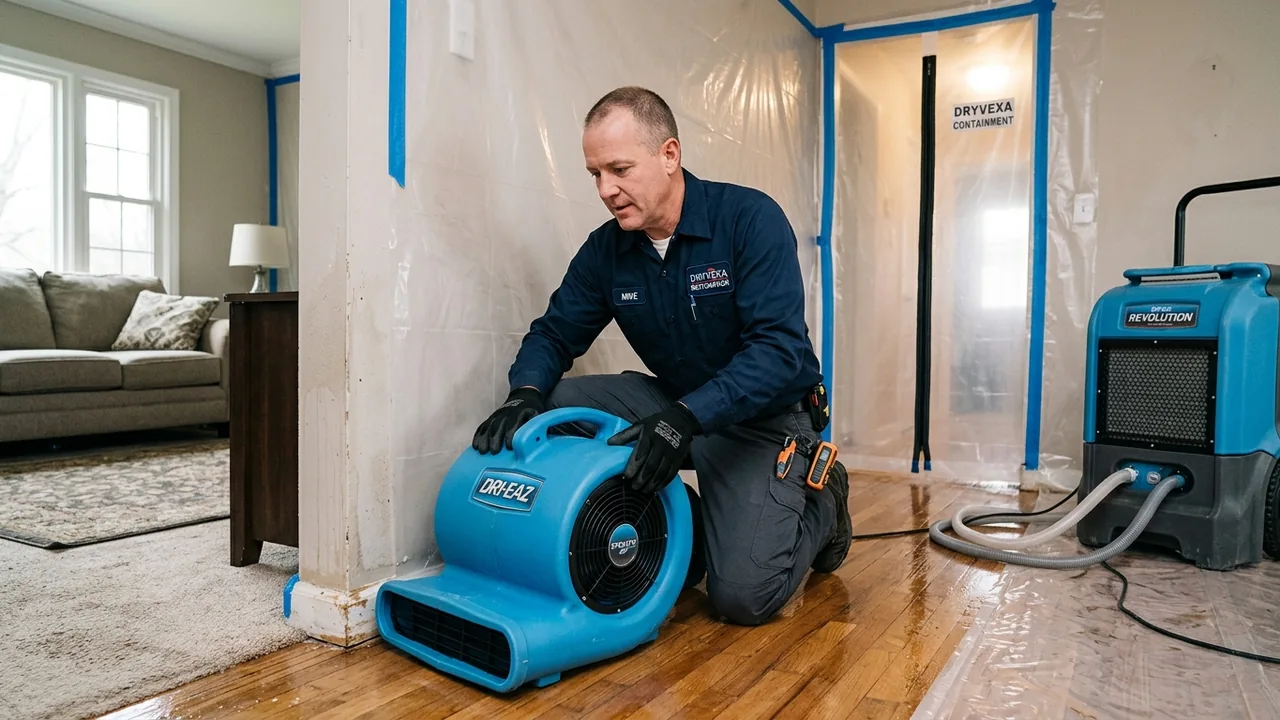
- 2We stop the spreadStop the source, remove water, and contain the affected area.
- 3We stabilize & dryBegin drying and protect what is not yet damaged.
What is water mitigation?
Water mitigation is the work of stopping water damage from getting worse in the hours right after a loss. It is the fast, protective stage that comes before cleanup and repairs, focused on limiting how far the damage spreads.
The word mitigation means to make something less severe. That is exactly the goal here: stop the source, get the water out, seal off the area, and start drying so a bad situation does not turn into a worse one. Mitigation is about protecting what is not yet damaged.
How is mitigation different from restoration and cleanup?
Mitigation, cleanup, and restoration are three stages of the same recovery, and each does a different job. Mitigation comes first and is about damage control.
- Water mitigation: stops the spread and prevents further damage.
- Water damage cleanup: removes debris and contamination and disinfects.
- Water damage restoration: repairs and rebuilds what the water ruined.
A single loss often moves through all three, starting with mitigation to stabilize the property.
What does water mitigation include?
Water mitigation includes the fast steps that limit the damage while cleanup and repairs are still ahead. A typical mitigation response covers:
- Stopping the source so no more water enters
- Removing standing water from the affected area
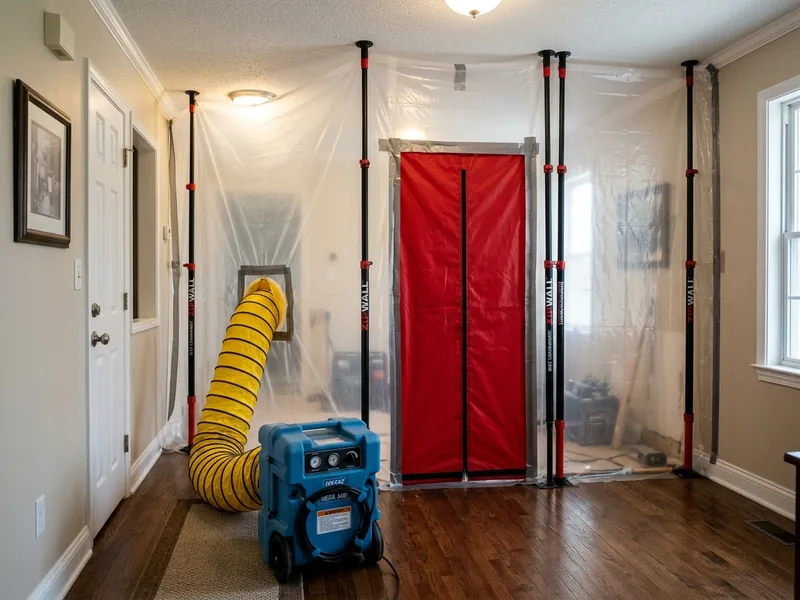
- Containing the area to keep water and humidity from spreading
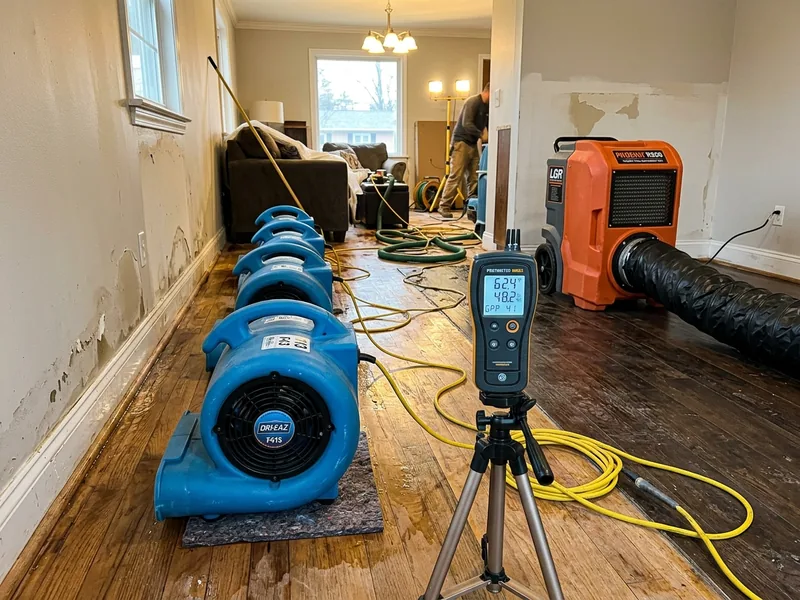
- Starting the drying with air movers and dehumidifiers
- Protecting contents by moving or covering what can still be saved
- Reducing mold risk by drying materials before mold can grow
Why fast mitigation matters
Fast mitigation matters because water damage grows on its own until something stops it. The first event is only the beginning. What follows, such as spreading water, swelling materials, and mold, is called secondary damage, and it is often the larger loss.
Acting quickly breaks that chain. Removing water and drying materials within the first day or two takes away the moisture that mold and rot need. The sooner mitigation starts, the less there is to clean up and repair later.
Do you have to mitigate before an insurance claim?
In most cases you are expected to take reasonable steps to limit further damage. Home and business insurance policies generally ask the property owner to prevent a bad situation from getting worse, which is often called a duty to mitigate.
That does not mean handling it alone. Calling a mitigation professional promptly and documenting the damage are reasonable steps. Keep records of what happened and what was done, and check your own policy for its specific requirements.
Damage spreads until it is stopped
Every hour water sits, it reaches further and does more harm. Call our Houston team to start mitigation now.
What water damage restoration looks like