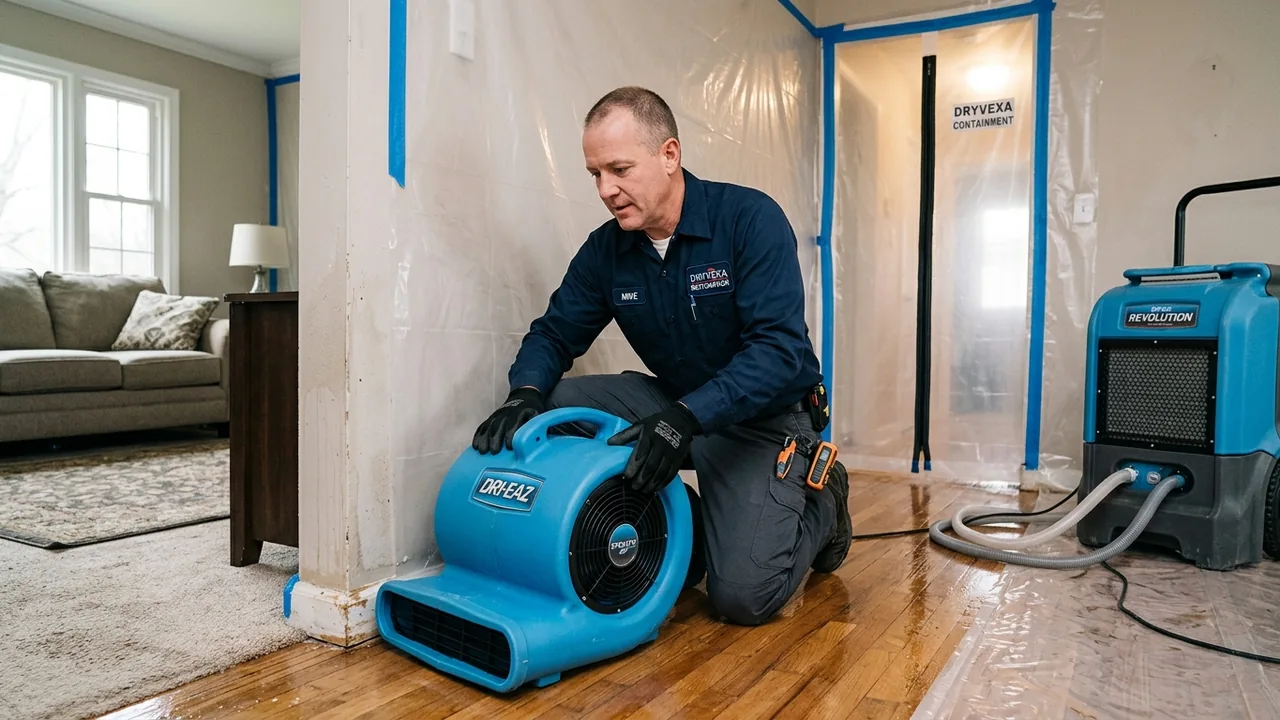
Mold can begin to grow within about 24 to 48 hours after water damage, and visible colonies often appear within a few days. That short window is why professionals treat fast drying as a race against time, and why "letting it dry on its own" so often ends in a mold problem.
Here is what drives that timeline and how to stay ahead of it.
Why does mold grow so quickly after water damage?
Mold grows quickly because a water leak creates everything mold needs at once: moisture, organic material to feed on, and a comfortable temperature. Mold spores are already present in most indoor air, so when a surface stays damp, they settle and begin to colonize.
Three conditions speed it up:
- Moisture that lingers, especially inside walls, under flooring, and in insulation.
- Warm temperatures, which suit most common indoor molds.
- Humidity, which keeps materials from drying on their own.
In a humid climate like Houston's, indoor air can stay moist enough to feed mold growth even after the visible water is gone, which makes thorough drying especially important.
What is the mold timeline after a leak?
The general progression after water damage looks like this:
| Time after water exposure | What typically happens |
|---|---|
| First 24 hours | Materials absorb water; conditions for mold begin to form |
| 24 to 48 hours | Mold can start to grow on damp surfaces and inside wall cavities |
| 3 to 7 days | Visible mold and a musty odor often appear; colonies spread |
| After a week or more | Mold becomes well established and harder to remove |
These are general ranges, not a guarantee. The real variables are how wet the materials are, how warm and humid the space is, and how fast the drying happens.
Where does mold hide after water damage?
Mold often grows where you cannot see it first. Common hidden spots include:
- Inside wall cavities and behind baseboards
- Under carpet and padding, and beneath hard flooring
- In the subfloor and framing
- Inside insulation
- Behind cabinets and furniture against damp walls
Because so much of this is out of sight, a musty smell or a small surface stain is often the only early warning. Our guide on signs of hidden water damage covers what else to watch for.
How do you stop mold after water damage?
The most reliable way to stop mold is to remove the moisture quickly and completely, before colonies can establish. That means more than wiping up water.
- Remove standing water as soon as possible.
- Dry the structure, not just the surface, using air movers and dehumidifiers that pull moisture out of walls, flooring, and framing.
- Measure moisture with meters so hidden damp areas are not missed.
- Clean and disinfect affected surfaces.
- Address what cannot be dried, such as soaked drywall or insulation, by removing it.
Professional structural drying and mold prevention services are built around this goal: drying to a verified moisture level so mold never gets the conditions it needs. If mold has already taken hold, it should be handled with proper containment and protective equipment rather than scrubbed with household cleaners, which can spread spores.
When should you call a professional?
Call a professional when water has soaked into materials you cannot easily dry, when you notice a musty smell, or when visible mold appears. Early action keeps a small, drying-related problem from turning into a larger remediation job, and it protects both your property and your indoor air.
Frequently asked questions
How quickly can mold grow after water damage?
Does drying within 48 hours prevent mold?
Can mold grow inside walls where I cannot see it?
Is a little mold after a leak a real problem?
Worried about mold after a leak in Houston?
Fast drying is the best defense. Call and we'll talk through drying and mold prevention for your property.