Water Damage Cleanup in Houston, TX
Water damage cleanup is the step that removes the water, debris, and contamination a loss leaves behind, then cleans and sanitizes what is left. It is the difference between a property that only looks dry and one that is actually clean and safe. We handle cleanup for Houston homes and businesses after leaks, storms, sewage backups, and floods.
How we respond
- 1You call usDescribe the water and any contamination, and we advise safety steps.
- 2We remove & clearExtract water, clear debris, and take out ruined materials.
- 3Clean & sanitizeDisinfect and deodorize the affected areas so they are safe again.
What is water damage cleanup?
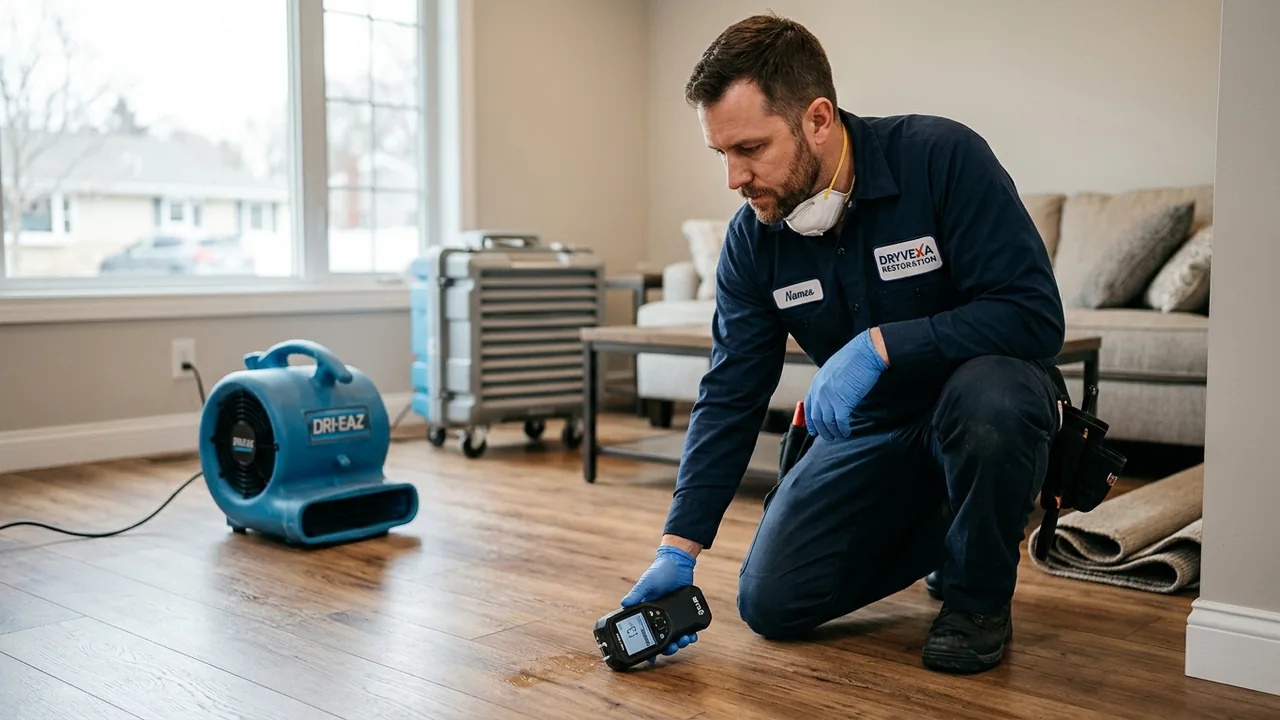
Water damage cleanup is the process of removing the water, wet debris, and contamination left by a loss, then cleaning and sanitizing what remains. It is the stage that gets your property clean and safe, not just dry.
Cleanup is more than pumping out water. It also clears ruined materials, wipes out the dirt and bacteria the water carried in, and removes odors. Doing this well is what stops a wet room from turning into a health hazard.
What does professional water damage cleanup include?
- Water removal. We remove standing water so cleanup can reach the surfaces and materials underneath.
- Debris and muck removal. Mud, silt, and soaked debris are cleared out of the affected areas.
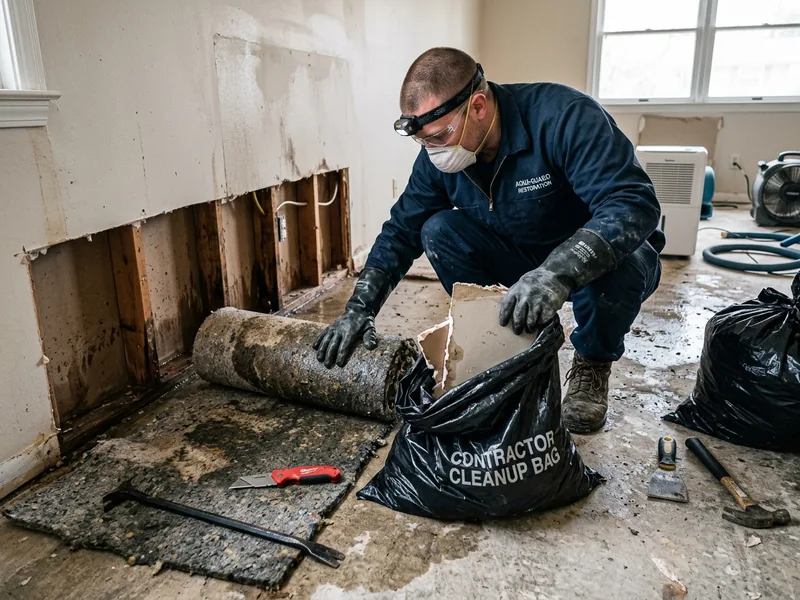
- Removing ruined materials. Soaked items that cannot be saved, such as carpet padding or contaminated drywall, are taken out and bagged for disposal.
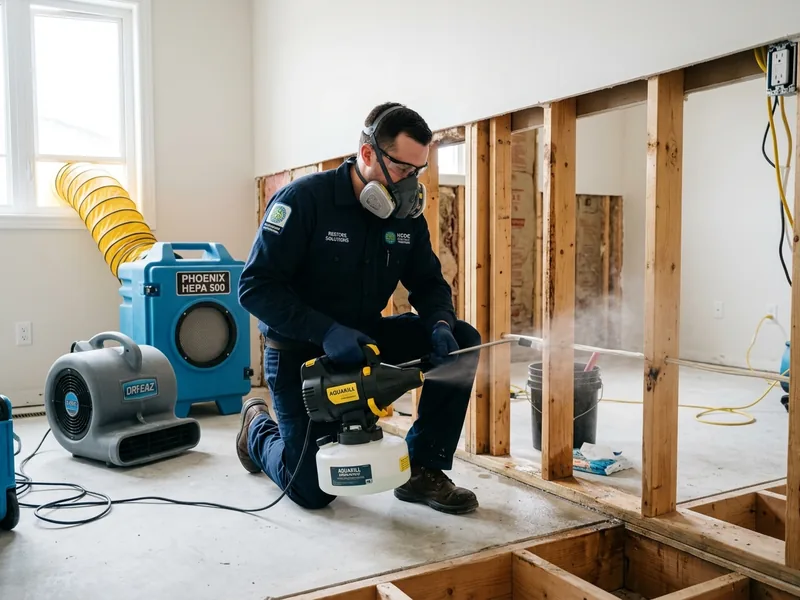
- Cleaning and disinfecting. Floors, walls, and salvageable surfaces are cleaned and disinfected to kill bacteria and mold spores.
- Deodorizing. We treat lingering odors caused by the water and contamination.
Once an area is clean, it is ready for drying and any repairs that follow.
Why contaminated water makes cleanup urgent
Water damage cleanup is urgent because standing water gets dirtier and more dangerous the longer it sits. Even water that started clean picks up dirt and bacteria within a day or two, and warm Houston conditions speed that up.
As water sits, three things happen. Bacteria multiply, mold spores begin to grow on damp surfaces, and odors set in. Contaminated water, such as a sewage backup, is a health risk from the very start. Fast cleanup limits the health hazard and keeps more of your property salvageable.
Is it safe to clean up water damage yourself?
A small, fresh spill of clean water is usually safe to wipe up yourself. Larger losses are not. Standing water can hide electrical hazards, and water from sewage or flooding carries bacteria that need protective equipment and disinfection to handle safely.
Never enter a flooded area while the power is on to that space, and do not try to clean up sewage or flood water without protection. When the water is contaminated or has spread beyond a small area, call a professional.
What can be cleaned, and what has to be thrown out?
Whether an item is cleaned or discarded depends on what it is made of, how long it was wet, and how contaminated the water was. Non-porous surfaces usually clean up well. Soft, porous materials that soak up dirty water often cannot be disinfected safely and are removed.
| Usually can be cleaned | Usually must be removed |
|---|---|
| Hard floors, tile, and sealed surfaces | Soaked carpet padding |
| Metal, glass, and solid wood | Drywall touched by contaminated water |
| Sturdy items that dried quickly | Porous items exposed to sewage or flood water |
We sort items into clean, remove, and dispose so nothing salvageable is thrown out and nothing unsafe is left behind.
How is cleanup different from extraction and restoration?
These three services work together but do different jobs. Cleanup is the sanitation stage in the middle.
- Water extraction removes the standing water as fast as possible.
- Water damage cleanup clears debris and contamination, then cleans and disinfects.
- Water damage restoration is the full recovery, including drying the structure and repairing the damage.
If you are not sure which you need, describe what happened when you call and we will point you to the right step.
Dirty water does not wait
Contamination and odor get worse the longer wet debris sits. Call our Houston team to get cleanup underway.
What water damage restoration looks like