Hidden water damage usually shows itself through small signs before any water is visible: stains on walls or ceilings, bubbling paint, a musty smell, warped or spongy floors, or a water bill that climbs for no clear reason. Catching these early is what keeps a slow leak from turning into rot and mold.
Here are the warning signs worth paying attention to, and what each one usually means.
What are the warning signs of hidden water damage?
The clearest signals fall into a few groups. Any one of them is worth investigating.
- Stains and discoloration. Yellow, brown, or copper-colored patches on walls or ceilings point to water moving through the material.
- A musty or earthy smell. This often means moisture, and sometimes mold, inside walls or under floors.
- Peeling, bubbling, or cracking paint. Trapped moisture pushes paint and wallpaper away from the surface.
- Warped, buckled, or spongy flooring. Wood swells, laminate lifts, and floors feel soft where water has soaked in.
- A rising water bill. A steady increase with no change in usage suggests a leak you cannot see.
- Damp or humid spots. Areas that feel cool, clammy, or more humid than the rest of the home.
Why is hidden water damage so easy to miss?
Hidden water damage is easy to miss because water rarely stays where it starts. It follows gravity and the path of least resistance, traveling along pipes, inside wall cavities, and across the subfloor before it ever surfaces.
That means the stain on your ceiling may be several feet from the actual leak, and a damp baseboard may be fed by water running down inside the wall. By the time the sign is visible, the moisture has often been working out of sight for a while.
Where does hidden water damage usually occur?
Certain spots are more prone to hidden leaks and moisture:
- Under sinks and behind cabinets, where supply lines and drains connect.
- Around tubs, showers, and toilets, where seals and caulk can fail.
- Behind appliances such as dishwashers, washing machines, and water heaters.
- In ceilings below bathrooms or below the roofline.
- Along exterior walls after storms or roof leaks.
A stained ceiling, for example, often traces back to a roof leak or a failed seal above it. Our page on ceiling water damage covers that specific problem in more detail.
How is hidden water damage found and confirmed?
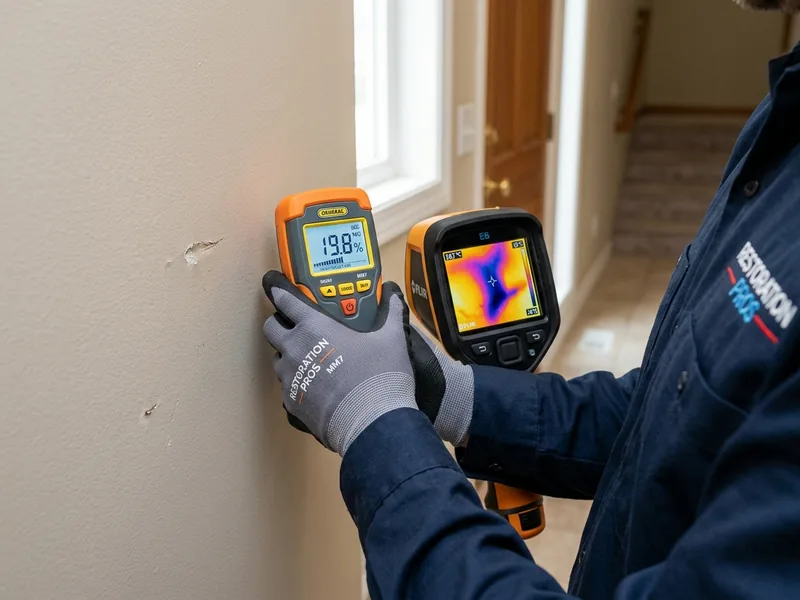
Hidden water damage is confirmed with moisture detection tools rather than guesswork. Moisture meters read the dampness inside walls, floors, and ceilings, and professionals use them to map how far water has traveled without opening up every surface.
This matters because fixing only the visible spot leaves the real moisture in place, where it keeps damaging materials and can feed mold. A proper water damage inspection locates the full extent of the problem so the repair addresses all of it.
Why act early on hidden water damage?
Acting early limits both the damage and the cost of repairs. Left alone, hidden moisture warps and weakens materials, stains finishes, and creates the damp conditions mold needs, which can begin within about 24 to 48 hours. You can read more about that timeline in our guide on how fast mold grows after water damage.
If you notice any of the signs above, it is worth checking sooner rather than later. Early inspection and, where needed, professional repair keep a small, hidden leak from becoming a major restoration project.
Frequently asked questions
What is the most common sign of hidden water damage?
Can water damage be present without visible water?
Does a higher water bill mean a hidden leak?
How is hidden water damage found?
Suspect hidden water damage in your Houston home?
If something seems off, it is worth checking early. Call and we'll talk through inspection and next steps.