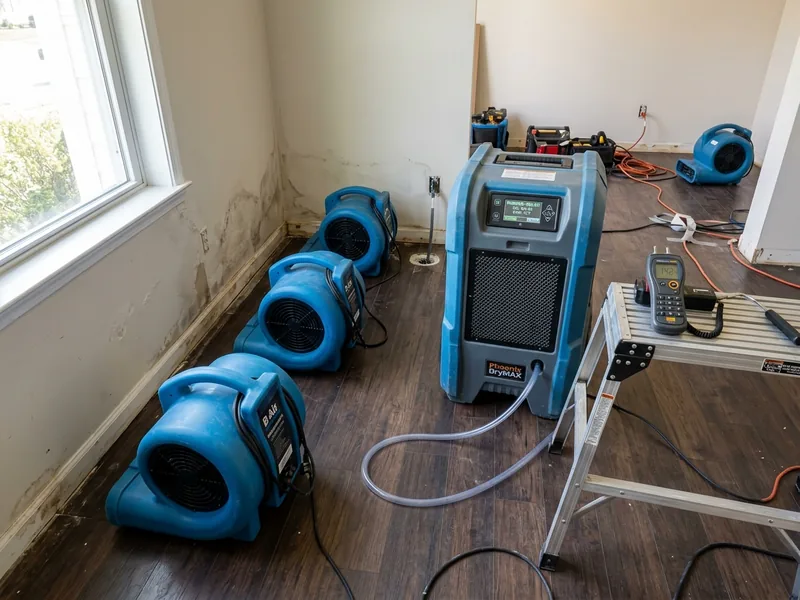
Structural Drying in Houston, TX
Structural drying removes the moisture left inside a building's materials after the water is extracted. It is the step that dries the walls, floors, subfloors, and framing to a verified level, so hidden moisture does not turn into mold and rot. We provide structural drying for Houston homes and businesses.
How we respond
- 1You call usDescribe the water damage and we advise the next steps.
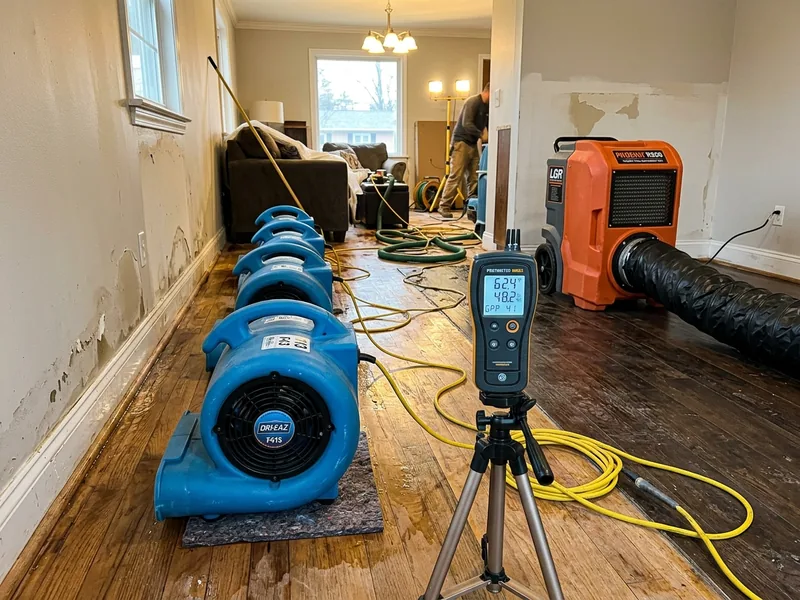
- 2We set up dryingAir movers and dehumidifiers target the wet materials.
- 3We verify dryWe monitor with meters until the structure is truly dry.
What is structural drying?
Structural drying is the removal of moisture from a building's materials after the standing water is gone. It is the phase that dries the parts of the structure that soaked up water, so the property returns to a normal, dry state.
Drying is its own step for a simple reason: pumping out water does not dry a wall. Materials like drywall, subfloor, and framing hold moisture inside long after the surface looks dry, and structural drying is what pulls that moisture out before it causes lasting harm.
Why is drying separate from removing the water?
Drying is separate from removing the water because the two deal with different water. Extraction takes out the liquid water sitting on and in surfaces. Drying removes the moisture that has soaked deep into materials, where no pump can reach.
Skipping or shortening the drying stage is one of the most common causes of water damage coming back. The visible water can be gone while the structure is still wet inside, so drying finishes the job that extraction starts.
What parts of the structure get dried?
Structural drying targets each material that holds moisture, component by component. Depending on the loss, that includes:
- Walls, including the cavity, insulation, and drywall
- Floors, from hard surfaces to carpet
- Subfloors, the layer beneath the finished floor
- Ceilings, wetted by leaks from above
- Framing, the structural wood behind it all
Each component dries at its own rate, which is why the drying is set up and monitored for the specific materials involved.
How does structural drying work?
Structural drying works by moving air and removing moisture, then confirming the result.
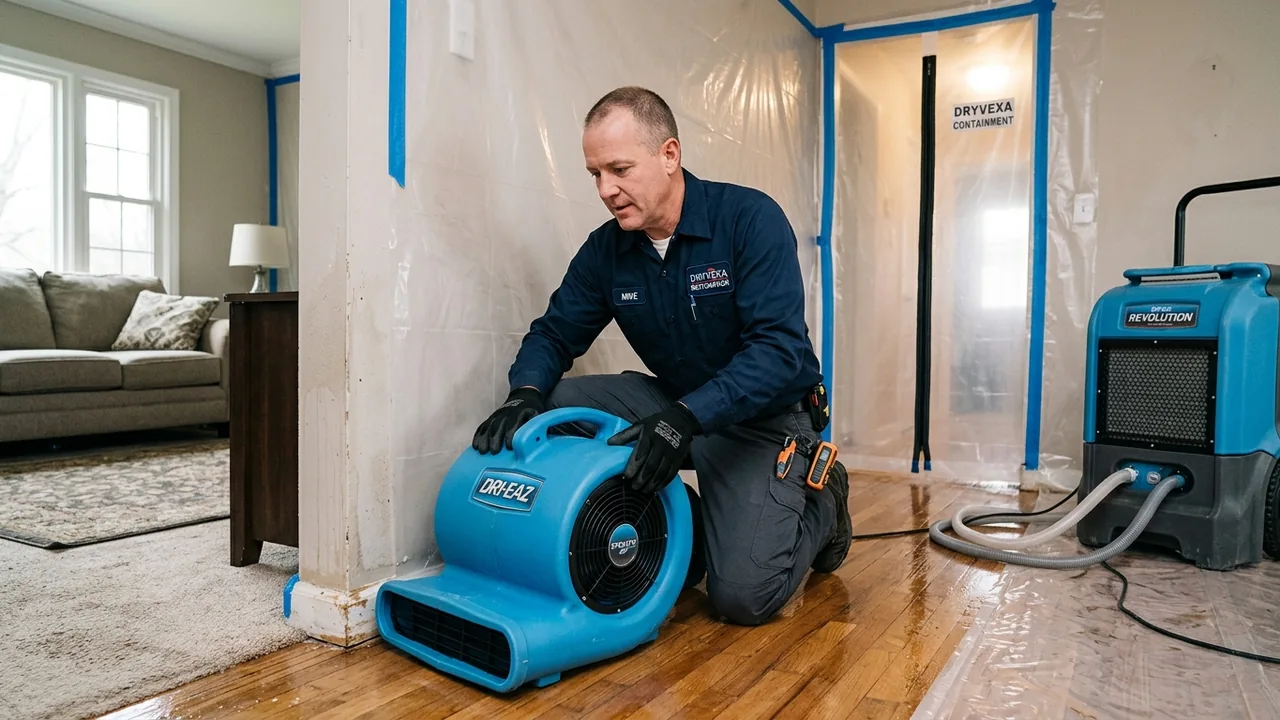
- Air movement. Air movers push air across and into wet materials.
- Dehumidification. Dehumidifiers pull the released moisture out of the air.
- Containment. The area is often sealed so the drying stays focused.
- Monitoring. Moisture meters track materials until they reach a dry reading.
Why "verified dry" matters
"Verified dry" matters because a surface that feels dry can still be wet inside. Judging drying by touch is how hidden moisture gets missed.
Verified dry means the moisture readings inside the materials have returned to normal, confirmed with a meter. Stopping before that leaves moisture that turns into mold, rot, and warping. Measuring rather than guessing is what makes structural drying hold up over time.
Dry to verified dry, not just the surface
Hidden moisture is what turns into mold. Call our Houston team to dry the structure properly.
What water damage restoration looks like