Wall Water Damage in Houston, TX
Wall water damage is often more than a stain on the surface, because water soaks into the cavity, insulation, and framing behind the drywall. Much of the damage hides inside the wall, where it can cause mold if it is not found and dried. We handle wall water damage for Houston homes and businesses.
How we respond
- 1You call usDescribe what you're seeing and we advise the next steps.
- 2We find & extractCheck inside the wall, then remove the water it holds.
- 3Dry & repairDry the cavity and repair the wall to match.
What is wall water damage?
Wall water damage is water damage to a wall as a whole, including the cavity, insulation, and framing behind the surface, not just a mark on the drywall. Water reaches inside the wall, where it can sit unseen and cause mold.
That hidden dimension is what defines wall water damage. A wall may look nearly normal on the outside while it is wet within, so handling it means looking past the surface to what the water did inside the wall.
What is inside a wall that water damages?
A wall is layered, and water can affect each part. Understanding those layers explains why surface repairs are often not enough:
- The surface, usually drywall, plaster, or paneling
- Insulation in the cavity, which soaks up and holds water
- The wall cavity, a hollow space where moist air lingers
- The framing behind it, which carries the building's load
Water that gets past the surface settles into the insulation and cavity, out of sight.
Why is wall water damage often hidden?
Wall water damage is often hidden because the wet part is enclosed behind the surface. A leak or flood sends water into the cavity, where it soaks the insulation and framing without showing much outside.
The clues that do appear, a stain, bubbling paint, a swollen baseboard, a musty smell, are indirect, and they can understate how wet the wall is inside. This is why finding wall water damage relies on measuring moisture in the wall, not just judging the surface.
What are the signs of water in a wall?
The signs of water in a wall usually show at the surface even though the water is inside. Watch for:
- Stains or discoloration on the wall
- Bubbling, peeling, or cracking paint
- Soft or swollen drywall
- Swollen baseboards at the wall base
- A musty smell near the wall
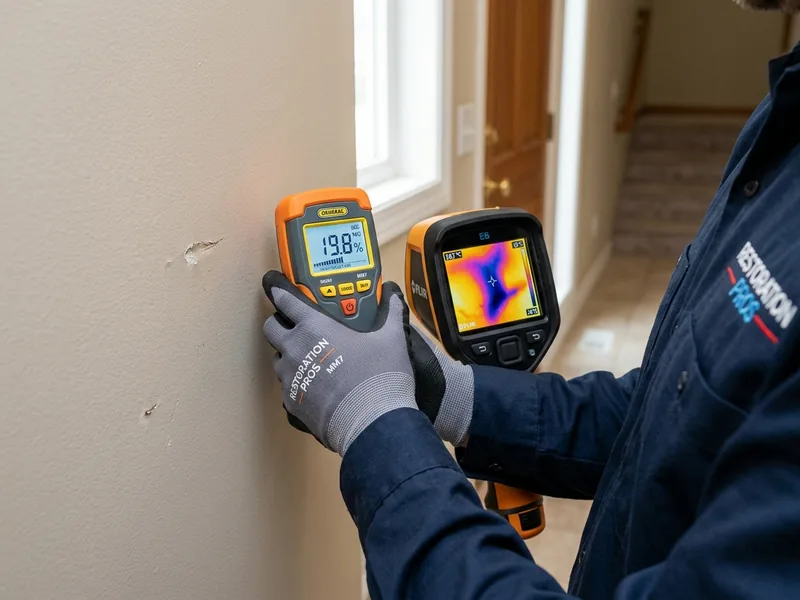
Any of these is worth checking with a moisture meter, since the wall can be wet inside while looking almost normal.
What does wall water damage recovery involve?
Wall water damage recovery works from inside the wall out, so no moisture is sealed in.
- Assess. Moisture in the wall is measured to map the damage.
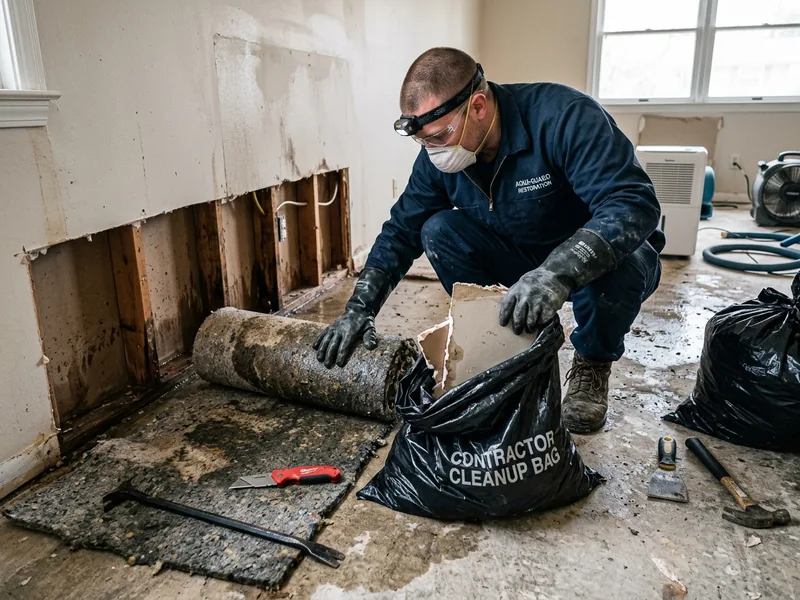
- Extract. Liquid water is removed from the cavity and base.
- Dry. The cavity, insulation area, and framing are dried to a verified level.
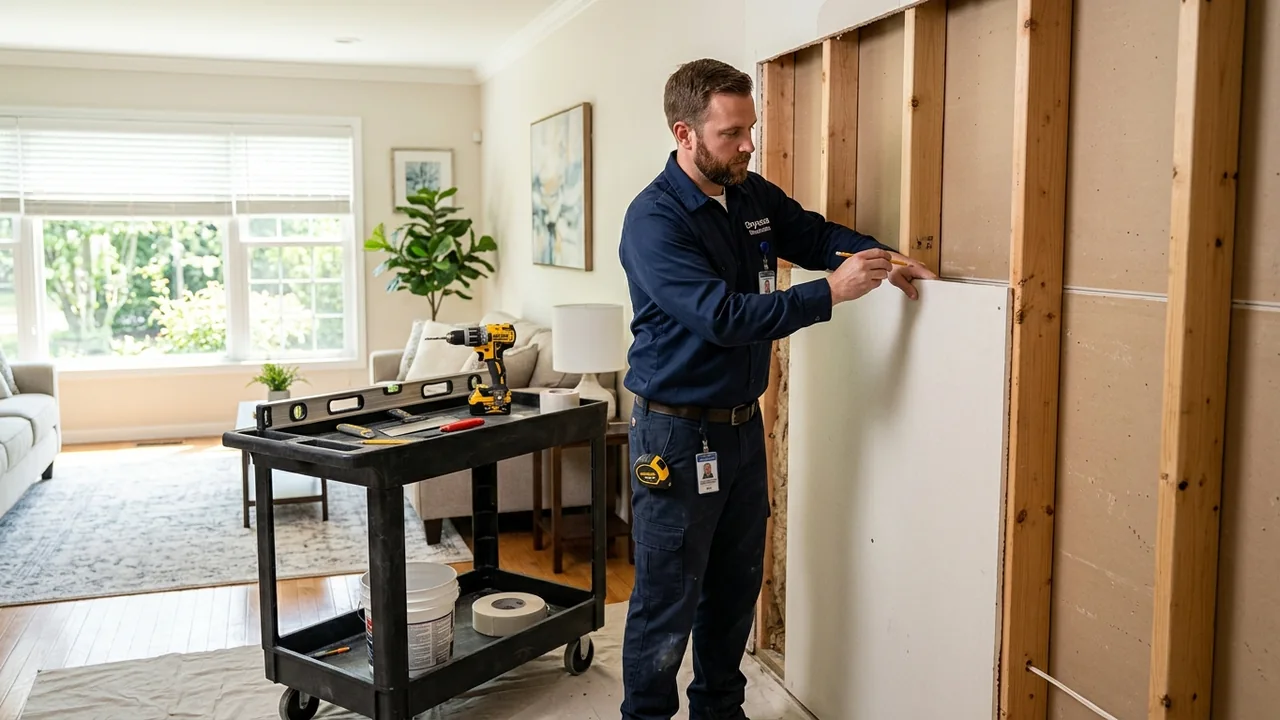
- Repair. The drywall, insulation, and finish are rebuilt to match.
Our wall damage assessment, wall drying, and wall repair pages cover these stages in detail.
The damage is often inside the wall
Wall water hides in the cavity and insulation. Call our Houston team to find and dry it.
What water damage restoration looks like