Wall Drying in Houston, TX
Wall drying removes the moisture trapped inside a wall after water gets into it, in the cavity, the insulation, and the drywall. Because walls dry slowly from the inside, they need airflow into the cavity, not just across the surface. We dry water-damaged walls for Houston homes and businesses.
What is wall drying?
Wall drying is the removal of moisture from inside a wall after water reaches it. A wall is not a solid surface; it is drywall over a hollow cavity with insulation and framing, and water can soak all of it.
Because the moisture sits inside, wall drying is about reaching the cavity, not wiping the surface. Air has to move into the wall, and the moisture has to be pulled out of the air, so the drywall, insulation, and framing all return to a dry state.
Why are walls hard to dry?
Walls are hard to dry because the wet part is enclosed and out of reach. The drywall face may feel dry within a day, while the cavity behind it stays damp far longer, with little airflow to carry the moisture away.
Insulation makes it slower still, holding water against the framing. Left to dry on its own, a wet wall can stay damp for a long time, which is exactly the condition mold needs. That is why walls get active drying rather than being left to air out.
How is a wall dried?
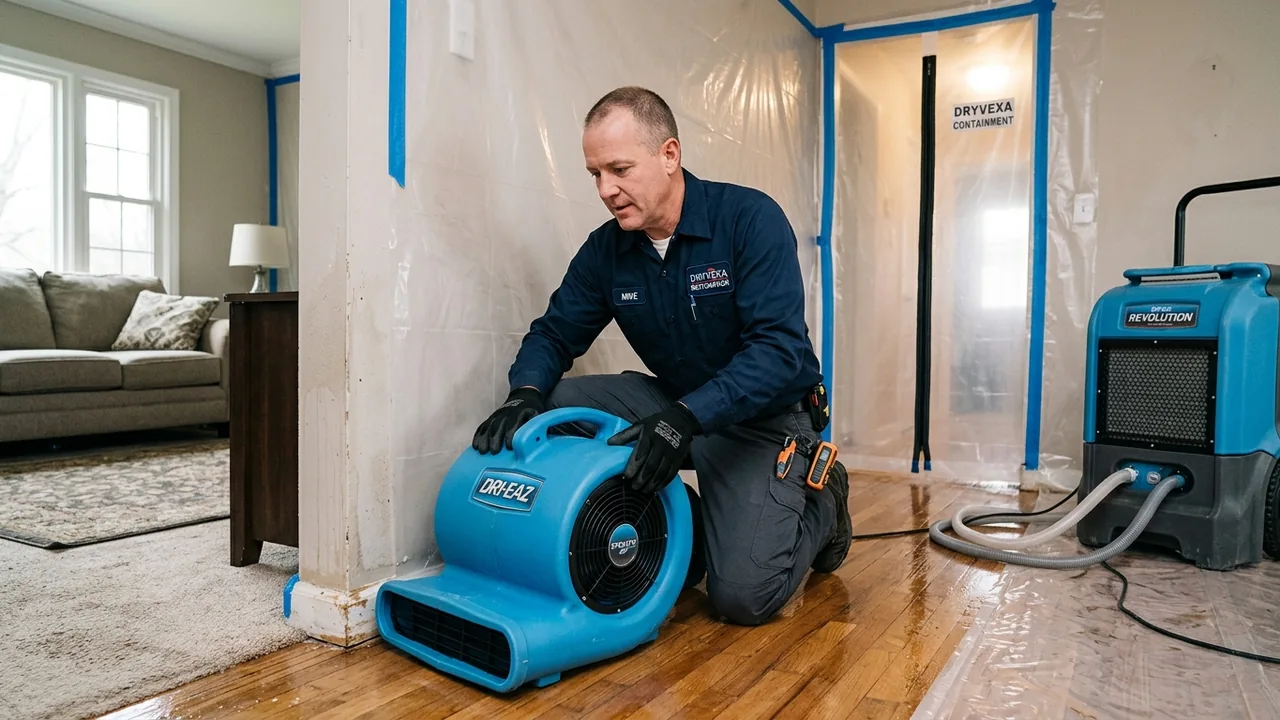
A wall is dried by getting air into the cavity and moisture out of the space, then confirming the result.
- Access the cavity. Small openings near the base let airflow reach inside.
- Move air. Air movers push air through the cavity and across the drywall.
- Dehumidify. Dehumidifiers remove the released moisture from the air.
- Remove soaked insulation. Wet insulation is taken out when it slows drying.
- Monitor. Meters track the drywall and framing until they are dry.
What happens after the wall is dry?
After the wall is verified dry, any openings made for drying and any removed material are repaired. Drying restores the wall to a dry state; repair puts it back together.
That means patching access holes, replacing insulation and drywall that had to come out, and refinishing to match. Because drying is confirmed with meters first, the wall is rebuilt over dry framing, not damp materials, which is what keeps mold from returning behind the finish.
Dry the cavity, not just the surface
A wall can feel dry while wet inside. Call our Houston team to dry it to a verified level.