Wall Damage Assessment in Houston, TX
A wall damage assessment measures the moisture hidden inside a wall and determines how far the water spread. It answers the key questions after a wall gets wet: how bad is it, and does the wall need to be opened. We assess wall water damage for Houston homes and businesses.
What is a wall damage assessment?
A wall damage assessment is the measuring of hidden moisture inside a wall to determine how bad the water damage is. It maps how wet the wall is and how far the water spread, so the recovery is based on facts rather than what the surface shows.
The assessment matters because a wall hides its damage. The visible signs, a stain or a swollen baseboard, only hint at what is inside, so measuring the moisture is what turns a guess into a clear picture of the wall's condition.
Why does a wet wall need its own assessment?
A wet wall needs its own assessment because the surface almost always understates the damage. Water gets into the cavity and insulation, where it does not show, so judging a wall by its face leads to missing hidden moisture.
Without an assessment, it is easy to dry the surface and leave a wet cavity behind, which turns into mold. It is also possible to over-react and open a wall that only got damp on the surface. The assessment prevents both, by showing exactly how wet the wall is inside.
How is moisture inside a wall measured?
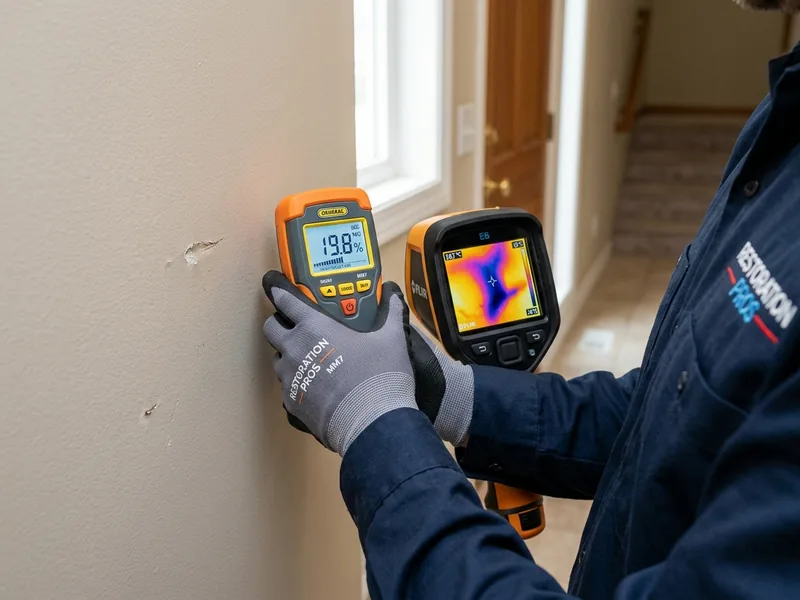
Moisture inside a wall is measured with instruments, not by touch, so nothing hidden is missed.
- Moisture meters read how much water is inside the drywall and framing.
- Infrared cameras reveal cooler, damp areas behind the surface.
- Comparison points show how the wet areas differ from dry parts of the wall.
- Mapping records how far the moisture reached.
Together these give a measured picture of the wall's condition behind the surface.
How do you decide whether to open the wall?
Whether to open the wall is decided by the readings, not by guesswork. The moisture measurements determine the right course.
If the cavity and insulation read wet, the wall usually needs to be opened so the wet material can be removed and the inside dried. If only the surface got damp and the cavity reads dry, the wall can often be dried without opening it. Basing that decision on the assessment is what keeps the work matched to the actual damage.
Measure before you open the wall
An assessment shows what the surface hides. Call our Houston team to check the wall.