Wall Water Extraction in Houston, TX
Wall water extraction is the removal of liquid water from inside a wall, from the cavity, the base, and around soaked insulation, before drying begins. Pulling that water out first means less moisture is left for the drying stage to handle. We extract water from walls for Houston homes and businesses.
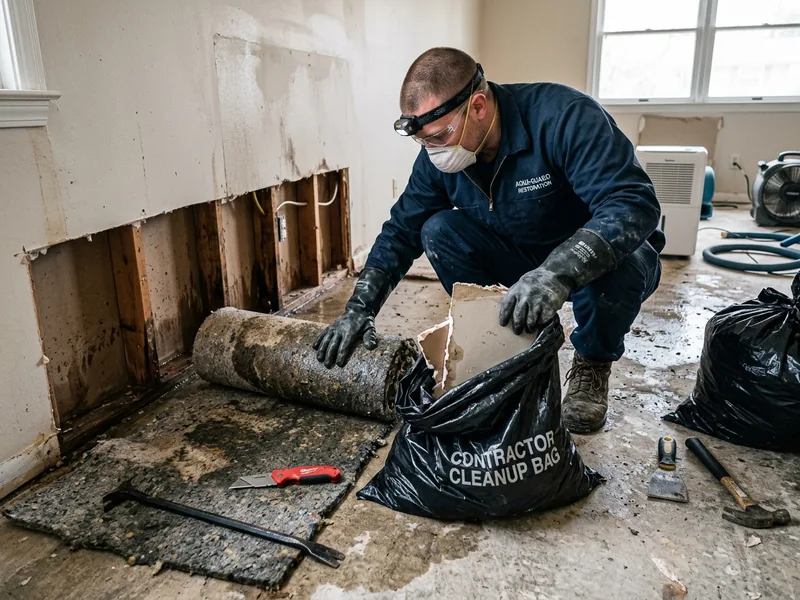
What is wall water extraction?
Wall water extraction is the removal of liquid water from inside a wall before drying starts. It targets the water pooled in the cavity and at the base, and it goes hand in hand with removing soaked insulation that holds more.
Extraction is the step that decides how much drying a wall needs. Standing water inside a cavity dries very slowly on its own, so pulling it out mechanically first means the drying stage starts with far less moisture to remove.
How is water extracted from a wall?
Water is extracted from a wall by reaching the cavity and removing the liquid, then clearing what holds it.
- Access the cavity. Small openings, often near the base, reach inside the wall.
- Extract the water. Pooled water in the cavity and at the base is pulled out.
- Remove wet insulation. Soaked insulation, which holds a lot of water, is taken out.
- Check the framing. The framing and cavity are checked before drying.
Getting the liquid water and the water-logged insulation out is the core of the extraction.
How is extraction different from wall drying?
Extraction and wall drying are two steps that handle different water. One removes the liquid; the other removes what is left inside the materials.
Wall water extraction pulls out the standing and pooled water from the cavity and base. Wall drying then uses airflow and dehumidification to remove the moisture that remains in the framing and any materials that stayed. Extraction first, drying second, is what makes a wall dry properly instead of slowly.
Why removing wet insulation matters
Removing wet insulation matters because insulation holds water against the framing and dries very slowly. Left in place, it keeps the cavity damp and works against everything the drying is trying to do.
Taking it out during extraction removes that trapped water in one step, which shortens the drying and lowers the risk of mold in the cavity. New insulation goes back in during the repair, once the wall is confirmed dry, so the wall ends up both dry and properly insulated.
Get the water out of the cavity
Extraction from the wall cavity shortens the drying. Call our Houston team to handle it.