Wall Repair in Houston, TX
Wall repair addresses the whole wall after water damage, not just the surface. Water soaks into insulation and the wall cavity, so a real repair deals with what is inside the wall as well as the finish you see. We repair water-damaged walls in Houston and refinish them to match.
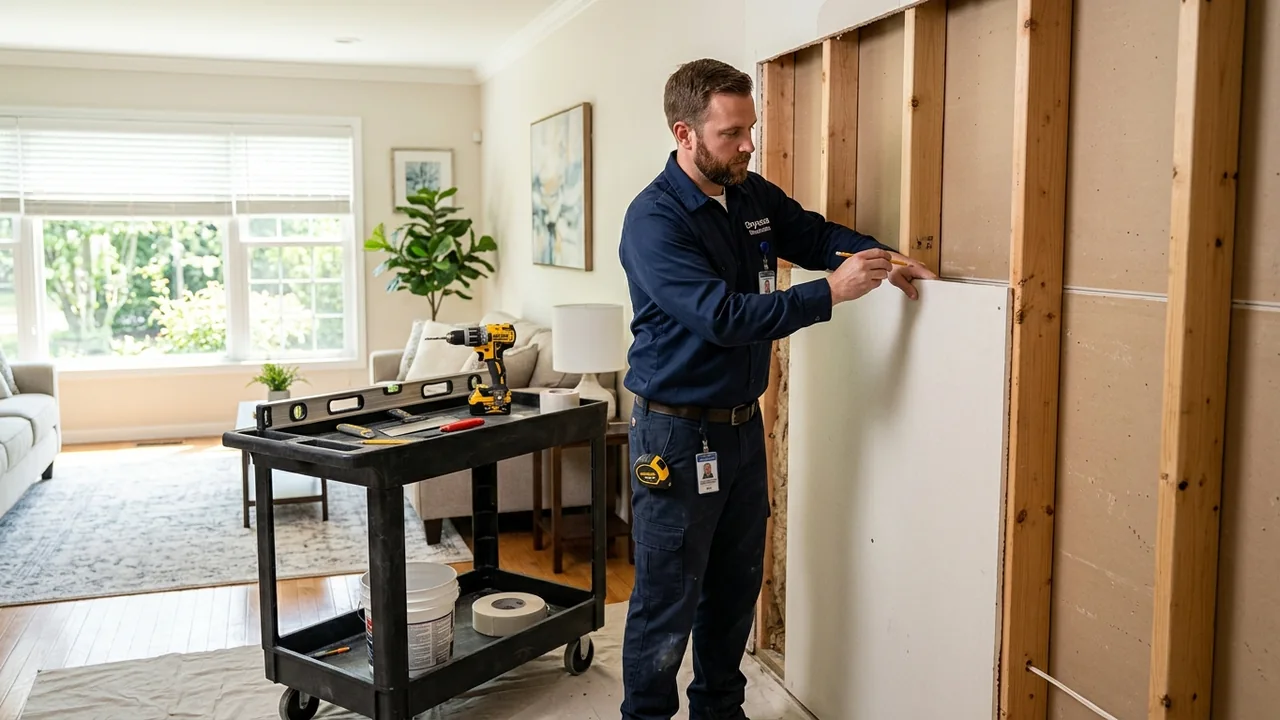
What is water damage wall repair?
Water damage wall repair is the repair of a wall as a whole system after water has gotten into it. A wall is not just its surface. Behind the paint and board sit insulation, a hollow cavity, and framing, and water can affect all of them.
Because of that, wall repair looks past the stain on the surface to what the water did inside the wall. It combines removing wet material from the cavity, addressing the framing where needed, and restoring the finish you see.
What is inside a wall that water damages?
Understanding what is inside a wall explains why surface repairs are often not enough. A typical wall holds several layers that water can reach:
- The surface, usually drywall, plaster, or paneling
- Insulation in the cavity, which soaks up and holds water
- The wall cavity, a hollow space where moist air lingers
- The framing behind it, though load-bearing framing is structural work
Water that gets past the surface settles into the insulation and cavity, where it cannot dry on its own.
Why wet insulation usually has to be removed
Wet insulation usually has to be removed because it does not recover well and it holds moisture against everything around it. Once soaked, most insulation loses much of its value and stays damp long after the surface looks dry.
That trapped dampness is a prime spot for mold, and it keeps the framing and back of the wall wet. Removing and replacing the insulation clears the moisture out of the cavity so the wall can be closed up dry.
How is a water-damaged wall repaired?
A water-damaged wall is repaired from the inside out, so no moisture is sealed in.
- Open the wall. The surface is opened where water reached the cavity.
- Remove wet material. Soaked insulation and damaged material are taken out.
- Dry and check. The cavity and framing are dried and checked with moisture meters.
- Close up. New insulation and surface material are installed.
- Refinish. The wall is textured, primed, and prepared to match the room.
Different wall types
Not every wall is standard drywall, and the repair changes with the material. Each type behaves differently when it gets wet.
Drywall is the most common and is covered in detail on our drywall repair page. Plaster walls, found in some older properties, can crack and separate from their backing when wet. Paneling can swell, warp, or delaminate. Whatever the wall is made of, the priority stays the same: remove the moisture behind it before restoring the surface.
The damage is often inside the wall
Wet insulation and cavities cause mold if they are left. Call our Houston team to repair the whole wall properly.