Framing Drying in Houston, TX
Framing drying removes moisture from the structural wood behind your walls, floors, and ceilings, meaning the studs, joists, and beams. Because framing holds the building up, drying it before it rots is about strength as well as mold. We dry water-damaged framing for Houston homes and businesses.
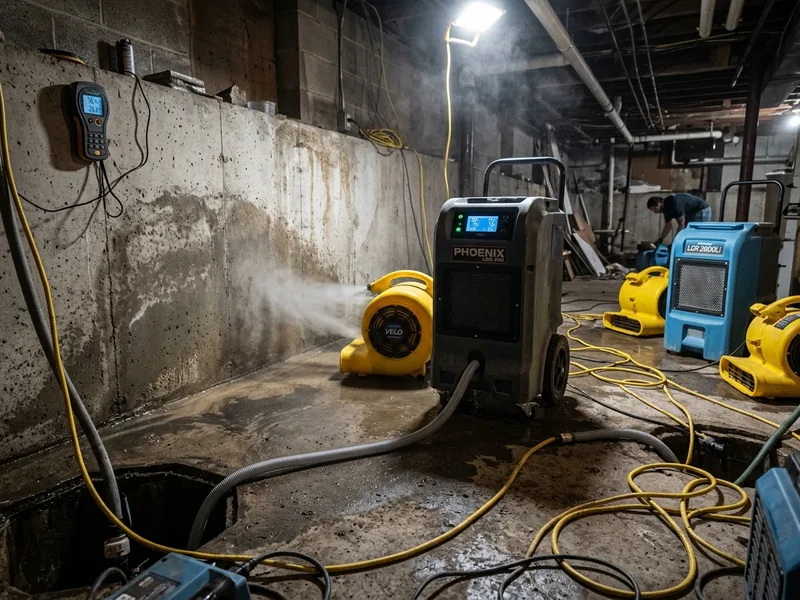
What is framing drying?
Framing drying is the removal of moisture from the structural wood inside a building, the studs, joists, and beams that hold it up. This wood sits behind the drywall and beneath the floors, and when water reaches it, it soaks in and dries slowly.
Framing drying stands apart because of what the wood does: it carries the load of the structure. Drying it is not only about preventing mold; it is about keeping the wood sound and strong, so wet framing does not become weakened framing.
Why is framing slow to dry?
Framing is slow to dry because it is solid, dense wood that releases moisture from the outside in. Unlike thin drywall, a stud or joist can hold water deep inside for a long time, even as its surface feels dry.
That is why framing is measured and dried on its own schedule. The materials around it may reach dry first, while the framing needs more time and more airflow. Judging it by the drywall would leave the wood wet, so it gets its own attention.
What are the risks of wet framing?
Wet framing carries risks that go beyond a stained wall, because it is structural. Left wet, framing can:
- Grow mold, which spreads through the cavity
- Rot, breaking down the wood over time
- Warp or twist, affecting the framing around it
- Lose strength, weakening what it supports
These are why wet framing is dried promptly and monitored, rather than left to dry behind a rebuilt wall.
What if the framing cannot be dried in time?
If framing cannot be dried in time, or has already rotted, it moves from a drying problem to a structural repair. Drying saves framing that is caught early; wood that lost strength has to be rebuilt.
Moisture readings and inspection show which it is. Framing that dries back to a normal level is kept, while framing that stayed saturated, rotted, or weakened is addressed as structural repair, which our structural restoration service covers.
Dry the framing before it rots
Wet structural wood is a strength issue, not just mold. Call our Houston team to dry it.