Subfloor Drying in Houston, TX
Subfloor drying removes moisture from the layer beneath your finished floor, where water collects and hides. A dry surface can sit on a wet subfloor, so drying this layer is what protects the floor above from warping and mold. We dry water-damaged subfloors for Houston homes and businesses.
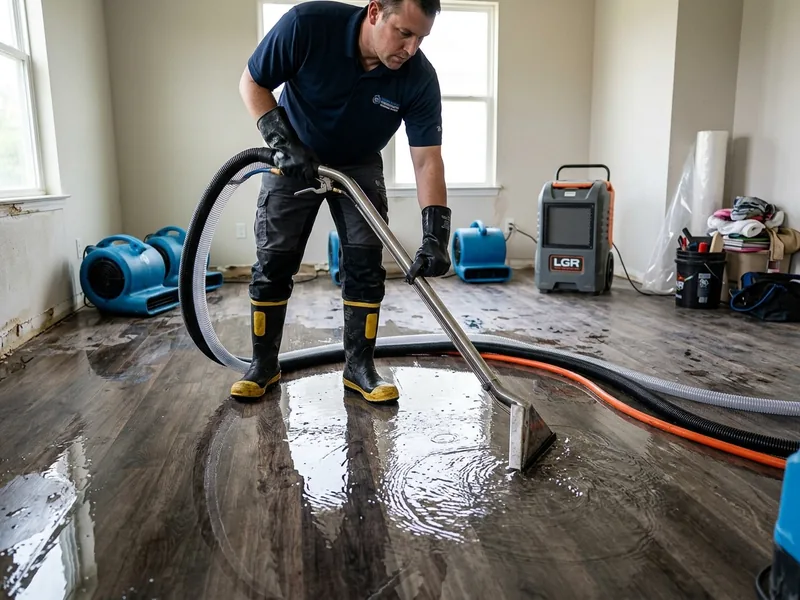
What is subfloor drying?
Subfloor drying is the removal of moisture from the layer beneath a finished floor. The subfloor is the structural base, plywood or a concrete slab, that the flooring you walk on is attached to, and it is where water tends to collect after a floor gets wet.
Subfloor drying exists because a floor can look and feel dry on top while the layer underneath is still soaked. That hidden moisture is what ruins new flooring and grows mold, so drying the subfloor is a distinct and important step.
Why does the subfloor stay wet?
The subfloor stays wet because it sits at the bottom, where water gathers and airflow is poor. Water on a floor runs off the surface and through seams, collecting in the subfloor below, then has little way to escape.
Trapped there against the flooring above, the moisture lingers long after the surface dries. This is the classic reason water damage returns: the visible floor gets dried or replaced while the wet subfloor underneath keeps causing problems.
How is a subfloor dried?
A subfloor is dried by getting airflow to it and pulling moisture out, then confirming the layer is dry.
- Reach the subfloor. Flooring is lifted or vented where it blocks airflow.
- Move air. Air movers push air across and under the subfloor.
- Dehumidify. Dehumidifiers remove the released moisture from the air.
- Monitor. Meters measure the subfloor until the readings are normal.
Why drying the subfloor protects the new floor
Drying the subfloor protects the new floor because whatever goes down next sits directly on it. A dry, sound subfloor is the foundation a lasting floor needs.
If new flooring is installed over a damp subfloor, the trapped moisture warps it, breaks down adhesives, and grows mold underneath, undoing the repair. Confirming the subfloor is dry with meters first is what makes the flooring that follows stay flat and sound.
A dry floor can hide a wet subfloor
The subfloor holds water after the surface dries. Call our Houston team to dry it properly.