Flooring Repair in Houston, TX
Flooring repair fixes or replaces floors that water has warped, swelled, or loosened. Different flooring reacts to water in different ways, and not all of it can be saved. We repair water-damaged flooring in Houston homes and businesses and match it to the surrounding floor.
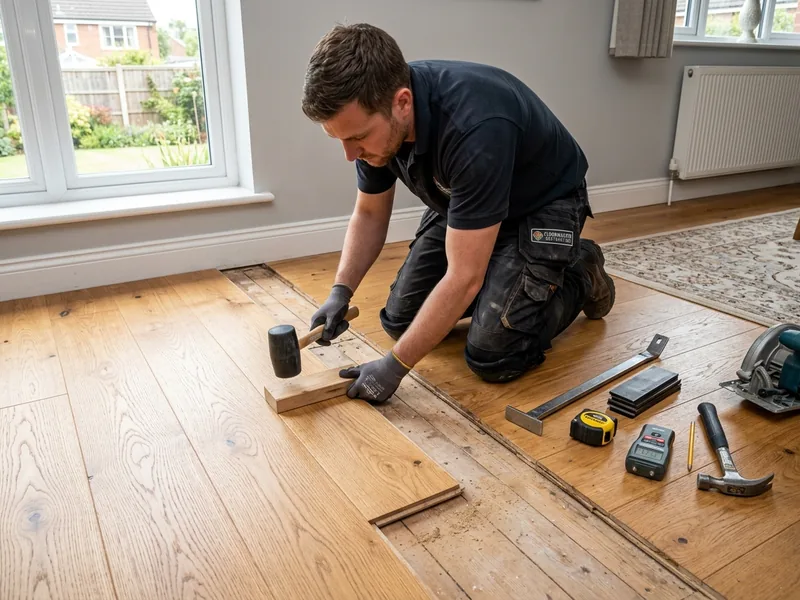
What is water damage flooring repair?
Water damage flooring repair fixes or replaces the finished floor after water has damaged it. It deals with the floor you walk on, such as laminate, vinyl, and tile, and works together with checking the subfloor underneath.
Not all flooring can be saved, and the right approach depends on the material. Repair may mean swapping out a few damaged sections or replacing a whole floor, always after making sure what is beneath it is dry and sound.
How does water damage different types of flooring?
Water affects each type of flooring differently, which is why the repair is not the same for all of them.
- Laminate swells and separates at the seams and rarely recovers.
- Vinyl and vinyl plank can lift, curl, or trap water underneath.
- Tile may stay intact, but grout can fail and tiles can loosen if the subfloor moves.
- Hardwood cups, crowns, and buckles, and needs fast, specialized water removal.
Knowing how a material reacts tells us whether it can be dried and kept or should be replaced.
Can water-damaged flooring be repaired, or replaced?
Whether flooring is repaired or replaced depends on the material, how long it was wet, and whether the water was clean. Some floors handle water far better than others.
Solid materials like tile and sometimes hardwood can often be saved when treated quickly. Laminate and wet padding under other floors usually have to be replaced. Any flooring soaked by contaminated water is generally removed for health reasons. We assess each floor and recommend the option that lasts.
How is flooring repaired?
Flooring is repaired from the subfloor up, so the finished floor sits on a dry, sound base.
- Remove damaged flooring. The affected sections of the finished floor are taken up.
- Check the subfloor. We measure moisture and inspect the subfloor beneath.
- Dry or replace the base. The subfloor is dried, or damaged sections are replaced.
- Install new flooring. Replacement flooring is fitted to match the surrounding floor.
Why the subfloor matters
The subfloor matters because it is the layer most likely to hide water after a flooring loss. Water runs off the surface and collects underneath, where it is out of sight.
If a new floor is laid over a wet subfloor, the trapped moisture can warp the new material, weaken the subfloor, and grow mold. Checking and drying the subfloor first is what makes a flooring repair last instead of failing again a few months later.
The damage may be under the floor
Buckled flooring often means a wet subfloor underneath. Call our Houston team to check and repair it properly.