Floor Drying in Houston, TX
Floor drying removes moisture from a wet finished floor, whether it is hardwood, laminate, carpet, or tile. Each material holds and releases water differently, so the drying method is matched to the floor. We dry water-damaged floors for Houston homes and businesses.
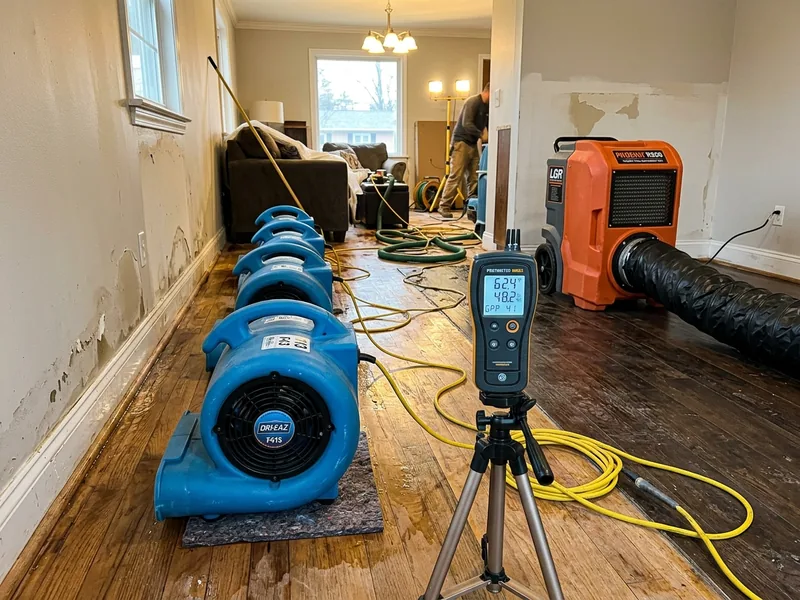
What is floor drying?
Floor drying is the removal of moisture from a wet finished floor, using the method that fits the material. It is one of the more material-specific parts of structural drying, because a hardwood floor, a carpet, and a tile floor each behave very differently when wet.
The aim is to dry the floor thoroughly enough to save it where possible, and to protect the subfloor beneath it. A floor that is dried well and quickly is far more likely to be kept than one left to dry on its own.
Why does the floor material change the drying?
The floor material changes the drying because each type holds and releases water in its own way. Matching the method to the material is what makes floor drying work.
- Hardwood absorbs water into the boards and needs specialized mat systems.
- Carpet holds water in the fibers and pad and is dried by lifting and moving air.
- Laminate swells easily and often cannot be dried and saved.
- Tile may survive, but the subfloor and grout beneath must be checked.
Using one approach for every floor is how wet floors get missed or ruined.
How is a wet floor dried?
A wet floor is dried by drawing moisture out of the material and the layer beneath, then confirming it is dry.
- Assess the material. The floor type sets the drying method.
- Apply the method. Mats for hardwood, air for carpet, and checks under hard floors.
- Reach the subfloor. The layer beneath is dried where water got through.
- Monitor. Meters track the floor and subfloor until the readings are normal.
Why the subfloor matters when drying a floor
The subfloor matters because it is where water hides after a floor gets wet. Water runs off or through the finished floor and collects in the subfloor, out of sight.
Drying the visible floor while the subfloor stays wet is a common mistake that leads to warping, cupping, and mold weeks later. Proper floor drying always includes checking and drying the subfloor, which is covered further on our subfloor drying page.
The right method for each floor
Hardwood, carpet, and tile dry differently. Call our Houston team to dry your floors properly.