Ceiling Drying in Houston, TX
Ceiling drying removes moisture from a ceiling and the space above it after water gets in from a roof leak, an upper-floor problem, or the attic. Because a wet ceiling holds water overhead, drying it quickly also reduces the risk of it sagging. We dry water-damaged ceilings for Houston homes and businesses.
What is ceiling drying?
Ceiling drying is the removal of moisture from a ceiling and the space above it after water comes in from overhead. The water usually starts with a roof leak, an upper-floor problem, or an attic issue, and it soaks the ceiling from the top down.
That top-down path is what makes ceiling drying its own task. The wet part is not just the surface you see; it is the insulation, framing, and top of the ceiling above it, so drying has to reach the space overhead as well as the room below.
Why do ceilings need special attention when drying?
Ceilings need special attention because the water sits above them and gravity keeps feeding it down. Unlike a floor, a ceiling holds water overhead, which adds a safety concern on top of the moisture problem.
A wet ceiling can hold a pocket of water and begin to sag, and a sagging, water-filled ceiling can fail. So ceiling drying starts with making sure the area is safe, then dries both the ceiling and the space above so the moisture is not left to keep soaking down.
How is a ceiling dried?
A ceiling is dried from both sides, so the moisture above does not keep feeding the surface below.
- Check safety. A sagging ceiling is assessed before anyone works under it.
- Dry above. The attic or space above is dried, and wet insulation is removed as needed.
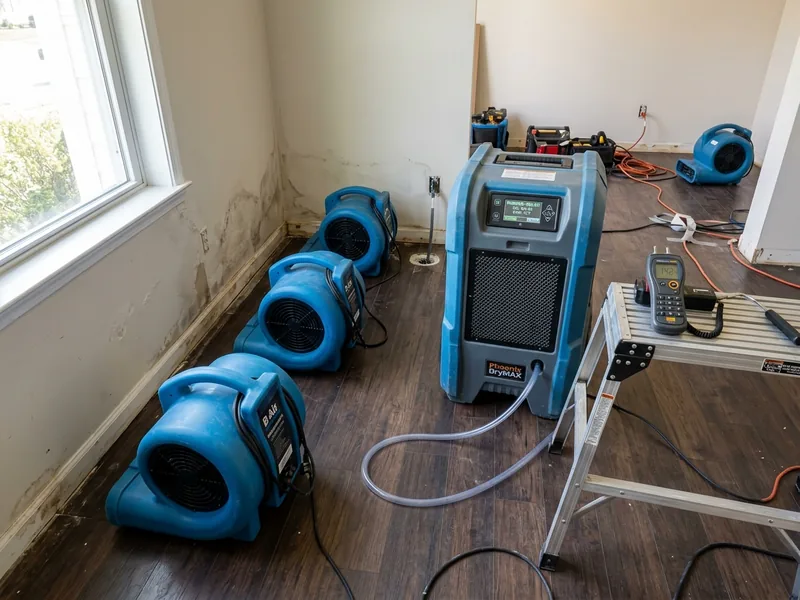
- Dry below. Air movers and dehumidifiers dry the ceiling surface.
- Monitor. Meters track the ceiling and framing until they are dry.
What happens after the ceiling is dry?
After the ceiling is verified dry, any damaged sections are repaired and refinished. Drying restores the material to a dry state; repair handles what the water ruined.
Stained, softened, or removed ceiling drywall is replaced and textured to match, and old stains are sealed so they do not bleed through new paint. Because drying is confirmed first, the repairs go over dry framing and insulation, not damp materials.
Dry both sides of the ceiling
Water above keeps a ceiling wet from the top. Call our Houston team to dry it properly.