Ceiling Repair in Houston, TX
Ceiling repair fixes ceilings damaged by water from roof leaks, upper-floor plumbing, or overflows. A stained or sagging ceiling is a sign water has collected above it, and a sagging ceiling can be dangerous. We repair water-damaged ceilings in Houston and finish them to match the room.
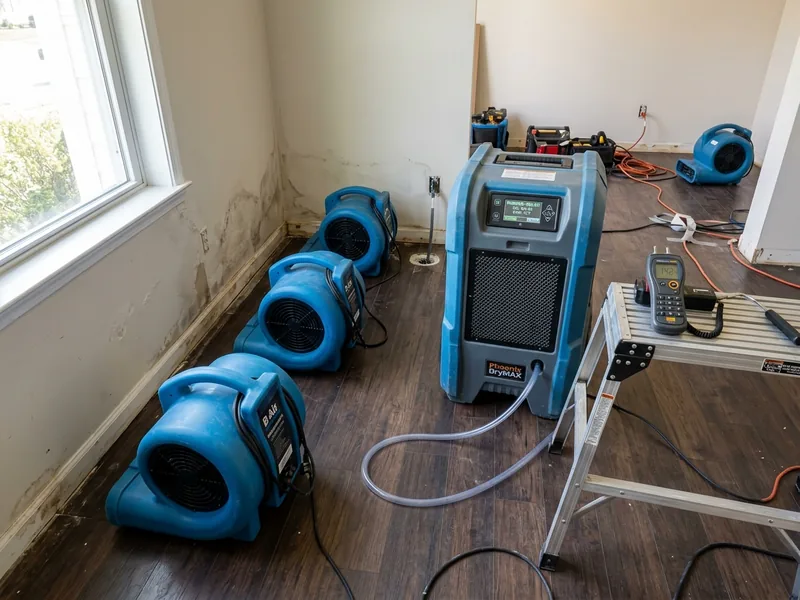
What is water damage ceiling repair?
Water damage ceiling repair fixes ceilings that water has stained, softened, or made sag. Because ceilings sit below whatever is above them, they often show the first sign of a leak from a roof, an upper floor, or an attic.
Repairing a ceiling is about more than the mark you see. The water that stained it came from somewhere, and it may have soaked the ceiling material and anything above. A proper repair deals with the source, the damaged material, and the finish.
What causes water-damaged ceilings?
Water-damaged ceilings are caused by water coming from above and collecting in the ceiling material. The most common sources are:
- Roof leaks letting rain into the attic and ceiling
- Upper-floor plumbing leaks from bathrooms or pipes overhead
- Appliance or fixture overflows on the floor above
- HVAC or condensation problems in the attic or ceiling space
Finding which of these caused the damage matters, because the ceiling cannot be repaired for good until the source is stopped.
Is a sagging ceiling dangerous?
Yes, a sagging ceiling can be dangerous and should be treated with caution. A bulge often means the ceiling is holding a pocket of water, and the added weight can cause a sudden collapse.
Keep people and pets out of the room, and do not try to poke or drain the bulge yourself, since you cannot control how much comes down. A sagging, water-filled ceiling is a situation to step back from and have handled professionally.
How is a water-damaged ceiling repaired?
A water-damaged ceiling is repaired from the source down, so the problem does not return.
- Find and stop the source. The leak above is identified and stopped or coordinated for repair.
- Remove damaged material. Stained, soft, or sagging ceiling material is taken out.
- Check above. We look for wet insulation and framing in the space above the ceiling.
- Rebuild and texture. New material is installed, finished, and textured to match.
- Prime and prep. The area is sealed and prepared so old stains do not bleed through.
Matching ceiling texture
Ceilings often have a texture that a plain patch will not match, so blending it in takes extra care. A mismatched patch can stand out even more on a ceiling than on a wall.
We match common finishes such as smooth, knockdown, and other textures, and we seal the repair so old water stains do not show through the new paint. Some older sprayed textures are difficult to match exactly, and we let you know when that is a factor.
A sagging ceiling can collapse
If your ceiling is bulging or dripping, stay clear and call our Houston team right away.