Moisture Control in Houston, TX
Moisture control is the work of measuring, drying, and monitoring the moisture left in a property after water damage. A room can look dry while materials are still soaked inside, and that hidden moisture is what leads to mold and rot. We control moisture in Houston homes and businesses until the structure is truly dry.
What is moisture control?
Moisture control is the process of measuring, drying, and monitoring the moisture that stays in a property after water damage. Removing the standing water is only part of the job. Materials keep holding water inside long after the surface looks and feels dry.
The aim of moisture control is to bring that trapped moisture back down to a normal level and keep it there. It combines finding the moisture, actively drying it out, and checking the readings until the structure is verified dry.
Why is controlling moisture so important after water damage?
Controlling moisture is important because hidden moisture, not the water you can see, is what causes long-term damage. Water that soaks into materials and stays there quietly leads to bigger problems.
Left uncontrolled, trapped moisture causes:
- Mold growth, which needs only damp materials and a day or two
- Wood rot and weakened materials over time
- Lingering odors that will not clear
- Warping and staining of floors, walls, and ceilings
This is why drying and monitoring matter as much as removing the water itself.
How is moisture measured and monitored?
Moisture is measured with instruments, not by feel, so nothing hidden is missed. Crews map where the moisture is and track it as drying goes on.
- Moisture meters read how much water is inside materials like drywall and wood.
- Humidity readings show how much moisture is in the air of the space.
- Repeat checks track whether the readings are dropping as drying continues.
These readings turn drying from a guess into something measured and confirmed.
How is moisture controlled?
Moisture is controlled by removing it from both the air and the materials, and by keeping the drying environment stable.
- Dehumidification. Dehumidifiers pull moisture out of the air so wet materials release theirs.
- Air movement. Air movers push air across surfaces to speed up drying.
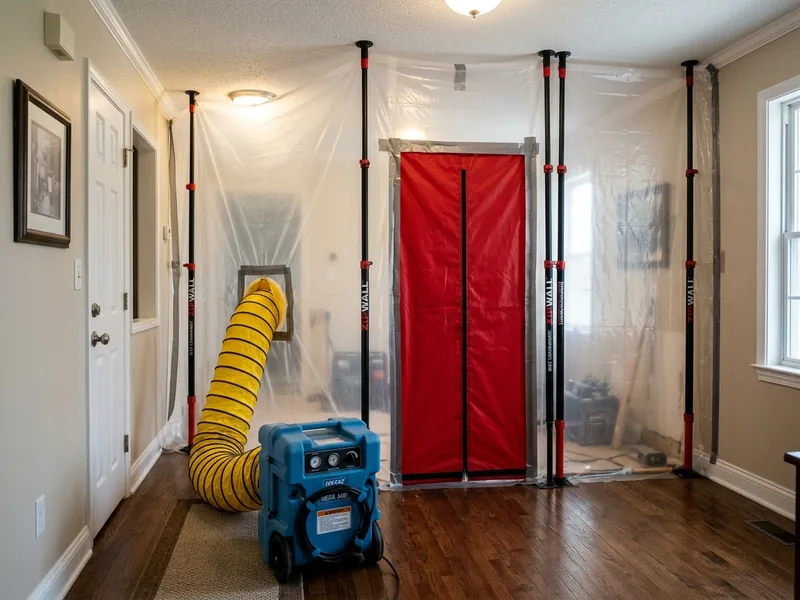
- Containing the space. Sealing the area keeps humid air in the zone being dried.
- Monitoring to verified dry. Drying continues until meter readings return to normal.
What happens if moisture is not controlled?
If moisture is not controlled, the damage keeps going after the water is gone. Trapped moisture does not simply disappear on its own, especially inside walls and under floors.
The most common result is mold, which can begin within a day or two on damp materials and spread from there. Over a longer period, uncontrolled moisture also rots wood, weakens the structure, and leaves an odor that keeps coming back. Proper moisture control is what prevents these slow, hidden failures.
Dry to the touch is not dry
Hidden moisture is what turns into mold and rot. Call our Houston team to measure and control it properly.