Air Drying in Houston, TX
Air drying uses air movers to speed how fast wet materials release their moisture. It is the airflow half of drying, working hand in hand with dehumidification, which removes that moisture from the air. We provide air drying for Houston homes and businesses.
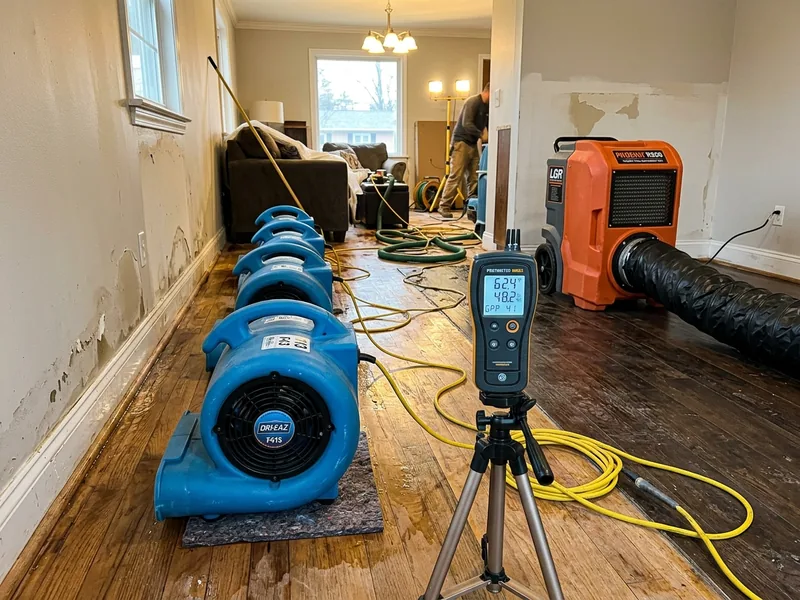
What is air drying?
Air drying is the use of air movers to speed how quickly wet materials release their moisture. It is the airflow side of drying, and it works together with dehumidification, which handles the moisture once it is in the air.
The idea is simple physics: moving air over a wet surface pulls moisture out of it faster than still air does. Air drying puts that to work with equipment aimed at the wet materials, so the drying moves along instead of stalling.
How does air drying work with dehumidification?
Air drying and dehumidification are two halves of one process, and each needs the other. One moves moisture out of materials; the other removes it from the air.
- Air movers push air across and into wet materials, speeding their release of moisture.
- Dehumidifiers pull that released moisture out of the air.
Run air movers alone and you just fill the room with humid air. Run dehumidifiers alone and materials dry slowly. Used together, they dry the structure efficiently, which is why a proper setup pairs them.
Why not just open windows?
Opening windows is not a reliable substitute for air drying, especially in Houston. In dry weather it can help a little, but in the region's frequent humidity, outdoor air can carry more moisture in than it takes out.
Controlled air drying does not depend on the weather. Air movers and dehumidifiers dry the materials no matter how humid it is outside, which is exactly the control a wet property needs in a humid climate. Windows cannot offer that consistency.
Where are air movers placed?
Air movers are placed deliberately, aimed at the wettest materials rather than just switched on in the middle of a room. Their position is part of what makes air drying effective.
Crews direct the airflow across wet surfaces and, where possible, into wall cavities and under flooring. The placement targets the areas holding the most moisture, so the airflow speeds drying where it counts. As monitoring shows how areas are drying, the air movers are repositioned to keep the drying even.
Airflow gets the moisture moving
Air movers and dehumidifiers dry together. Call our Houston team to set both up.