Basement Water Damage Cleanup in Houston, TX
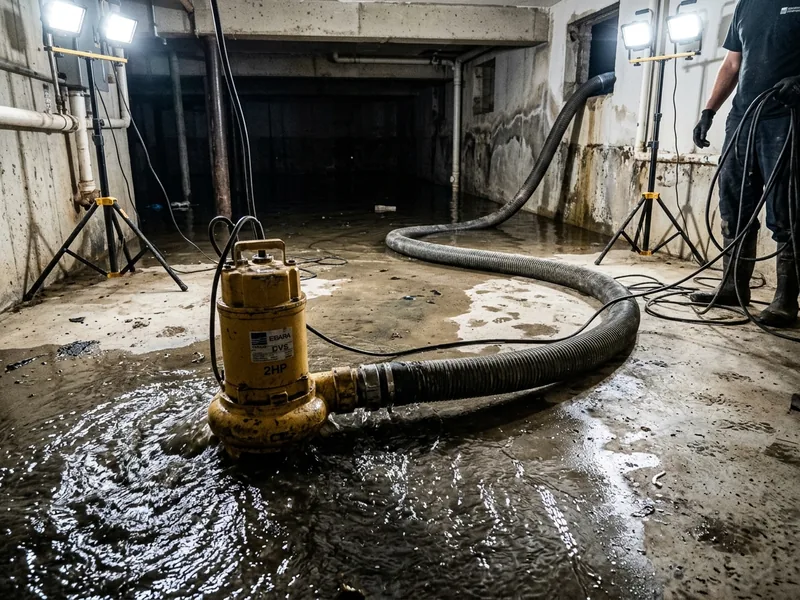
Basement water damage cleanup handles flooded basements and other below-grade spaces, where water collects at the lowest point and cannot drain on its own. Full basements are uncommon in Houston, but below-grade rooms and low areas take on water for the same reasons. We clean, dry, and restore below-grade spaces for Houston homes and businesses.
How we respond
- 1You call usDescribe the space and water, and we advise safety steps.
- 2We remove & cleanPump out the water, then clear and clean the space.
- 3Dry & restoreDry the below-grade area and repair the damage.
What is basement water damage cleanup?
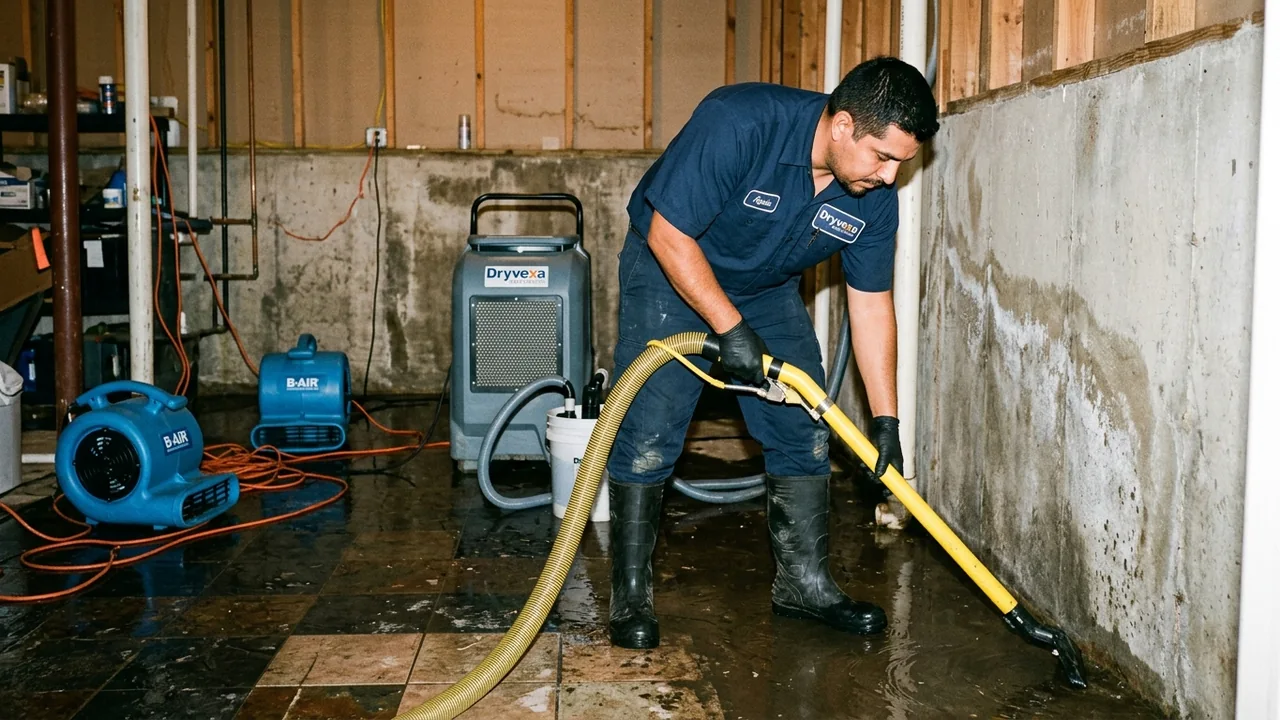
Basement water damage cleanup is the recovery of a flooded basement or other below-grade space. It covers pumping out the water, clearing and cleaning the space, drying it, and repairing the damage the water caused.
The defining feature is being below ground. Water flows to the lowest point and collects there, and it cannot drain away on its own, so it has to be pumped out. Below-grade spaces also stay humid and dry slowly, which shapes the whole cleanup.
Why are below-grade spaces prone to water problems?
Below-grade spaces are prone to water because they sit at the lowest point, where water naturally flows and gathers. Once water reaches a space below ground level, it stays until it is removed.
Common reasons include heavy rain overwhelming drainage, poor grading directing water toward the foundation, and groundwater seeping through walls or floors. In the Houston area, full basements are uncommon because homes are built on slabs, but below-grade rooms, crawl spaces, and low areas take on water for these same reasons.
Why is basement water damage hard to dry?
Basement water damage is hard to dry because a below-grade space works against natural drying. There is little airflow, the humidity stays high, and the water sits against masonry foundation walls and floors that hold moisture.
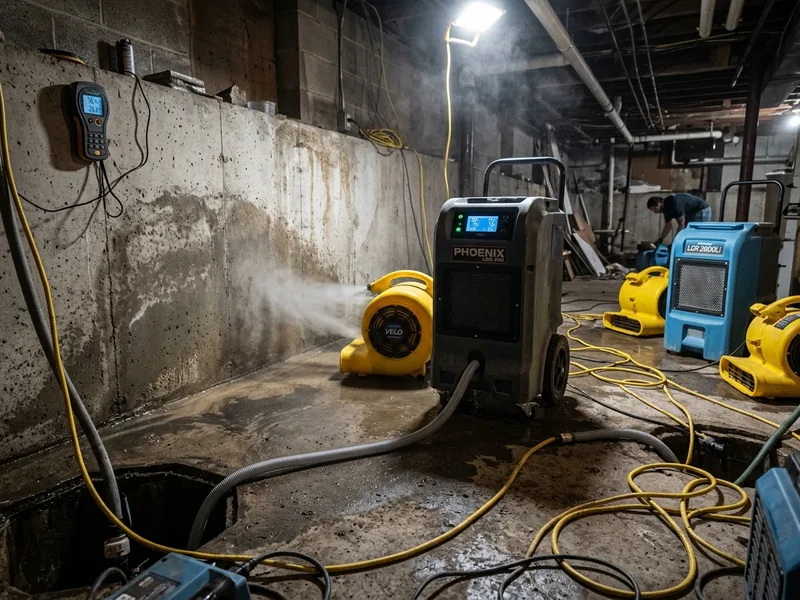
Left to dry on its own, a below-grade space can stay damp for a long time, which invites mold and odor. That is why basements and below-grade areas usually need strong dehumidification and directed airflow, rather than being left to air out.
What does basement water damage cleanup involve?
Basement water damage cleanup follows a below-grade sequence from pumping to repair.
- Safety check. Crews confirm it is safe, checking for electrical hazards in the water.
- Pump and remove. The pooled water is pumped and extracted from the space.
- Clean. Debris, mud, and contamination are cleared, with disinfection if needed.
- Dry. Strong dehumidification and airflow dry the space to a verified level.
- Restore. Damaged materials are repaired.
How can below-grade water problems be reduced?
Below-grade water problems can be reduced by managing where water goes around and into the space. Since the space cannot drain itself, the aim is to keep water from reaching it and to move out any that does.
Keeping gutters clear, grading soil to slope away from the foundation, and maintaining drainage all help keep water out. Where water still gets in, a working pump system moves it out. Addressing the cause is what keeps the next heavy rain from refilling the space, which our water damage prevention guidance covers further.
Below-grade water will not drain out
Water in a basement or low space has to be pumped and dried. Call our Houston team to handle it.
What water damage restoration looks like