Basement Drying in Houston, TX
Basement drying removes the moisture left in a below-grade space after the water is out and it is cleaned. Below-grade areas trap humidity and dry slowly, so they need strong dehumidification and airflow, not just time. We dry basements and below-grade spaces for Houston homes and businesses.
What is basement drying?
Basement drying is the removal of moisture from a below-grade space after the water is pumped out and the area is cleaned. It is the stage that takes a damp, humid basement back to a normal, dry state.
Below-grade spaces make drying harder than an open room does. Humidity gets trapped, airflow is poor, and the water soaks into masonry walls and floors that release it slowly. Basement drying is built to overcome those conditions rather than wait them out.
Why are basements hard to dry?
Basements are hard to dry because everything about a below-grade space slows evaporation. The factors work together:
- Trapped humidity with little natural airflow
- Masonry walls and floors that hold moisture
- Enclosed layout that keeps damp air in place
- Groundwater nearby that keeps conditions moist
Left alone, a basement can stay damp long enough for mold and odor to set in, which is why active drying is needed.
How is a basement dried?
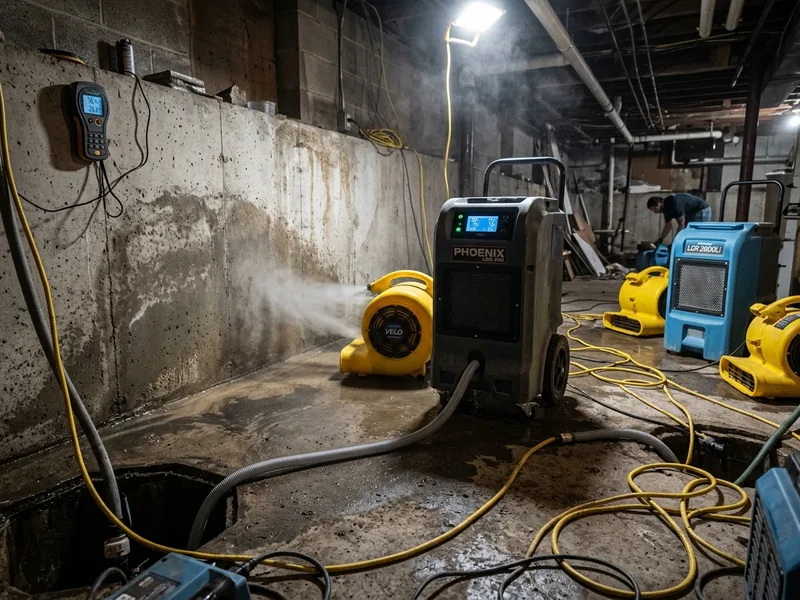
A basement is dried with strong dehumidification and directed airflow, then confirmed with measurements.
- Dehumidify. Higher-capacity dehumidifiers pull moisture from the humid air.
- Move air. Air movers push air across walls, floors, and materials.
- Target the materials. Masonry and any remaining materials are dried directly.
- Monitor. Meters track moisture until the readings return to normal.
Because the space fights back with humidity, the equipment is sized to the job rather than left underpowered.
Why household drying often is not enough
Household drying often is not enough for a basement because a small dehumidifier cannot keep up with a below-grade space after a water event. It may manage everyday dampness, but not the moisture a flood leaves in the air and materials.
Recovery drying uses higher-capacity equipment matched to the space, which is what actually pulls the moisture down to a safe level. Confirming that with meters, rather than by how the air feels, is what makes sure the basement is truly dry before anything is restored.
Below-grade humidity needs real drying
A basement will not dry on its own. Call our Houston team to dry it to a verified level.