Basement Water Removal in Houston, TX
Basement water removal is the pumping-out of water that has collected in a basement or other below-grade space. Water flows to the lowest point and pools there, where it cannot drain out on its own. We remove water from basements and below-grade areas in Houston homes and businesses.
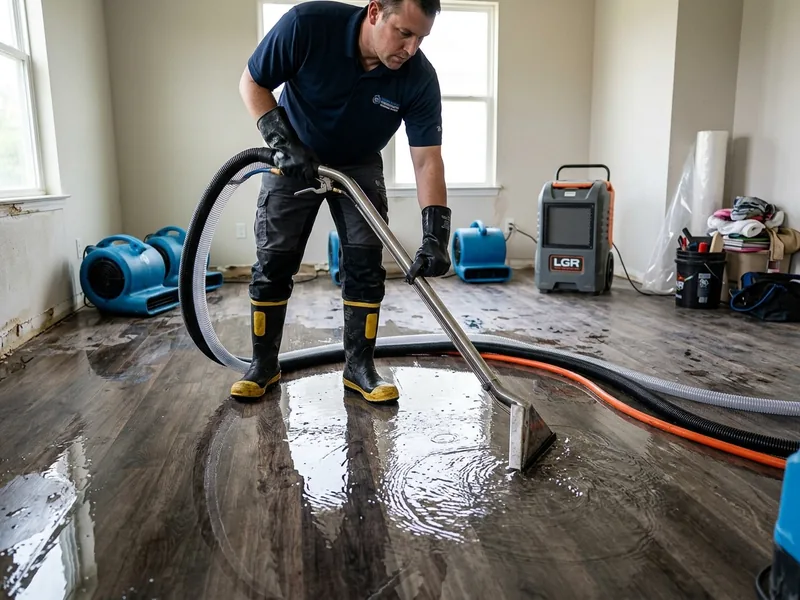
What is basement water removal?
Basement water removal is the pumping-out of water that has collected in a basement or another below-grade space. Because these areas sit below ground level, water that gets in has nowhere to drain and pools at the lowest point.
That trapped water will not leave on its own. It has to be pumped out, and then the walls and floor need to be checked for moisture that has soaked in. Removing it promptly protects the space and the structure around it.
Why does water collect in basements and below-grade spaces?
Water collects in below-grade spaces because they are the lowest point, and water always flows downhill. Once it reaches a space below ground level, it stays there until it is removed.
Common reasons water gets in include:
- Heavy rain overwhelming drains and gutters
- Poor drainage around the foundation directing water inward
- Groundwater seeping through walls or floors
- Plumbing or appliance failures on a lower level
In the Houston area, full basements are uncommon because most homes are built on slabs, but below-grade rooms, crawl spaces, and low-lying areas take on water for these same reasons.
How is water removed from a basement?
Water is removed from a basement from the bottom up, starting with the deepest water and working toward a dry floor.
- Safety check. We confirm it is safe to enter and check for electrical hazards before starting.
- Pump out the bulk. Submersible pumps move large volumes of water out of the space.
- Extract the rest. Extractors pull the remaining water off the floor.
- Check for soaked-in moisture. We measure moisture in the walls and floor, since below-grade materials hold water.
Why below-grade water needs prompt removal
Below-grade water needs prompt removal because it sits against the structure and cannot evaporate or drain away like water in an open room. The longer it stays, the more it soaks into walls, floors, and anything stored down there.
Standing water below grade also raises the humidity of the whole space, which encourages mold on damp surfaces and stored items. Pumping it out quickly limits that damage and starts the space drying.
Is standing water in a basement dangerous?
Standing water in a basement can be dangerous, so caution comes first. Water can reach submerged outlets, wiring, and equipment, creating a serious electrical hazard, and below-grade water may be contaminated by groundwater or backups.
Do not enter a flooded basement while the power to that area is on, and stay out if the water is deep or its source is unknown. When there is any doubt, let a professional remove the water safely rather than wading in.
Below-grade water needs pumping out
Water that collects below ground level will not drain by itself. Call our Houston team to have it removed safely.