Damage Containment in Houston, TX
Damage containment is the work of sealing off a water-damaged area so the problem does not spread to the rest of the property. Water, humidity, and contamination all move outward if nothing stops them. We contain water-damaged areas in Houston homes and businesses to protect the spaces that are still clean and dry.
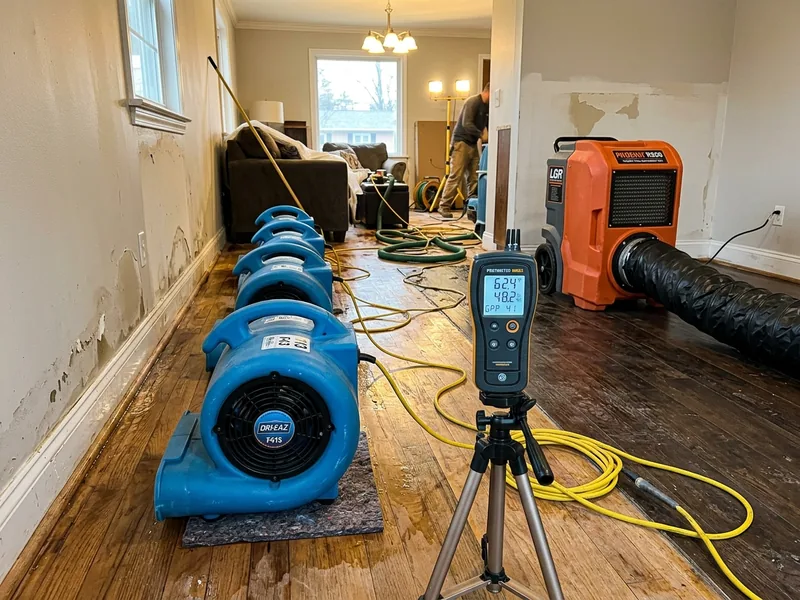
What is damage containment?
Damage containment is the practice of sealing off a water-damaged area so the damage stays in one place. Instead of letting a problem creep through the building, crews build a boundary around it and work inside that zone.
Containment matters because water damage does not stay put on its own. Moist air drifts into dry rooms, contamination tracks from space to space, and humidity raises the mold risk everywhere it reaches. A contained area keeps all of that inside the work zone.
Why contain a water-damaged area?
Containing a water-damaged area protects the parts of the property that are still clean and dry. Without a boundary, the loss quietly grows beyond the room where it started.
Containment does several things at once:
- Stops moist air from carrying humidity into dry rooms
- Keeps contamination from spreading on foot traffic and airflow
- Focuses the drying, so equipment works on one sealed space
- Protects clean areas and the belongings in them
How is a water-damaged area contained?
A water-damaged area is contained by building physical barriers and closing off the ways air and water travel between spaces.
- Barriers. Heavy plastic sheeting is used to wall off the affected area from the rest of the building.
- Sealing openings. Doorways, vents, and gaps are closed so air does not carry moisture out.
- Air management. For contaminated work, air is controlled and filtered so it does not push spores into clean areas.
- A defined work zone. Everything, from equipment to foot traffic, stays inside the sealed space.
When is containment most important?
Containment is most important when the water is contaminated, the mold risk is high, or people are still using the building. In these cases, stopping the spread is as important as the drying itself.
It is especially valuable in a home where families need to keep living in the unaffected rooms, and in a business that needs to stay open while one area is worked on. Contaminated water, such as sewage or floodwater, also makes containment essential to keep germs out of clean spaces.
What does containment protect?
Containment protects the people, spaces, and belongings that the water has not reached. By keeping the damage in one zone, it limits how much of the property is affected.
Specifically, it protects clean and dry rooms from humidity and contamination, keeps stored belongings and furniture in those rooms safe, and helps keep moist, spore-carrying air out of the building's air paths. The result is a smaller, more controlled loss and a safer property during the work.
Keep the damage in one place
Containment stops water, humidity, and contamination from reaching clean rooms. Call our Houston team to seal off the area.