Rapid Water Mitigation in Houston, TX
Rapid water mitigation is fast-acting work that keeps a water loss from escalating in the hours right after it happens. The sooner the source is stopped, the water is removed, and the area is stabilized, the less the damage spreads. We provide rapid water mitigation for Houston homes and businesses.
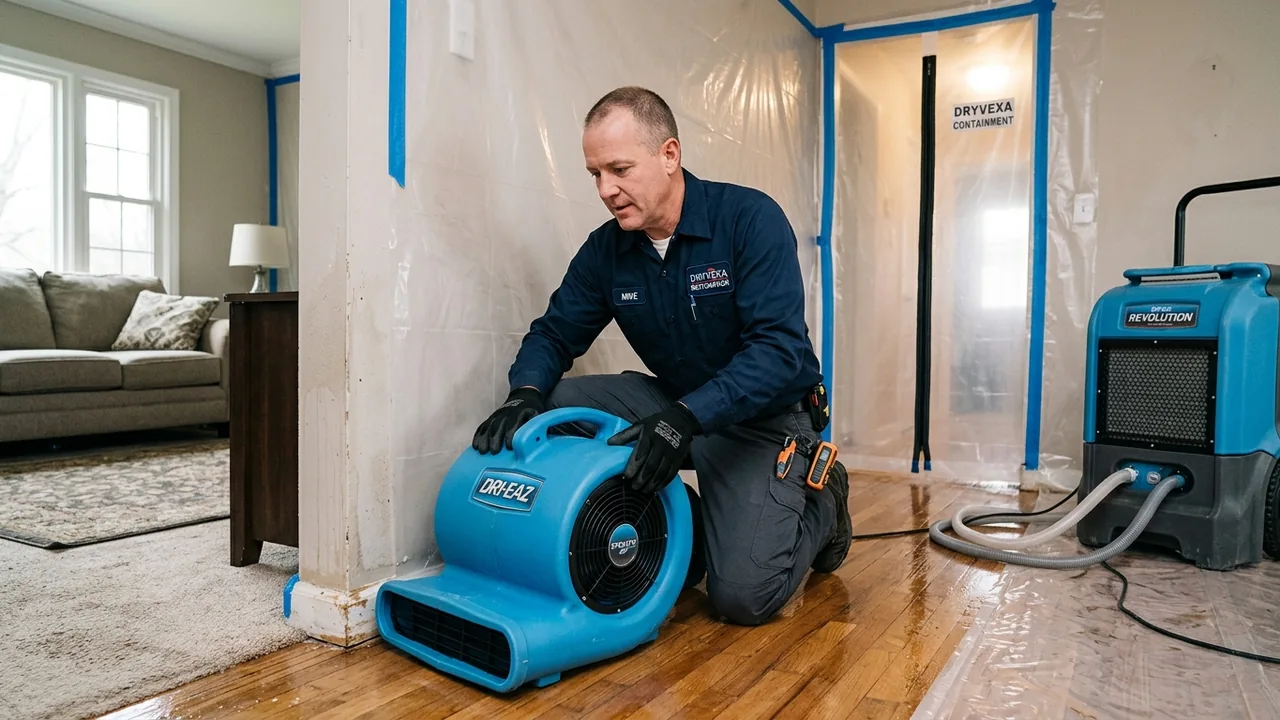
What is rapid water mitigation?
Rapid water mitigation is fast-acting work that stops a water loss from getting worse in the hours right after it starts. It is the stabilizing stage that comes before cleanup and repairs, focused on limiting how far the damage spreads.
The idea is simple: water damage grows on its own until something stops it. Rapid mitigation is that something. By stopping the source, removing the water, and drying the area quickly, it keeps a manageable problem from turning into a major loss.
Why do the first hours matter?
The first hours matter because water damage spreads the fastest early on. How you use that early window has a large effect on the final outcome.
In those first hours, water moves across floors and soaks into walls, flooring, and belongings. Materials begin to swell and stain, and the conditions that lead to mold start to form. Acting during this window is the best chance to keep the damage small.
What are the first steps of mitigation?
Rapid mitigation follows a fast, ordered set of steps to bring the situation under control.
- Stop the source. Where safe, the water supply or source is shut off so no more water enters.
- Check for hazards. Crews confirm it is safe, watching for electrical dangers near water.
- Remove standing water. Pumps and extractors clear the water that is already there.
- Contain the area. The affected space is sealed off to keep water and humidity from spreading.
- Begin drying. Air movers and dehumidifiers start pulling moisture from the structure.
What should you do before help arrives?
Before help arrives, stay safe and take a few simple steps to limit the damage. Your safety comes first, so do not take risks around water and electricity.
If you can do so safely, shut off the water at its source and switch off power to the affected area at the breaker. Move small valuables and electronics out of the water, and lift what you can off wet floors. Do not enter deep or contaminated water, and do not use a household vacuum on it.
Why acting quickly limits the total loss
Acting quickly limits the total loss because water damage compounds. A little water left to spread becomes a lot of ruined material and, eventually, mold.
Stopping the source and drying materials quickly cuts off that chain of secondary damage. That usually means fewer materials to replace, a shorter recovery, and a lower chance of mold problems later. Rapid mitigation is about getting ahead of the damage instead of chasing it.
The first hours matter most
Water damage gets worse the longer it sits. Call our Houston team to stop the source and stabilize your property.