Ceiling Water Removal in Houston, TX
Ceiling water removal is the safe clearing of water that has collected in or above a ceiling, including the pocket behind a bulging, sagging ceiling. Because that water is overhead and heavy, removing it safely is the priority before the ceiling can be dried or repaired. We remove ceiling water for Houston homes and businesses.
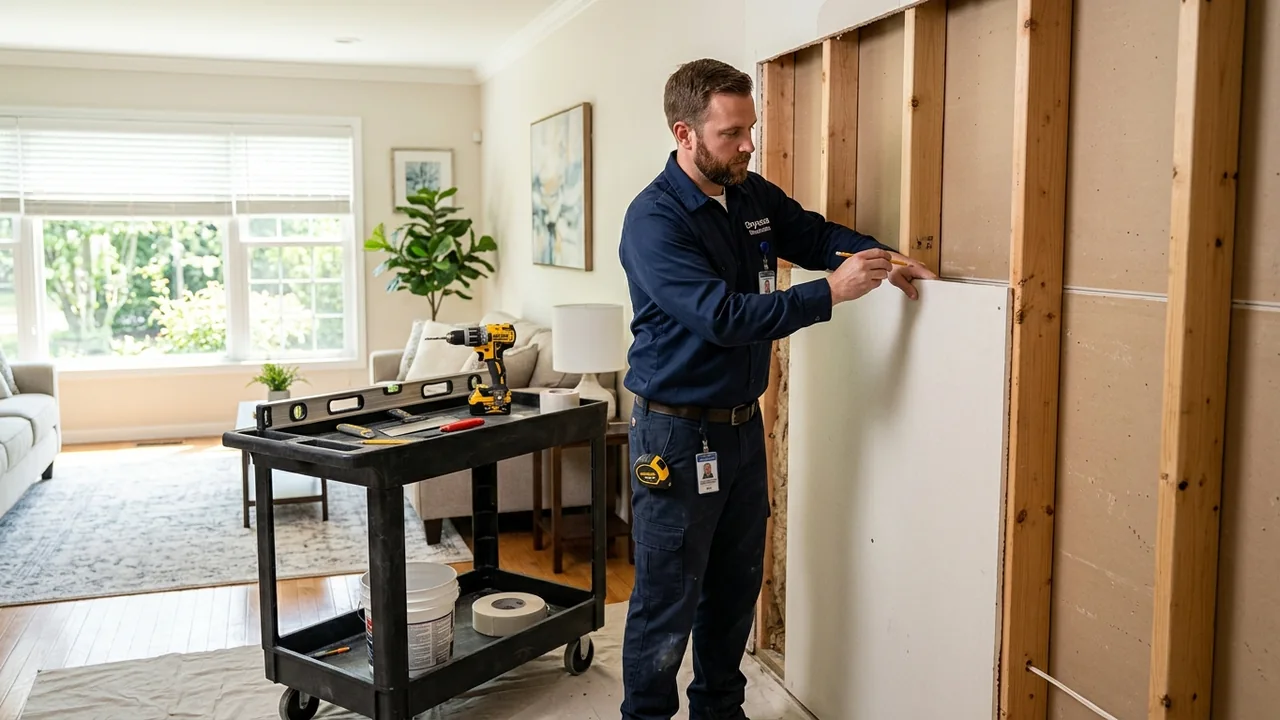
What is ceiling water removal?
Ceiling water removal is the safe clearing of water that has collected in or above a ceiling. Most urgently, it means dealing with the pocket of water behind a bulging, sagging ceiling, which is both a source of damage and a safety hazard.
Unlike water on a floor, ceiling water is overhead and heavy, and it is often trapped behind drywall that is straining to hold it. Removing it safely, in a controlled way rather than letting it fall, is the first priority before any drying or repair.
Why is a water-filled ceiling a safety concern?
A water-filled ceiling is a safety concern because water is heavy and the ceiling is above you. A bulge means the drywall is holding a pocket of water it was never meant to carry.
That load can bring the ceiling down suddenly, and it can come with a rush of water and debris. This is why a bulging ceiling should be treated as a hazard: people kept clear, and the water released deliberately rather than by poking at it and losing control of how much comes down.
How is water removed from a ceiling safely?
Water is removed from a ceiling in a controlled way, protecting the area below first.
- Clear and protect below. The room under the bulge is cleared and covered.
- Release at a low point. The trapped water is let out deliberately at a chosen spot.
- Catch the water. It is captured as it comes out, rather than left to fall freely.
- Remove water above. Water in the space above the ceiling is cleared too.
Doing it this way turns a potential collapse into a managed release.
What happens after the water is removed?
After the water is removed, the ceiling and the space above are dried, the source is stopped, and the ceiling is repaired. Removing the water addresses the immediate hazard; it does not finish the job.
The source above must be stopped or the ceiling refills, and the ceiling and the area above it are dried to a verified level. Then the damaged ceiling is repaired. Our ceiling drying and ceiling repair pages cover those next stages.
Do not poke a bulging ceiling
A water-filled ceiling can come down hard. Stay clear and call our Houston team to release it safely.