Ceiling Water Damage in Houston, TX
Ceiling water damage shows up as stains, sagging, or drips when water gets in from above, through a roof, an upper floor, or the attic. Because a ceiling holds water overhead, a wet one can be a safety concern as well as a repair. We handle ceiling water damage for Houston homes and businesses.
How we respond
- 1You call usDescribe the ceiling and we advise safety steps to take.
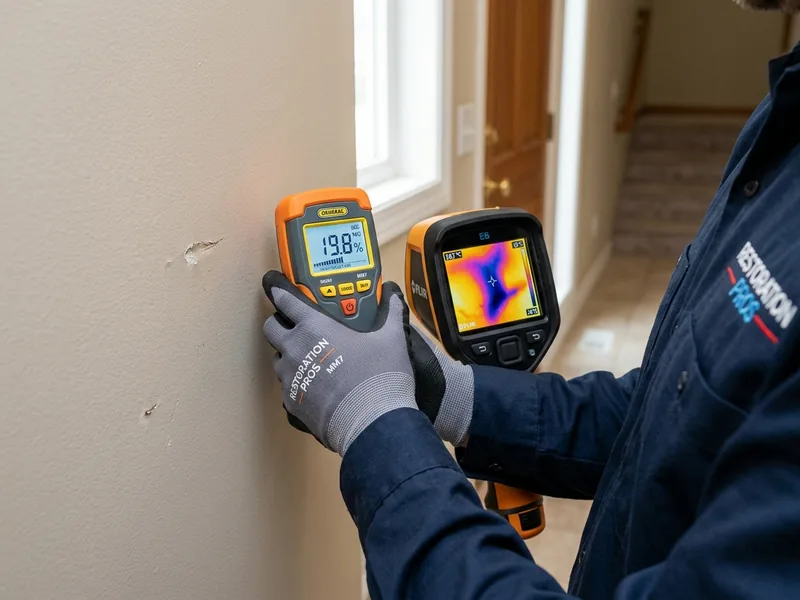
- 2We find the sourceTrace the water above, then remove it and dry the space.
- 3Repair & finishRepair the ceiling and treat stains to match.
What is ceiling water damage?
Ceiling water damage is the harm water does when it reaches a ceiling from above and collects there. It shows up as stains, sagging, soft drywall, or active drips, and it always points to a source overhead.
Ceilings are distinct among water-damaged surfaces because they hold water over your head. A wet ceiling is not just a repair; a sagging, water-filled one can be a safety hazard, so ceiling water damage combines finding and stopping the source above with handling the ceiling itself safely.
Where does ceiling water come from?
Ceiling water comes from above, which is why the damage and the source are often in different places. Common sources in Houston homes and businesses include:
- Roof leaks letting rain into the attic and ceiling
- Upper-floor plumbing leaks and overflows
- Attic HVAC or condensation dripping down
- An overflow from a bathroom or appliance above
Because water travels along framing before it drips through, tracing it back to the real source is part of the job.
Is a sagging ceiling dangerous?
Yes, a sagging ceiling can be dangerous and should be treated with caution. A bulge usually means the ceiling is holding a pocket of water, and the weight can cause a sudden collapse.
Keep people and pets out of the room, and do not try to poke or drain the bulge yourself, since you cannot control how much water and material come down. A sagging, water-filled ceiling is a situation to step back from and have handled professionally.
What does ceiling water damage recovery involve?
Ceiling water damage recovery works from the source down, so the ceiling is not just patched over a continuing leak.
- Find and stop the source. The leak above is identified and addressed.
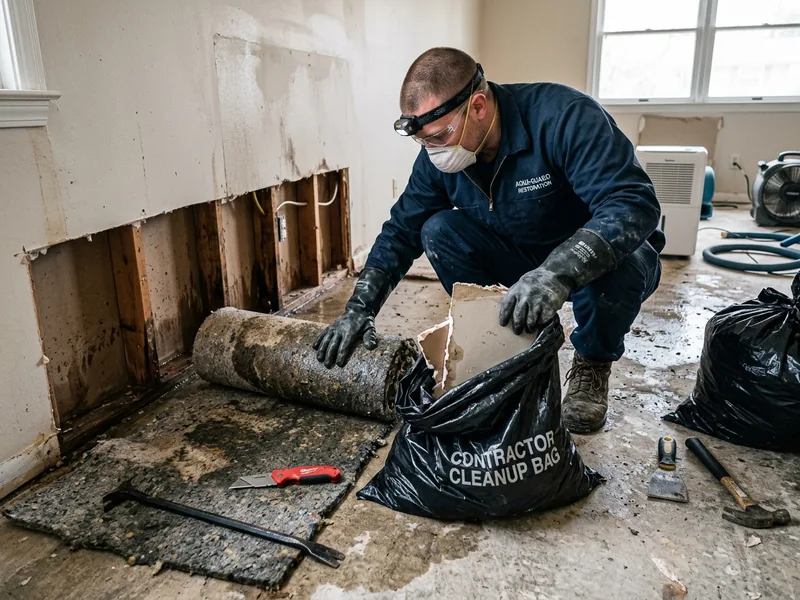
- Remove the water. Water in the ceiling and the space above is cleared.
- Dry the space. The ceiling and the area above it are dried to a verified level.
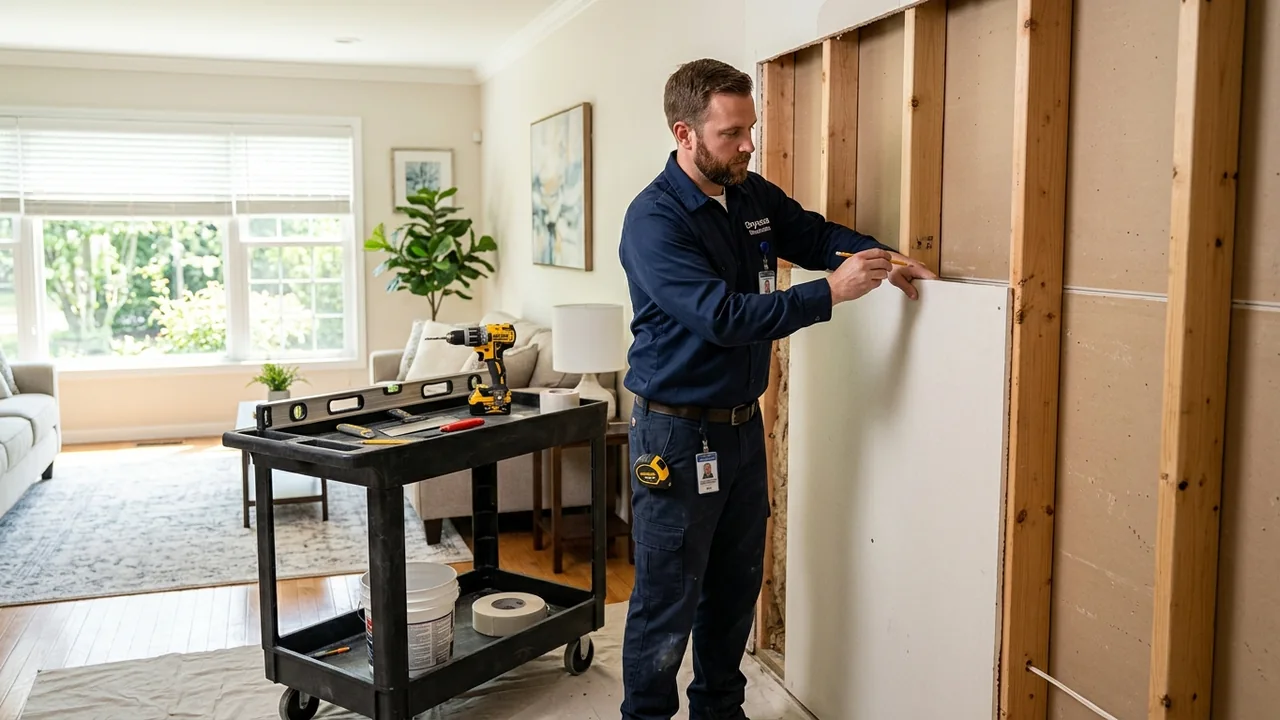
- Repair or treat. Damaged material is repaired; a sound but stained ceiling is treated.
What are the signs of ceiling water damage?
The signs of ceiling water damage usually appear as changes to the ceiling surface. Watch for:
- Brown or yellow stains that spread over time
- Sagging or bulging areas holding water
- Soft or crumbling ceiling drywall
- Active drips or water marks after rain
- Cracks or peeling paint near the ceiling
Any of these means water has reached the ceiling, and the source above should be found before the ceiling is repaired.
A ceiling holds water overhead
A sagging ceiling can be dangerous. Stay clear and call our Houston team to handle it.
What water damage restoration looks like