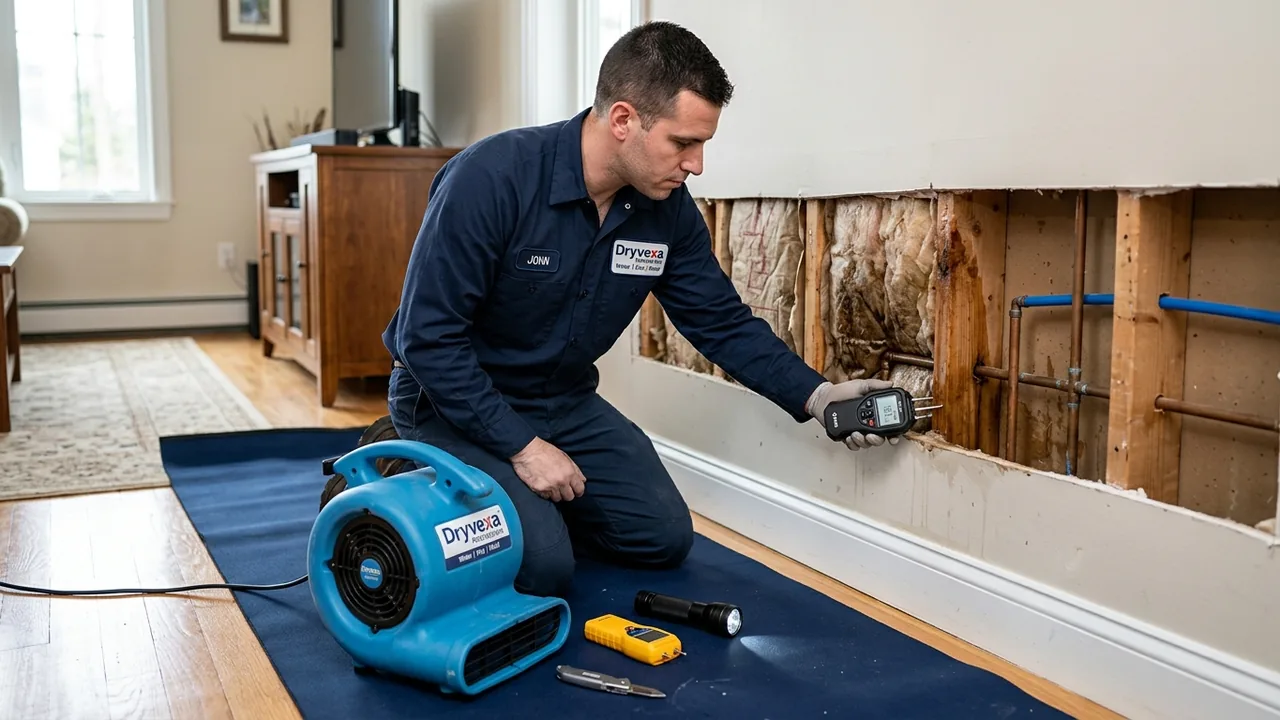
A burst pipe can release hundreds of gallons of water in a short time, so the first job is simple: stop the water, stay safe around electricity, and start removing water as fast as you can. What you do in the first 24 hours has the biggest effect on how much damage you are left with.
Here is exactly what to do, in order.
What should you do first when a pipe bursts?
Shut off the water at your home's main valve. This stops new water from feeding the leak and is the most important step you can take.
- Shut off the main water valve. It is usually where the water line enters the home, near the street, or by the water heater.
- Turn off power to wet areas. If water is near outlets or has reached a ceiling below, switch off those circuits at the breaker, but only if you can do so without standing in water.
- Stop the water heater if the burst is on a hot line, to protect the unit.
- Move what you can. Lift furniture, electronics, and valuables out of the water, or raise them on blocks.
- Start removing water. Use towels, a mop, or a wet/dry vacuum on the standing water you can safely reach.
How do you stop the water from a burst pipe?
Close the main shut-off valve first. If you cannot find it or it will not turn, your water provider can shut off service at the street meter.
While the water is off, it helps to open a few faucets at the lowest point in the house. This drains the remaining water in the lines and relieves pressure, which reduces how much escapes from the break.
What should you not do after a burst pipe?
A few common mistakes make the damage worse or put you at risk:
- Do not enter standing water if the power is on to that area. Water conducts electricity.
- Do not use a household vacuum to pick up water. Use a wet/dry vac rated for liquids.
- Do not wait for the water to "dry on its own." Hidden moisture in walls and subfloors leads to warping and mold.
- Do not throw everything out yet. Document the damage first (see below), as it helps with an insurance claim.
How bad is the damage likely to be?
The damage depends mostly on how long the water sits. Water moves through a home in a predictable way:
| Time after the burst | What typically happens |
|---|---|
| First hours | Water spreads across floors and wicks up into drywall, carpet, and baseboards |
| 24 to 48 hours | Materials swell and warp, and mold can begin to grow |
| Several days | Contamination and odor worsen, and more drywall and flooring need replacing |
This is why fast extraction and drying matter so much. The clock, not the size of the puddle, usually decides the outcome.
Should you document the damage for insurance?
Yes. Before you remove or discard anything, take clear photos and short videos of the water, the source, and every affected room and item. Note when you discovered the leak and what you did. Thorough documentation supports your claim and the scope of the repairs.
When should you call a professional?
Call a water damage professional any time water has soaked into flooring, walls, or framing, or when the amount is more than a small, clean spill you caught right away. Professionals use truck-mounted extraction and industrial drying equipment to pull out water you cannot reach and to dry the structure to a verified moisture level, which is what prevents mold and long-term damage.
If the burst involved a frozen or older pipe, our burst pipe cleanup and water extraction services cover the full recovery, from pumping out the water to drying and restoring the structure. For the drying stage specifically, see our guide on how to dry out a flooded room.
Frequently asked questions
What is the very first thing to do when a pipe bursts?
Should I turn off the electricity after a pipe bursts?
Can I clean up a burst pipe myself?
How quickly do I need to act?
Burst pipe flooding your Houston property?
Once the water is off, call and we'll walk you through the next steps and get a crew moving to extract and dry.