Water Extraction in Houston, TX
Water extraction is the step of pulling water out of your property with professional equipment, both from the surface and from the materials underneath. Good extraction removes far more water than mopping or a shop vacuum can, which means less soaks in and less has to be dried. We provide water extraction across Houston.
What is water extraction?
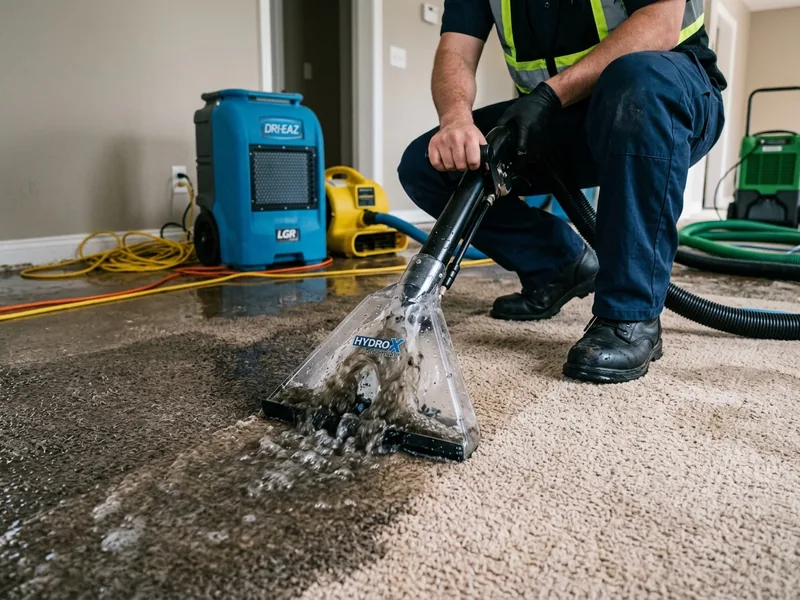
Water extraction is the process of pulling water out of a property with professional equipment. It removes water both from the surface and from inside the materials that have soaked it up, such as carpet and its padding.
Extraction is the step that decides how much drying is needed next. The more water pulled out now, the less moisture is left to dry, and the faster your property recovers. Weak extraction leaves water behind that turns into a longer, harder drying job.
What equipment is used for water extraction?
Water extraction uses machines built to pull water far more powerfully than household tools. The main types are:
- Truck-mounted extractors: high-powered units that remove large amounts of water quickly.
- Portable extractors: smaller units used where a truck-mounted unit cannot reach.
- Extraction wands and weighted tools: attachments that pull water from hard floors, carpet, and padding.
The right combination depends on the surfaces involved and how deeply the water has soaked in.
Surface extraction vs deep extraction
Extraction happens at two levels, and both matter. Surface extraction removes the water you can see. Deep extraction reaches the water hidden inside and beneath materials.
- Surface extraction clears standing water from the top of floors and hard surfaces.
- Deep extraction pulls water out of carpet, padding, and the layers underneath.
Skipping deep extraction is a common reason water damage comes back as mold or odor weeks later, so it is a key part of doing the job right.
Why professional extraction beats a shop vacuum
Professional extraction beats a shop vacuum because it removes far more water and reaches places a vacuum cannot. A shop vacuum can handle a small, fresh spill, but it barely touches the water held inside carpet, padding, and flooring.
More water out during extraction means less moisture left to dry, a shorter drying stage, and a lower risk of mold. For anything beyond a minor spill, professional extraction protects your property far better.
What happens after extraction?
After extraction, the focus shifts to drying the moisture that liquid removal cannot reach. Some water always stays inside materials even after strong extraction.
Air movers and dehumidifiers then dry the structure, and moisture is monitored until materials are verified dry. Extraction and drying are two halves of the same job: extraction takes out the water, and drying removes what is left.
Extract more, dry faster
Powerful extraction pulls out water a vacuum leaves behind, so drying is quicker. Call our Houston team to get started.