Standing Water Cleanup in Houston, TX
Standing water cleanup is the removal and cleanup of water that has pooled and been sitting inside your property. Water that sits gets dirtier, soaks deeper, and hides under floors and behind walls. We pump out standing water in Houston homes and businesses and clean up what it leaves behind.
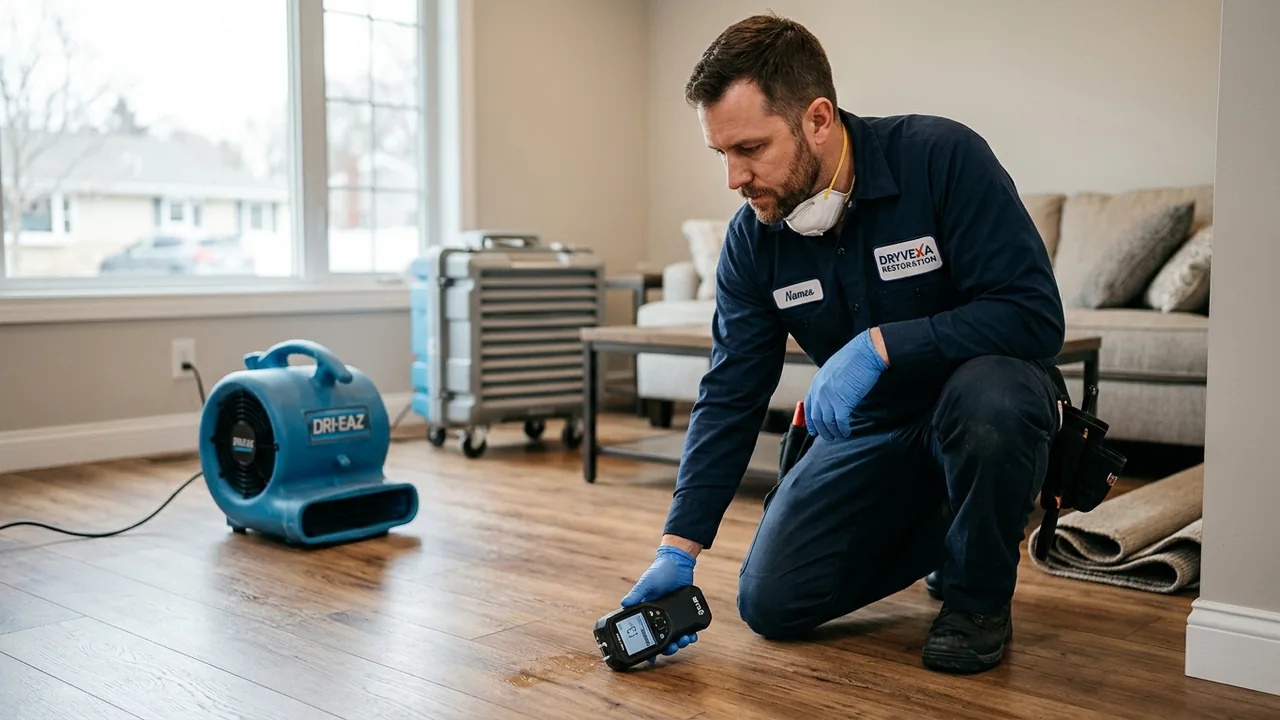
What is standing water cleanup?
Standing water cleanup is the removal and cleanup of water that has pooled and stopped moving inside a property. Unlike a fresh leak, standing water has settled in place and had time to soak into materials and grow contamination.
This kind of water is common after a pipe has leaked overnight, an appliance has flooded a room, or water has collected in a basement or on a slab. The water is no longer a small, surface problem. It has become a pool that is soaking into everything it touches.
Why is standing water worse the longer it sits?
Standing water is worse the longer it sits because time changes both how dirty it is and how far it has spread. Fresh water is mostly a surface problem. Water that has been sitting is a deeper one.
Three things happen while water stands in place:
- It grows contamination. Bacteria multiply and the water turns dirty, even if it started clean.
- It soaks deeper. Flooring, subfloor, and drywall keep absorbing water the whole time it sits.
- It invites mold. Damp materials can start growing mold within a day or two.
This is why standing water needs prompt, thorough cleanup rather than a quick mop-up.
What does standing water cleanup involve?
- Safety check. We make sure it is safe to enter, checking for electrical hazards before stepping into the water.
- Pump and extract. Pumps and extractors remove the pooled water from floors and low areas.
- Remove ruined debris. Soaked debris and materials that cannot be saved are cleared out.
- Clean and disinfect. The surfaces the water touched are cleaned and disinfected.
- Find trapped water. We check under flooring and inside walls for moisture the pump could not reach.
Where does standing water hide?
Standing water hides in the lowest and most enclosed parts of a property, which are often the hardest to see. After the visible pool is gone, water can still be trapped in places like:
- Under carpet, laminate, and other flooring
- Inside wall cavities and behind baseboards
- In subfloors and crawl spaces
- In basements and other low spots
Finding and removing this hidden water is the difference between a real cleanup and a surface fix that leads to mold later.
Is standing water dangerous to walk into?
Standing water can be dangerous, so treat it with caution. It can conduct electricity from submerged outlets or appliances, hide sharp debris, and carry contamination you cannot see.
Do not wade into standing water when the power to that area is on, and keep children and pets away from it. If the water is more than a small, shallow amount or you are unsure of its source, stay out and call a professional to handle the cleanup safely.
Sitting water only gets worse
Every hour standing water sits, it soaks deeper and grows dirtier. Call our Houston team to have it pumped out and cleaned up.