Mold-Contaminated Material Removal in Houston, TX
Mold-contaminated material removal is the safe taking-out and disposal of porous materials that mold has grown into and cannot be cleaned from. It is a key step within mold remediation, done under containment so spores are not spread. We remove mold-contaminated materials for Houston homes and businesses.
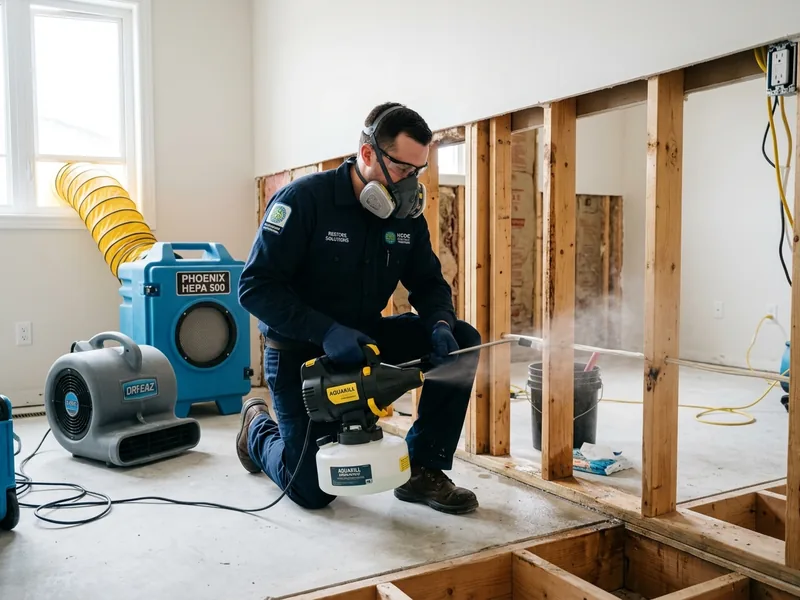
What is mold-contaminated material removal?
Mold-contaminated material removal is the safe removal and disposal of materials that mold has grown into and that cannot be cleaned. It is a specific step within mold remediation, focused on the absorbent materials mold ruins.
Because mold grows into porous materials rather than just sitting on them, those materials often have to leave the building entirely. Removing them, under containment so spores are not spread, takes the mold out at its source instead of trying to clean what cannot be fully cleaned.
Which materials get removed?
Which materials get removed depends on whether mold can be cleaned off them or has grown into them. The dividing line is how porous the material is.
- Usually removed: drywall, insulation, carpet and padding, and ceiling tiles
- Often cleaned instead: tile, metal, glass, and sealed hard surfaces
Mold in a porous material means the material itself is the problem, which is why removal focuses on the soft, absorbent items rather than every surface.
Why can't moldy materials just be cleaned?
Moldy porous materials cannot just be cleaned because the mold is inside them, not only on the surface. Wiping the visible mold off a piece of drywall leaves mold within the board, where it keeps growing and returns.
For absorbent materials, there is no reliable way to clean the mold out from within, so removing and replacing them is the sound approach. Hard, non-porous surfaces are different, because mold sits on top and can be cleaned, which is why they are usually kept.
How is the removal done safely?
The removal is done safely by containing the area first, so mold spores are not spread while the materials come out. This is why it belongs to a controlled remediation rather than a rushed teardown.
Crews seal off the work zone, remove the moldy materials carefully, and bag them for disposal so spores are not released into the air or tracked to clean parts of the property. Once the contaminated materials are out and the area is cleaned and dried, the space is ready for the repairs that rebuild what was removed.
Porous mold is removed, not wiped
Moldy absorbent materials have to come out. Call our Houston team to remove them safely.