Hardwood Floor Drying in Houston, TX
Hardwood floor drying uses specialized systems to pull moisture out of wood boards and the subfloor beneath, rather than just moving air over the surface. Because wood dries slowly and reacts to how it is dried, the method matters as much as the speed. We dry water-damaged hardwood floors for Houston homes and businesses.
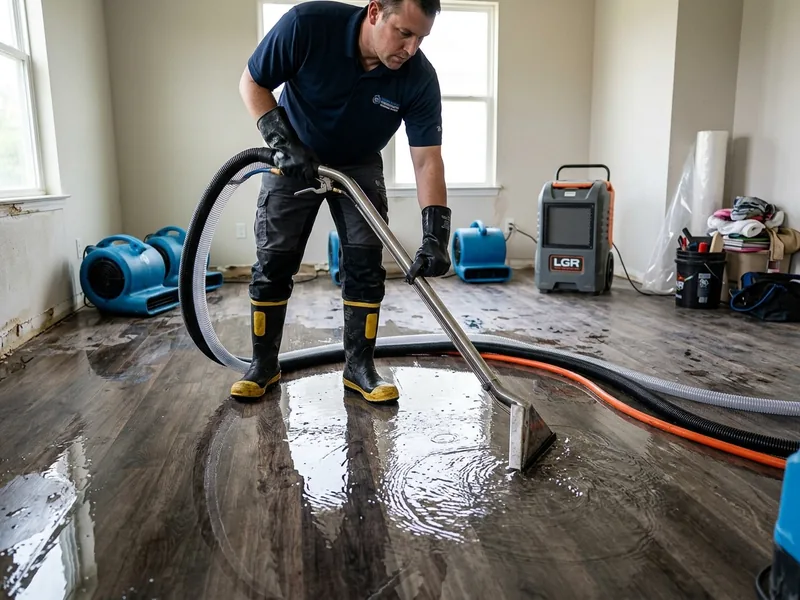
What is hardwood floor drying?
Hardwood floor drying is the specialized removal of moisture from wood flooring and the subfloor beneath it. It goes beyond running air movers over the surface, because wood holds water deep in the boards where surface air cannot reach.
The specialized approach is the point. Hardwood is dried with systems designed to draw moisture up and out of the boards, at a controlled pace, so the wood has the best chance to recover instead of warping further as it dries.
Why does hardwood need specialized drying?
Hardwood needs specialized drying because it holds moisture inside and reacts badly to being dried the wrong way. Two problems make ordinary drying insufficient:
- Depth: water soaks deep into the boards, out of reach of surface airflow
- Reaction: wood swells and changes shape, and uneven or overly fast drying can crack or split it
Specialized drying addresses both by pulling moisture from within the boards at a controlled rate, which surface fans alone cannot do.
How is a hardwood floor dried?
A hardwood floor is dried with a system built for wood, monitored throughout.
- Apply drying mats. Specialized mats create suction and airflow at the floor.
- Draw moisture out. Moisture is pulled up from the boards and subfloor.
- Support with dehumidification. Dehumidifiers remove the released moisture from the air.
- Monitor the wood. The boards' moisture is measured until it returns to normal.
Can drying reverse cupping?
Drying can reverse mild cupping, and this is one reason fast, specialized drying matters so much for hardwood. When cupped boards are dried evenly and return to their normal moisture level, they can flatten back out.
The chance depends on how severe the cupping is and how long the wood was wet. Mild, early cupping often recovers; severe or long-standing cupping may not, and those boards may need sanding, refinishing, or replacement. Drying is what gives the floor the opportunity to recover, and monitoring shows how much it did.
The right drying can save the floor
Specialized drying gives hardwood its best chance. Call our Houston team right away.