Carpet Drying in Houston, TX
Carpet drying removes the moisture left in carpet, its padding, and the subfloor beneath after the water is extracted. Because carpet holds water in layers, drying it means reaching all of them, not just the surface. We dry water-damaged carpet for Houston homes and businesses.
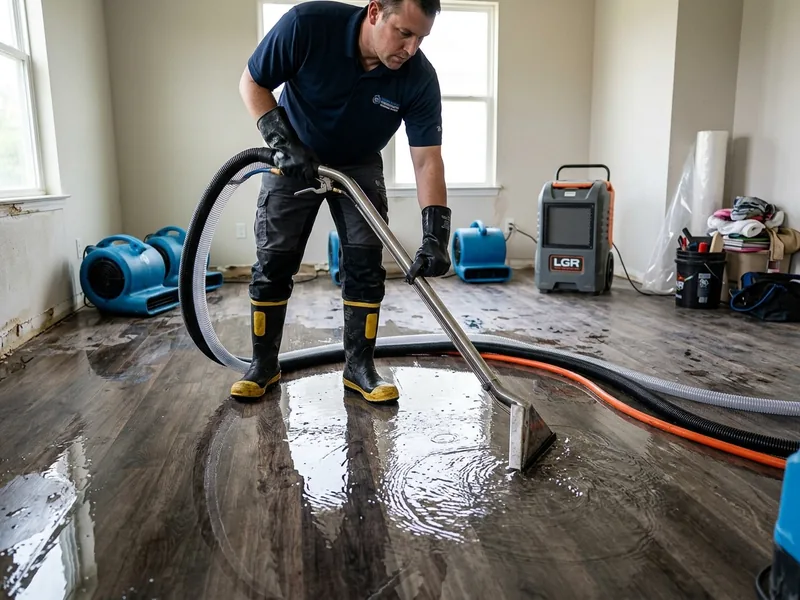
What is carpet drying?
Carpet drying is the removal of moisture from carpet and everything beneath it after the water is extracted. Carpet is a layered material, the carpet, the pad under it, and the subfloor below, and drying it means dealing with all three.
That layered nature is what makes carpet drying its own task. The surface can feel dry while the pad and subfloor stay soaked, so proper carpet drying reaches down through the layers rather than stopping at the top.
Why is carpet hard to dry?
Carpet is hard to dry because it holds water in layers that dry at different rates. The carpet fibers may dry fairly quickly, but the pad beneath holds far more water, and airflow struggles to reach it.
Below that, the subfloor can stay wet longer still. Left to dry on its own, this stack of wet layers holds moisture against itself, which is exactly what mold and odor need. That is why carpet gets active drying, and why the pad is often removed rather than dried in place.
How is carpet dried?
Carpet is dried by reaching each layer, using the method that fits how wet it is.
- Assess the layers. How wet the carpet, pad, and subfloor are is checked.
- Dry in place or lift. Air is moved across and under the carpet, or it is lifted for access.
- Handle the pad. Soaked pad is removed rather than dried when it will not dry well.
- Dry the subfloor. The layer beneath is dried and confirmed with meters.
Why the pad and subfloor decide the outcome
The pad and subfloor decide the outcome because they are where the water hides and lingers. Drying the visible carpet is the easy part; the layers beneath are what determine whether the carpet is truly saved.
A carpet dried on top while the pad or subfloor stays wet will develop mold and odor, undoing the work. That is why carpet drying is judged by the readings in the pad and subfloor, and why removing a ruined pad is often the right call to protect the carpet and the floor.
Dry all the layers, not just the top
Carpet, pad, and subfloor all hold water. Call our Houston team to dry them properly.