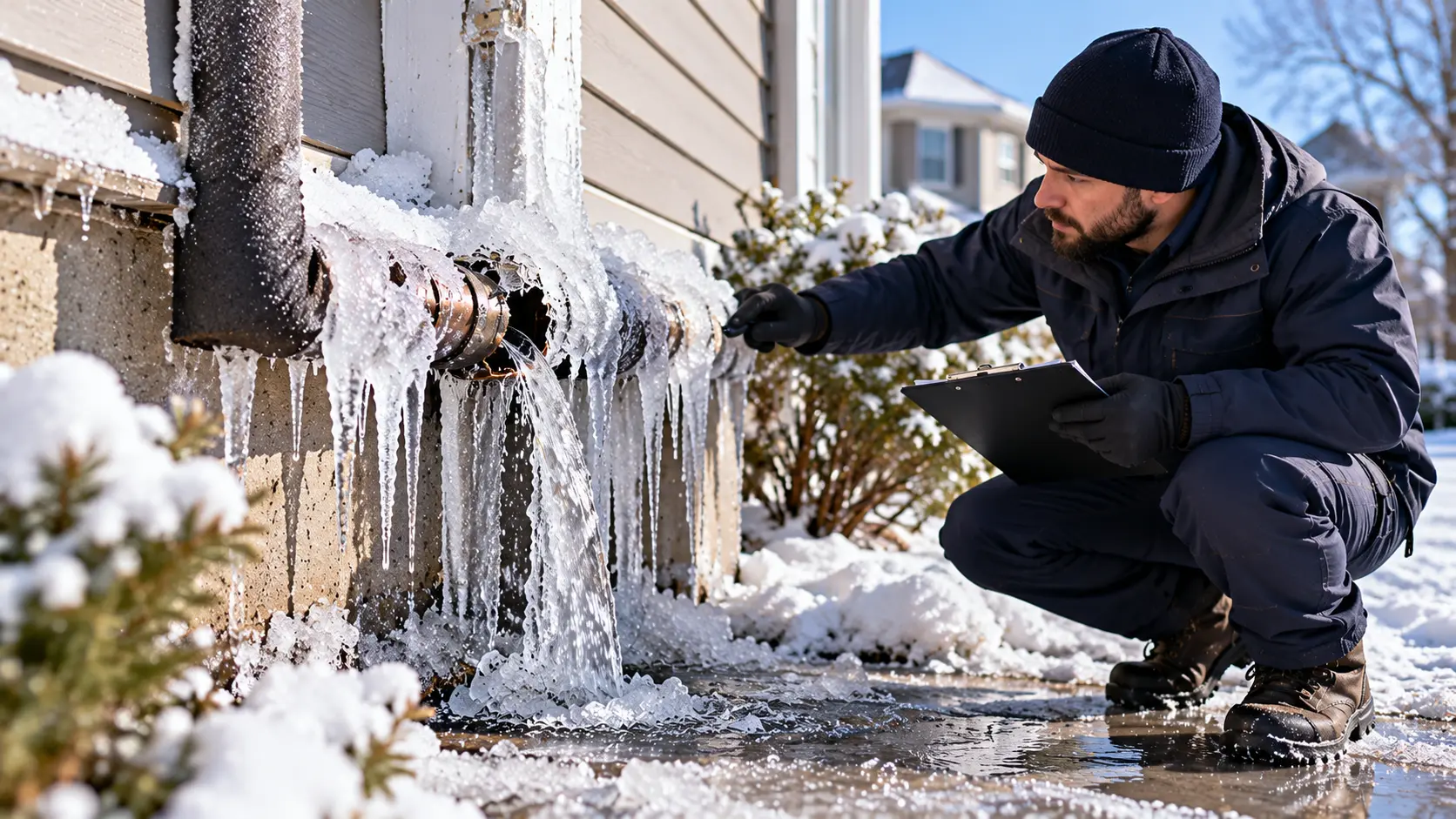
You can prevent most frozen pipes in Houston with a few simple steps before a hard freeze: let faucets drip, open cabinet doors so warm air reaches pipes, insulate exposed and outdoor pipes, and know where your main shut-off valve is. These matter here precisely because Houston homes are built for heat, not deep cold, so pipes are often more exposed than in colder regions.
Here is how to get ahead of a freeze.
Why do pipes freeze and break in Houston?
Pipes freeze and break in Houston during the occasional hard freeze because the region is not built for sustained cold. Most of the year the climate is mild, so pipes are commonly exposed, uninsulated, or routed through unheated spaces like attics, garages, and exterior walls.
When an unusual hard freeze arrives, those pipes can freeze solid. Water expands as it freezes, and inside a closed pipe that expansion builds pressure until the pipe cracks or splits. Because so many local homes share this vulnerability, a single hard-freeze event can cause a wave of pipe failures across the area.
How do you prevent frozen pipes before a freeze?
Prevention comes down to keeping water moving, keeping warmth near the pipes, and protecting the pipes that are most exposed. Do these before the cold arrives:
- Let faucets drip. A slow drip on faucets fed by vulnerable pipes keeps water moving and relieves pressure.
- Open cabinet doors. This lets warm indoor air reach the pipes under sinks, especially on exterior walls.
- Insulate exposed pipes. Wrap pipes in unheated spaces and outdoor pipes with foam insulation or heat tape.
- Disconnect garden hoses and cover outdoor spigots.
- Keep the heat on. Maintain a steady indoor temperature, even at night and when away.
- Seal drafts near pipes, such as gaps where lines enter the home.
- Know your main shut-off valve. If a pipe does break, shutting the water off fast is what limits the damage.
Which pipes are most at risk?
The pipes most likely to freeze are the ones with the least protection from indoor warmth:
- Outdoor spigots and sprinkler lines
- Pipes in attics, garages, and crawl spaces
- Pipes running along or inside exterior walls
- Pipes under sinks on outside walls
These deserve the most attention when you insulate and when you decide which faucets to drip.
Why do frozen pipes leak when they thaw?
Frozen pipes often leak during the thaw because the pipe cracks while frozen, but the ice inside plugs the crack so no water escapes yet. As the ice melts and water flows again, it finds the split and leaks out. This is why the moment to stay alert is as temperatures rise, not only during the freeze.
During a thaw, watch for damp spots, reduced water pressure, or the sound of running water, and be ready to shut off the main valve.
What should you do if a pipe freezes or bursts?
If a pipe freezes, you can try to thaw it gently, keep the nearby faucet open so melting water can escape, and never use an open flame. If a pipe bursts, shut off the main water valve immediately and then remove the water and dry the area quickly.
For the full first-response steps, see our guide on what to do after a burst pipe. If a freeze has already caused damage, our frozen pipe water damage and burst pipe cleanup services handle the cleanup, drying, and repairs, and our water damage prevention page covers reducing the risk ahead of the next freeze.
Frequently asked questions
Do pipes really freeze in Houston?
At what temperature do pipes freeze?
Does letting faucets drip really help?
Why do frozen pipes often leak when they thaw?
Frozen or burst pipe after a Houston freeze?
If a pipe has already failed, act quickly. Call and we'll help you stop the water and dry the damage.