Water Heater Leak Cleanup in Houston, TX
Water heater leak cleanup handles the water from a leaking or failed water heater, which can range from a slow drip to a full tank letting go. Where the heater sits, in a garage, closet, or attic, decides how far the water travels. We clean up water heater leaks for Houston homes and businesses.
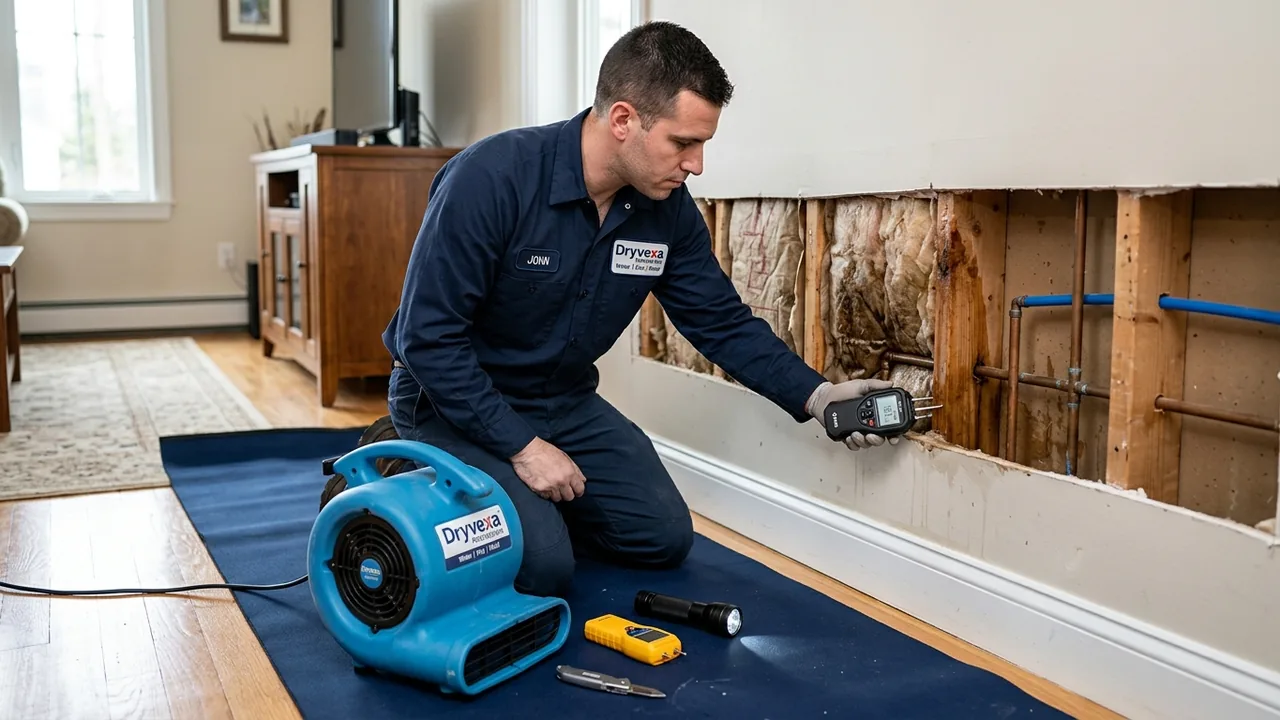
What is water heater leak cleanup?
Water heater leak cleanup is the recovery after a water heater drips, leaks, or fails and releases its water. It covers everything from a slow leak at a fitting to a tank that lets go and empties across the floor.
The scale of the problem depends on two things: how the heater failed and where it sits. A slow drip is a contained issue, while a full tank failure can flood a space quickly, and a unit in the attic sends its water down through the ceilings below.
Why do water heaters leak?
Water heaters leak mostly because of age and wear. Over years of use, sediment collects in the tank and the metal corrodes from the inside, until the tank finally springs a leak or fails outright.
Not every leak is the tank, though. Water heaters also leak at the inlet and outlet connections, the drain valve, and the temperature-and-pressure relief valve. Pinning down which one is leaking helps decide whether it is a repair or a replacement, and how much water the cleanup is dealing with.
Why does the location of the heater matter?
The location of the water heater matters because it decides where the water goes. The same leak causes very different damage depending on where the unit sits.
- In a garage, water tends to spread across a slab and can reach adjoining rooms.
- In a closet, it soaks the surrounding walls and flooring in a tight space.
- In an attic, it drains down through the ceiling, insulation, and rooms below.
An attic unit is the one to watch most closely, since its leak often shows up as a ceiling stain before anything appears at floor level.
How is a water heater leak cleaned up?
A water heater leak is cleaned up by stopping the water, removing what escaped, and drying everywhere it reached. For an attic unit, that means following the water down through the ceiling and walls.
Crews extract the water, dry the affected flooring, walls, or ceiling with meters to confirm the materials are dry, and repair the damage. Replacing or repairing the water heater itself is plumbing work, which a plumber handles, while we take care of the water damage it caused.
A failed tank floods fast
Shut off the water and heater, then call our Houston team to clean up and dry the damage.