Rain Water Damage Cleanup in Houston, TX
Rain water damage cleanup handles rain that works its way into a property at ground level, through drainage problems, grading, or gaps near the foundation. This water is often cleaner than storm floodwater, but it still damages floors and walls if it sits. We clean up rain water damage for Houston homes and businesses.
What is rain water damage cleanup?
Rain water damage cleanup handles rain that finds its way into a property at ground level, without a full storm flood. It comes from rain pooling around the building and seeping in low, through drainage problems, grading, or gaps near the foundation.
This is a quieter kind of water damage than a storm surge, but it is real. Rain that enters and sits still soaks into flooring, baseboards, and wall bases, and if the cause is drainage, it tends to happen again with the next heavy rain.
How does rain water get into a property?
Rain water gets in at ground level when there is more water outside than the property can shed, and a path for it to enter. Common causes in Houston include:
- Poor grading that slopes rain toward the building
- Overflowing or clogged gutters dumping water at the foundation
- Foundation cracks or gaps that let water seep in
- Low entry points like doorways and garage thresholds
Because these are drainage and envelope issues, the same rain keeps finding the same way in until the cause is addressed.
Is rain water as contaminated as flood water?
Rain water that enters directly is often cleaner than flood water, at least at first. Floodwater travels across the ground picking up contamination, while rain coming straight in starts closer to clean.
That said, it does not stay clean. As rain water enters at floor level and touches dirt and materials, it picks up contamination, and the longer it sits the more it turns gray. So while it may be less hazardous than storm floodwater, it still needs prompt cleanup and sanitizing.
How is rain water damage cleaned up?
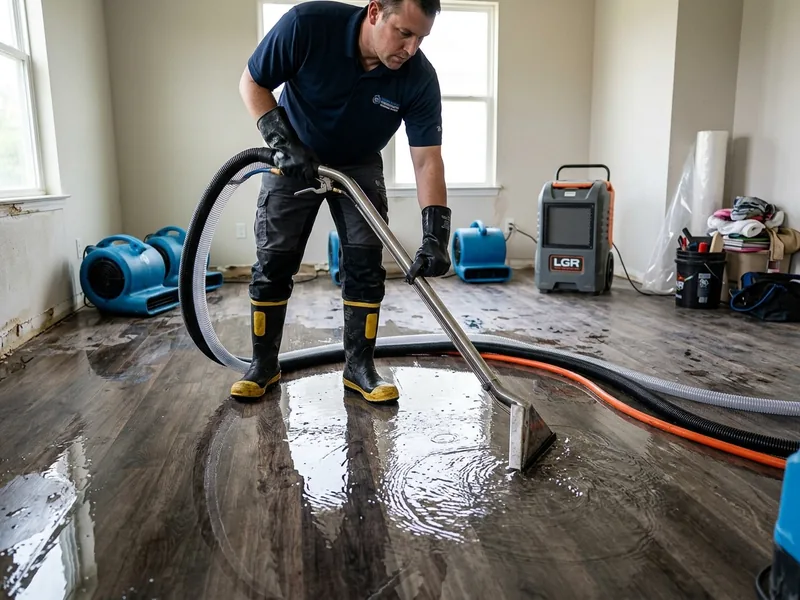
Rain water damage is cleaned up by removing the water, drying the materials it reached, and cleaning the affected area. Because it enters low, the focus is on floors, baseboards, and the base of walls.
Crews remove the water, check how far it wicked up and spread, dry the structure until it is verified dry, and clean the area. Since rain intrusion usually points to a drainage or foundation issue, addressing that cause is what keeps the next heavy rain from bringing the water right back.
Rain that gets in will do damage
Even without a flood, rain intrusion warps floors and grows mold. Call our Houston team to clean it up.