Sewage Contamination Cleanup in Houston, TX
Sewage contamination cleanup is the disinfection and decontamination of surfaces after sewage exposure. Removing the sewage is only part of the job; the bacteria it leaves on floors, walls, and belongings still have to be killed. We decontaminate sewage-affected areas for Houston homes and businesses.
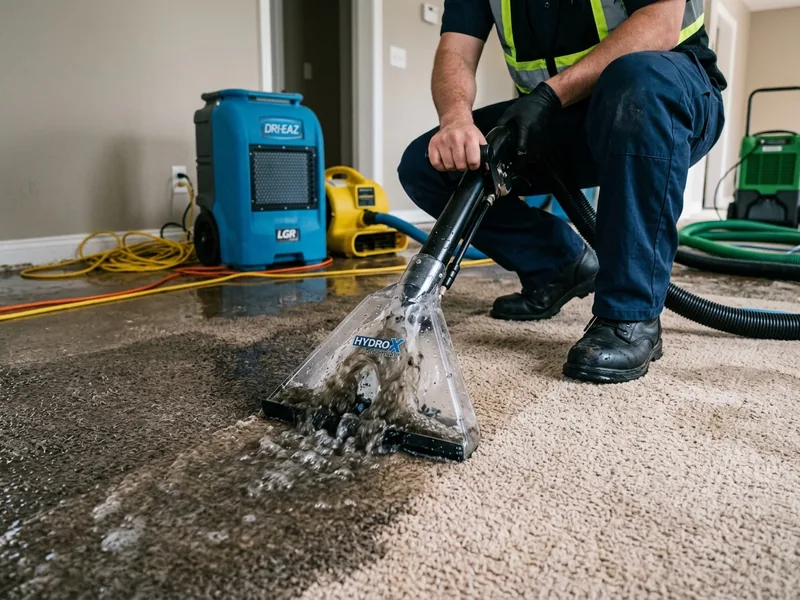
What is sewage contamination cleanup?
Sewage contamination cleanup is the disinfection and decontamination of everything sewage touched. It targets the part of the hazard you cannot see: the bacteria and other germs left on surfaces after the visible sewage is gone.
This is the step that actually makes a sewage-affected area safe. You can remove all the water and waste and still have a contaminated space, because the germs remain on the floors, walls, and items the sewage reached. Decontamination is what removes that hidden risk.
Why isn't removing the sewage enough?
Removing the sewage is not enough because contamination stays behind on the surfaces the water touched. The mess you can see and the hazard you cannot are two different problems.
Sewage leaves bacteria, viruses, and other pathogens on every surface it reaches. Those germs do not leave with the water, so a room that looks clean can still make people sick. Decontamination exists to close that gap between looking clean and being safe.
How are surfaces decontaminated?
Surfaces are decontaminated by cleaning them and then disinfecting them, in that order.
- Clean. Residue and soil are removed, since disinfectant cannot work through a dirty surface.
- Disinfect. The cleaned surfaces are treated with products that kill the germs.
- Remove what cannot be treated. Porous materials that cannot be disinfected are taken out instead.
- Confirm and dry. The area is dried so no dampness is left to support regrowth.
Why professional decontamination matters
Professional decontamination matters because doing it properly takes the right products, method, and protection. Wiping surfaces with a household cleaner does not reliably kill the pathogens sewage leaves.
Trained crews know which surfaces can be saved and disinfected and which have to be removed, and they use disinfectants suited to contaminated water. That is the difference between a surface that looks clean and one that is genuinely safe to touch and use again.
The hazard is what you cannot see
Sewage leaves bacteria behind on every surface it touched. Call our Houston team to decontaminate it safely.