Sewage Cleanup Service in Houston, TX
Sewage cleanup is the full process of making a contaminated area safe again after the sewage water is out. This page walks through the step-by-step cleanup itself: clearing debris, removing ruined materials, disinfecting, and deodorizing. We follow this process for Houston homes and businesses.
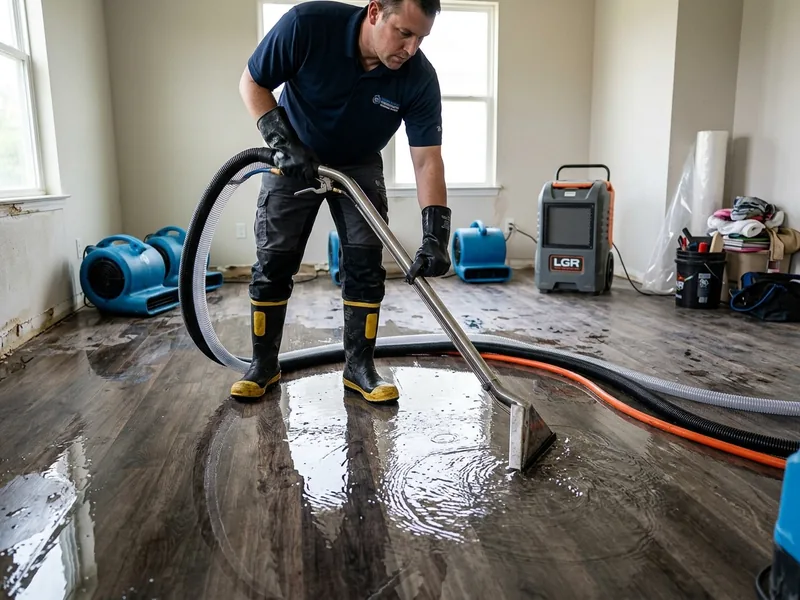
What does the sewage cleanup process involve?
The sewage cleanup process is the ordered set of steps that turns a contaminated area back into a safe one. It picks up after the sewage water has been removed and focuses on everything the water left behind.
Doing it in the right order matters. Skipping ahead, such as disinfecting before the ruined materials are out, leaves contamination in place. A proper process works through the area methodically so nothing hazardous is sealed in.
What are the steps of sewage cleanup?
Sewage cleanup follows these steps once the contaminated water is out:
- Clear waste and debris. Solid waste and debris are removed from the area.
- Remove ruined materials. Porous materials that soaked up sewage are taken out and bagged.
- Clean surfaces. The hard surfaces that remain are cleaned of residue.
- Disinfect. Cleaned surfaces are disinfected to kill the bacteria sewage leaves.
- Dry and deodorize. The area is dried and treated to remove the odor.
Why the order of the steps matters
The order of the steps matters because each one prepares the area for the next. Disinfectant cannot do its job on a surface still covered in residue, and drying is pointless if contaminated materials are still in place.
Working in order also keeps the contamination from spreading. Removing ruined materials before disinfecting, for example, takes the biggest source of bacteria out of the room first. A careful sequence is what makes the difference between a clean look and a genuinely safe space.
How is a sewage-cleaned area confirmed safe?
A sewage-cleaned area is confirmed by checking that the contamination is gone and the space is dry. Once the ruined materials are out and surfaces are disinfected, the area is dried and the moisture is checked so nothing damp is left to grow mold. Any lingering odor is treated until the space is fit to use again.
Cleanup is more than removal
Removing sewage is only the start. Call our Houston team for the full disinfect-and-deodorize process.