Residential Water Damage in Houston, TX
Residential water damage covers the homes people live in, from single-family houses to apartments and condos. Each type of home brings its own questions about shared walls, ownership, and who handles what. We help Houston residents extract water, dry the structure, and repair the damage, whatever kind of home they live in.
How we respond
- 1You call usDescribe the damage and we advise safety steps to take.
- 2We assess & extractFind the source, remove the water, and find hidden moisture.
- 3Dry & repairDry the structure and repair the damage to your home.
What is residential water damage?
Residential water damage is water damage to the places people live, whether a single-family house, an apartment, or a condo. The water itself behaves the same in each, but the home type changes who is responsible and how the recovery is coordinated.
That difference is the reason to think about residential water damage by home type. A homeowner in a house handles the whole property, while a renter or condo owner shares walls, floors, and responsibilities with neighbors and a management structure. The cleanup is similar; the arrangements around it are not.
What causes water damage in homes?
Water damage in Houston homes comes from a familiar set of sources, most of them inside the home:
- Plumbing leaks, from pipes, fixtures, and supply lines
- Appliance failures, such as washers, dishwashers, and water heaters
- Roof and storm leaks letting rain in
- Sewage backups bringing contaminated water indoors
- Overflows from tubs, sinks, and toilets
Many of these start small and hidden, so the damage is often more extensive than the first sign suggests.
How does the type of home affect the response?
The type of home affects who handles the recovery and how neighbors and management are involved. The water damage is treated the same way, but the coordination differs.
- Houses put the whole property in the owner's hands, from the roof to the slab.
- Apartments involve a landlord or property manager, and often a neighbor's unit.
- Condos split responsibility between the owner's unit and the association's common areas.
Knowing which situation you are in helps sort out who arranges the work, which is why our house, apartment, and condo pages cover each in more detail.
What does residential water damage recovery involve?
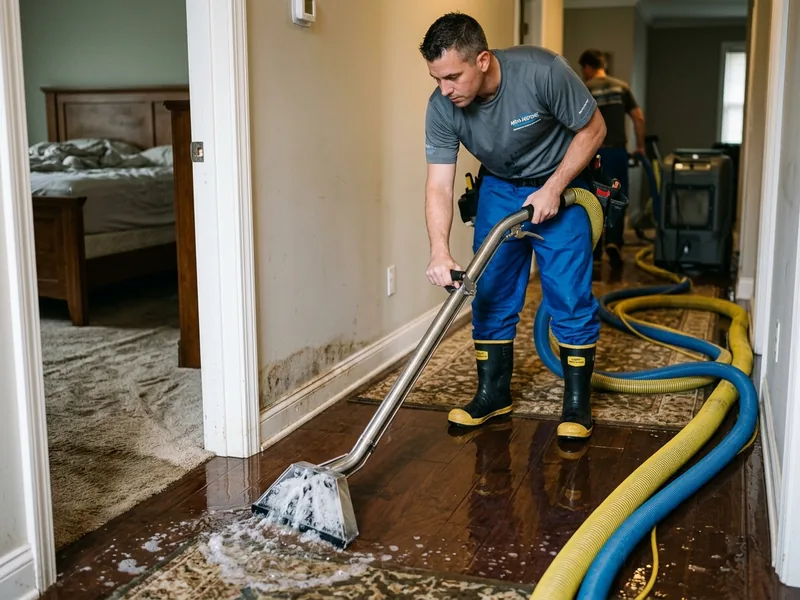
Residential water damage recovery follows the same core steps in any home, adapted to a lived-in space.
- Assess. Find the source and map how far the water spread.
- Extract. Remove the standing and trapped water.
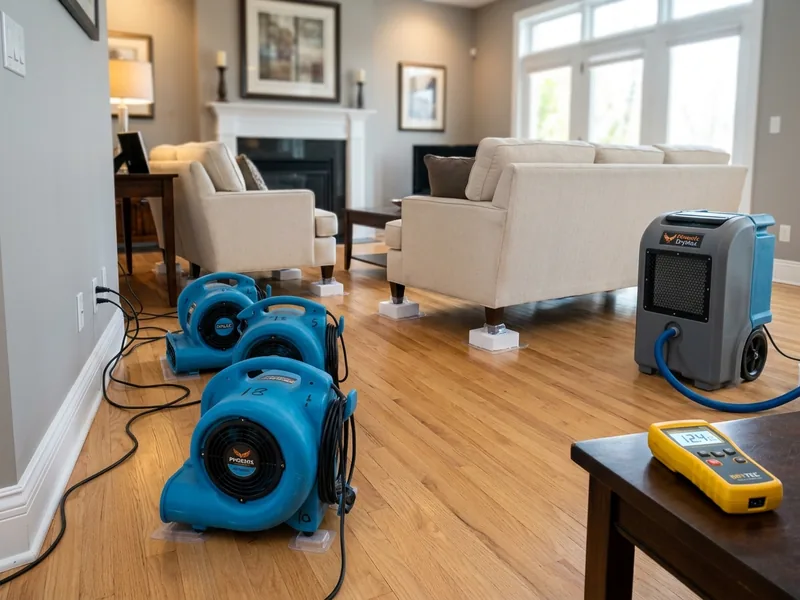
- Dry. Dry the structure to a verified level.
- Repair. Rebuild what the water ruined, matched to your home.
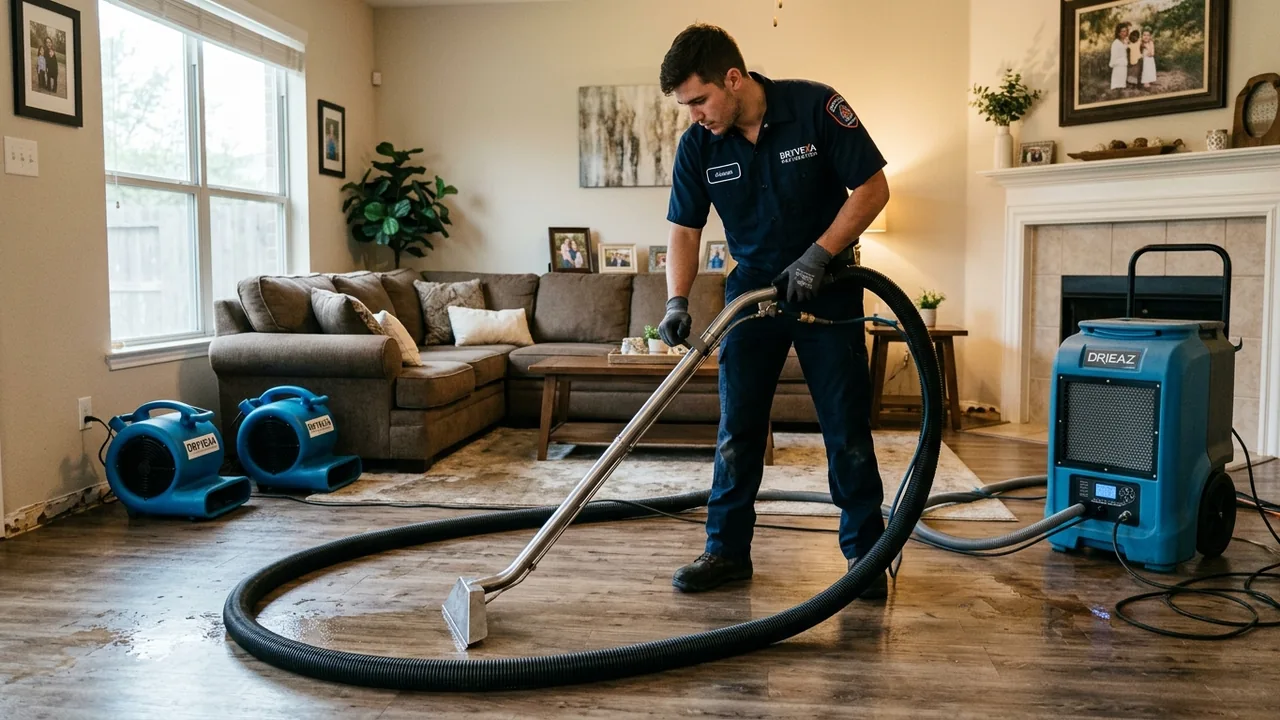
Throughout, the work is planned around a home that people are usually still living in, with their belongings in it.
What homeowners and renters should know
Homeowners and renters should know that acting fast is what limits residential water damage, and that documentation matters. Water spreads by the hour, so the sooner it is handled, the less it damages.
Take photos of the damage, keep records, and check your lease or policy for how claims and responsibilities work in your situation. In a shared building, report the issue to your landlord or association promptly. We handle the cleanup and coordinate with the parties involved so your home is restored properly.
Your home, back to normal
Whatever kind of home you live in, fast action limits the damage. Call our Houston team to get started.
What water damage restoration looks like