Gray Water Cleanup Service in Houston, TX
Gray water cleanup is the clean, sanitize, and dry process that follows a Category 2 water loss. Because gray water is moderately contaminated, sanitizing is the key step, and doing it before the water sits too long keeps the job from turning into a black water cleanup. We follow this process for Houston homes and businesses.
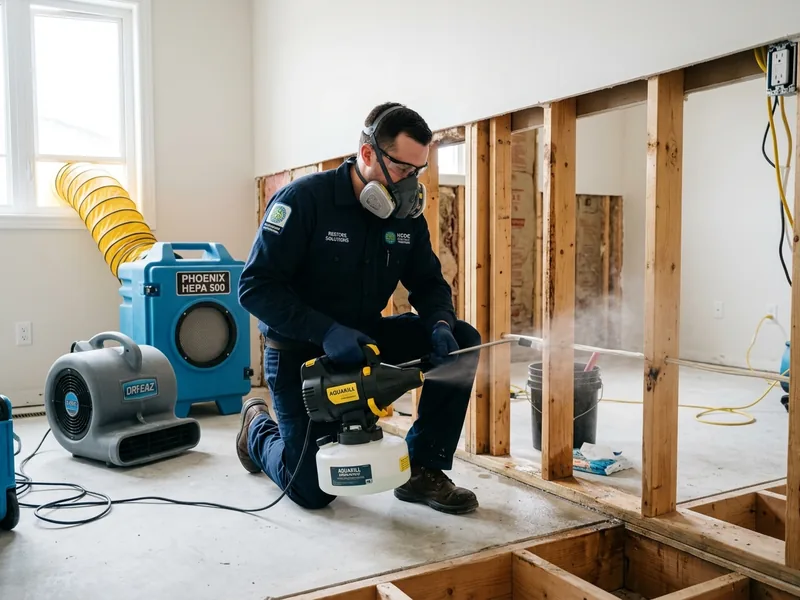
What does gray water cleanup involve?
Gray water cleanup is the process of making a Category 2 water loss clean, safe, and dry again. Its center of gravity is sanitizing, because gray water is contaminated enough to need more than a wipe-down but not so hazardous that everything must be stripped out.
The process is also a bit of a clock. Gray water cleanup done promptly stays a straightforward clean-and-sanitize job. Left too long, the same loss turns into a black water cleanup, so the timing shapes the whole approach.
What are the steps of gray water cleanup?
Gray water cleanup follows these steps once the water is extracted:
- Remove what cannot be saved. Soaked, unsalvageable materials are taken out.
- Clean the surfaces. The affected surfaces are cleaned of residue.
- Sanitize. Cleaned surfaces are sanitized to bring germs down to a safe level.
- Dry. The area is dried and moisture is checked to prevent mold.
If the water has started turning toward black, the sanitizing step is stepped up to full disinfection.
Why sanitizing is the key step
Sanitizing is the key step in gray water cleanup because it matches the risk the water actually carries. Category 2 water has germs that need reducing, but it is not the severe hazard that requires the strictest disinfection.
Sanitizing brings those germs down to a safe level once the surfaces are cleaned. Skipping it would leave a space that looks clean but still carries contamination, which is why it sits at the heart of the process rather than being optional.
Why timing changes the cleanup
Timing changes the cleanup because gray water does not stay Category 2 forever. The longer it sits, the more contaminated it becomes, and at some point it crosses into black water.
Caught early, a gray water loss is a contained clean-and-sanitize job with more materials saved. Caught late, it needs black water handling, with containment, stronger disinfection, and more removal. Acting promptly is what keeps the cleanup on the simpler end of that range.
Clean and sanitize before it turns
Gray water cleanup is about acting before it becomes black water. Call our Houston team to handle it.