Burst Pipe Water Extraction in Houston, TX
Burst pipe water extraction pulls the water a broken pipe drove into materials, such as carpet, subfloor, and wall cavities. It reaches the water bulk removal leaves behind, deep in the structure. We extract burst pipe water for Houston homes and businesses.
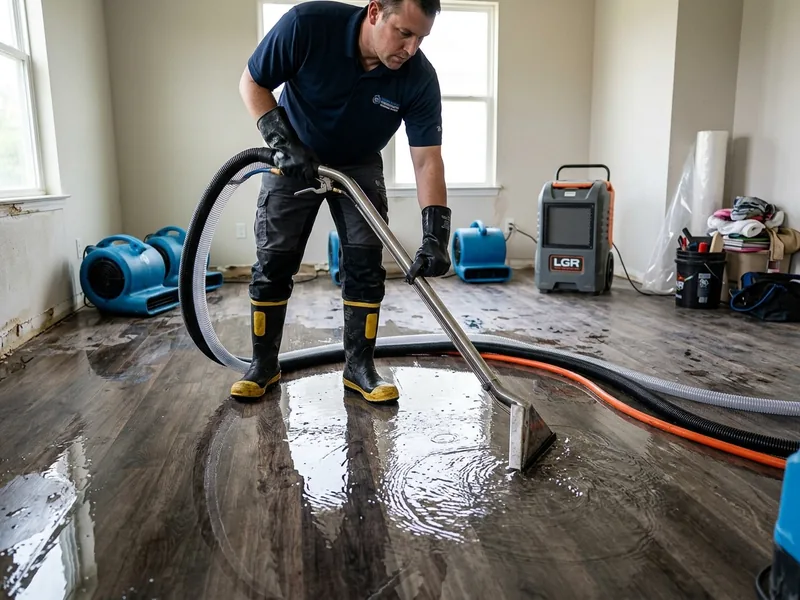
What is burst pipe water extraction?
Burst pipe water extraction is the pulling-out of the water a broken pipe drove into materials and cavities. It is the step that reaches the water bulk removal cannot, deep in carpet, padding, subfloor, and inside walls.
A burst pipe does not just leave a puddle. It pushes water into the structure, often right inside a wall or above a ceiling. Extraction targets that hidden water so it can be dried, rather than left to cause mold and rot out of sight.
Why does burst pipe water hide in the structure?
Burst pipe water hides in the structure because the pipe is often inside it. Many pipes run through walls, ceilings, and floors, so a break releases water directly into those spaces.
Even a break at floor level sends water two directions: up into drywall and baseboards by wicking, and down into the subfloor. The result is water in places a mop never reaches, which is exactly what extraction is designed to find and remove.
How is burst pipe water extracted?
Burst pipe water is extracted with tools built to reach into materials and cavities.
- Weighted and detail extractors pull water from carpet and padding.
- Cavity drying access lets crews reach water inside walls.
- Subfloor extraction removes water trapped beneath the finished floor.
- Moisture checks confirm where extraction is still needed.
The goal is to remove as much liquid water as possible so the drying stage has less to do.
How does extraction lead into drying?
Extraction leads directly into drying, because the two together handle all the moisture. Extraction removes the liquid water it can reach; drying removes the moisture that stays inside materials afterward.
Once the water is extracted from the cavities and materials, air movers and dehumidifiers dry the structure until meters confirm it is truly dry. Skipping thorough extraction only makes the drying longer and raises the risk of mold, which is why they always go hand in hand after a burst pipe.
Reach the water you cannot see
Burst pipe water hides in carpet, subfloor, and walls. Call our Houston team to extract it.