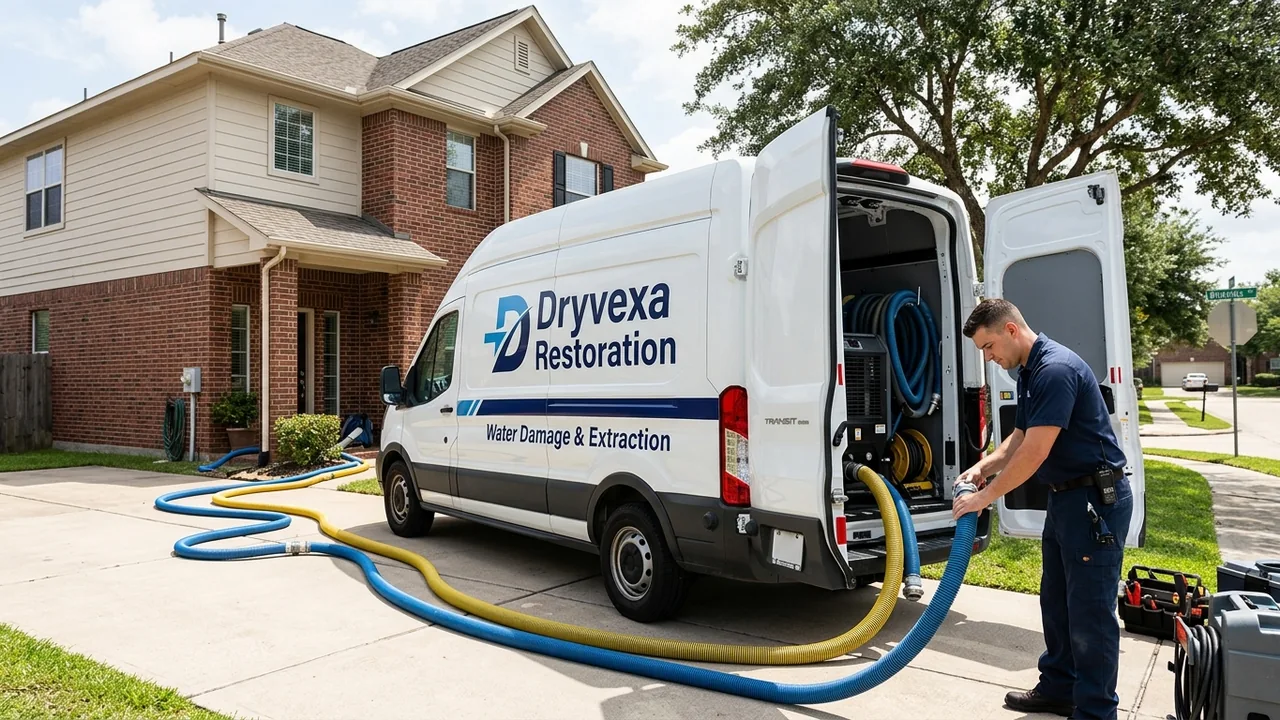
After storm or flood water enters your home, safety comes before cleanup: do not enter standing water while power is on, treat outside flood water as contaminated, document the damage, and then get the water extracted and the structure dried as quickly as it is safe to do so. In a flood-prone area like Houston, acting in that order protects both your health and your property.
Here is what to do, step by step.
What should you do first after flooding?
Make the situation safe before you touch anything. Flood water brings hazards that are not always obvious.
- Check for electrical danger. Do not enter standing water if power is on to that area. If you can safely reach the breaker without standing in water, cut power to affected areas.
- Treat the water as contaminated. Outside flood water often carries sewage, chemicals, and debris. Keep children and pets away, and wear boots and gloves if you must enter.
- Watch for structural hazards. Look for sagging ceilings, weakened floors, and debris before moving through the space.
- Protect yourself and valuables. Once it is safe, move people, pets, and important items to a dry area.
Only after the space is safe should you move on to documenting and removing water.
Is storm and flood water contaminated?
Yes, flood water from outside is generally treated as Category 3 black water, the most contaminated grade, because it can pick up sewage, lawn chemicals, fuel, and bacteria as it travels. That changes how the cleanup must be handled, including protective equipment and the removal of porous materials that soaked it up. Our guide to the three water categories explains why this matters so much for safety.
Even rainwater that enters through a roof can pick up contaminants on the way in, so it is safest not to assume flood water is clean.
Should you document the damage for insurance?
Yes, and before you clean up. Take clear photos and videos of the water level on walls, every affected room, and damaged belongings, and note when the flooding happened. Keep records of what you remove.
This documentation supports your insurance claim and helps establish the scope of the restoration, so it is worth doing even while you are eager to start cleaning.
How is storm and flood water removed and dried?
Storm and flood water is removed by extracting the standing water first, then drying the structure and treating the contamination. Because flood water is usually contaminated, the process includes more than drying:
- Extraction of standing water with pumps and truck-mounted equipment.
- Removal of soaked porous materials, such as carpet, padding, and affected drywall, that cannot be safely cleaned.
- Drying of the structure with air movers and dehumidifiers to a verified moisture level.
- Cleaning and disinfecting of surfaces that stay, to handle the contamination.
This is work for trained professionals with the right equipment and protection. Our storm water damage and water extraction services cover the full recovery.
Why does acting quickly matter so much after a flood?
Acting quickly matters because standing water spreads and soaks into materials within hours, and contaminated water becomes more hazardous the longer it sits. The faster the water is safely removed and the structure dried, the less has to be replaced and the lower the health risk. Once the immediate response is done, full water damage restoration returns the property to its pre-loss condition.
Frequently asked questions
Is storm or flood water safe to touch?
What is the first thing to do after flood water gets in?
Should I document flood damage before cleaning up?
How soon should flood water be removed?
Storm or flood water in your Houston property?
Once it is safe, fast extraction and drying matter most. Call and we'll guide you and get a crew moving.